
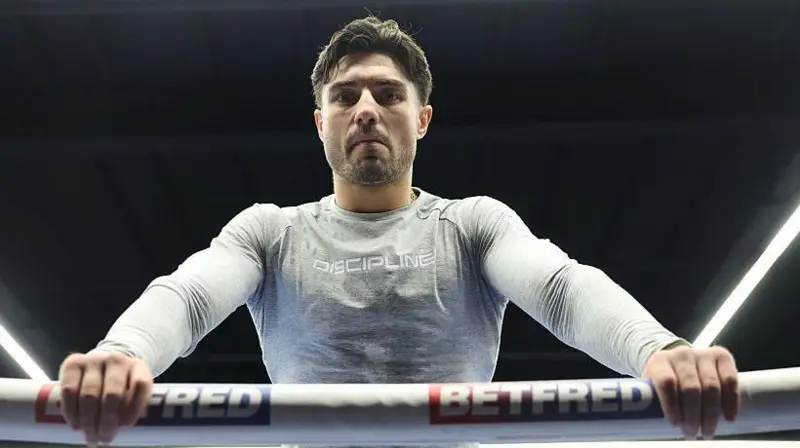
Josh Kelly has long projected confidence, swagger, and flair inside the boxing ring. With slick footwork, sharp reflexes, and a showman’s instinct, he earned the nickname “Pretty Boy” early in his professional career. But behind the polished exterior, Kelly was quietly fighting a much more personal and damaging battle.
Back in 2021, Kelly appeared destined for greatness. He entered his European welterweight title fight against David Avanesyan unbeaten in 10 professional bouts, with six victories coming by knockout. Many believed it was only a matter of time before he joined boxing’s elite at world level.
Yet what few knew was that Kelly was suffering from chronic hypochondria, formally known as illness anxiety disorder—a mental health condition defined by an overwhelming and persistent fear of serious illness, even in the absence of medical evidence.
Pressure, Perfection, and a Silent Struggle
Looking back, Kelly admits the warning signs were already there before stepping into the ring against Avanesyan. In his pursuit of perfection, he became obsessed with the idea that even the smallest imperfection could derail his performance.
“I should have seen it coming,” Kelly said. “Fight week would come around and I’d have boxes of Lemsips stacked up. I was drinking three or four a day, not because I was sick, but because I was terrified of getting sick.”
The pressure he placed on himself was immense. He believed everything had to align perfectly—physically, mentally, emotionally—or the fight would slip away. Ironically, that mindset began sabotaging him.
Sleep became impossible. During fight week, Kelly estimates he managed no more than 11 or 12 hours of sleep total. Desperate for rest, he even resorted to alcohol in the hope it would help him switch off.
“One night I smashed open the minibar and drank two small bottles of whiskey,” he recalled. “It wasn’t about drinking—it was about survival.”
Fight Night Collapse
By the time fight night arrived, Kelly was running on empty. He hadn’t slept the night before and took extreme measures to feel alert before walking to the ring.
“In the changing room, I had seven caffeine shots in about 15 minutes,” he said. “My heart was racing but my mind felt disconnected.”
Those who rewatch the ring walk can see it clearly. The usual smiling, playful Kelly was gone. His eyes told a different story.
“I was somewhere else. Even during the fight, everything felt blurred. I’m normally very aware—listening, learning, adjusting—but that night, I wasn’t present.”
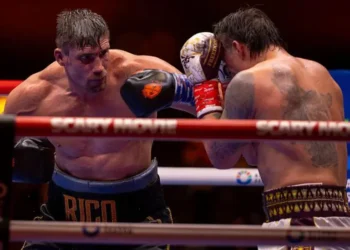
Avanesyan capitalized, handing Kelly the first and only defeat of his professional career.
Anxiety Beyond the Ring
Kelly’s struggles didn’t stop at boxing. After becoming a father—welcoming his first son in 2018—his anxiety intensified. His fears expanded into everyday life.
“I was constantly worrying about my kids—asking if they’d washed their hands, avoiding touching things, wanting to wear gloves,” he admitted.
What had once been confined to fight week began spilling into family life. That was the moment Kelly knew something had to change.
“I couldn’t let it keep controlling me,” he said.
Time Away and a Mental Reset
After the Avanesyan defeat, Kelly stepped away from boxing for 16 months. While he sought some professional help, much of his recovery came from leaning on his family, friends, faith, and mentorship.
One pivotal moment came through an unexpected connection with Steven Green, now a close mentor.
“We were originally talking about property on a Zoom call,” Kelly explained. “Then he mentioned mindset. I didn’t believe it at first—but once we went deeper, it changed everything.”
That mental clarity transformed Kelly’s outlook on boxing and life.
Stronger, Wiser, and Refocused
Returning under the guidance of trainer Adam Booth, Kelly marked his comeback with a stoppage win over Peter Kramer. From there, momentum built quickly.
Victories over Troy Williamson and Ishmael Davis, both domestic champions, sent a clear message: Josh Kelly was back—and better.
Now riding a seven-fight winning streak, Kelly has earned his shot at the IBF light-middleweight world title, facing undefeated Russian Bakhram Murtazaliev at the Utilita Arena in Newcastle.
A New Mental Edge
Kelly believes the mental battle—once his greatest weakness—is now his greatest strength.
“Training is mostly physical,” he said. “But on fight night, it becomes 90% mental—and I’ve nailed that.”
He added: “I’m not just confident. I know I’m strong mentally now. No one can touch that.”
The time away from boxing proved essential. He now cuts less weight, feels more mature, and trusts the people around him.
“Back then, if you told me I’d be fighting for a world title, I’d have laughed,” Kelly admitted. “Now, I believe it because I’ve earned it.”
Faith, Growth, and Fulfilled Potential
For Kelly, this journey has been about more than boxing belts.
“It’s about faith, belief, and surrounding yourself with the right people,” he said. “I had to lose something to find myself.”
As he prepares for the biggest fight of his life, Kelly is no longer just chasing greatness—he’s at peace with who he is.
For more in-depth boxing stories and exclusive sports coverage, visit https://netsports247.com.