
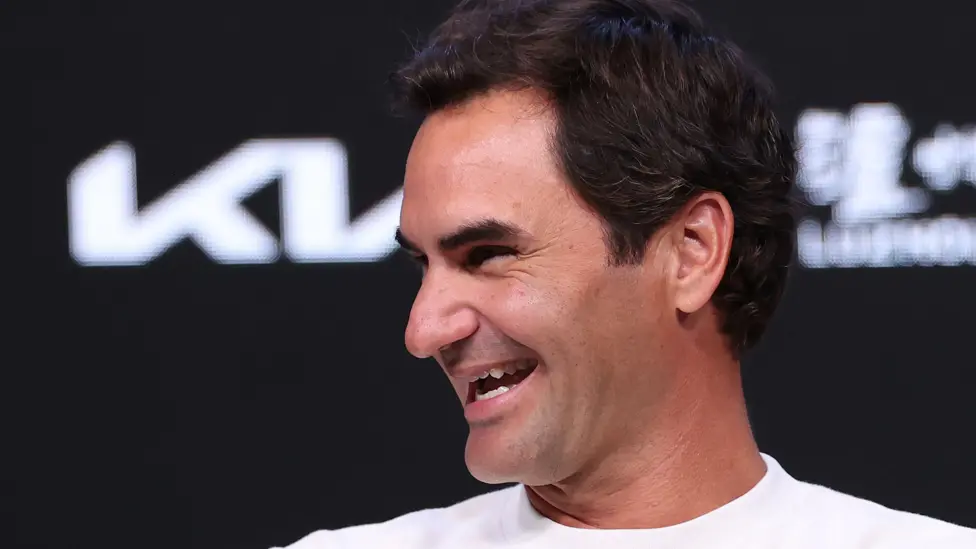
Roger Federer’s affectionate nickname for the Australian Open – the “Happy Slam” – has grown far beyond a throwaway phrase. Over time, it has become central to the tournament’s identity, shaping how players, fans and sponsors view the season’s opening Grand Slam.
Loved by much of the playing fraternity and buoyed by record-breaking attendance figures, the Australian Open has evolved into one of the most vibrant events in global sport. Fresh concepts such as the newly introduced One Point Slam have drawn fresh audiences and delivered strong engagement, helping tennis reach beyond its traditional fan base.
Yet beneath the celebration, recent weeks have also exposed emerging tensions. Complaints around overcrowding, intrusive behind-the-scenes filming of players, and concerns that many attendees are more interested in entertainment than tennis have sparked debate. With reports suggesting the architect of the tournament’s rapid expansion may soon depart, questions are being asked about the future direction of the Australian Open.
From tennis tournament to cultural festival
Grand Slam events were once compact, two-week showcases of elite tennis. Today, they are increasingly transforming into sprawling three-week spectacles, with the Australian Open leading this shift.
What was once a quiet qualifying week – featuring sparse crowds and closed practice sessions – has been replaced by daily headline events. Tournament director Craig Tiley refers to this transformation as the “festivalisation” of tennis, where the sport sits at the centre of a broader entertainment experience.
This year’s innovations included the One Point Slam exhibition, an opening ceremony featuring Federer, and exhibition sets involving Novak Djokovic and Aryna Sabalenka on Rod Laver Arena. Access to many of these events came with premium ticket prices, underlining the tournament’s commercial ambitions.
Beyond the courts, the Australian Open has embraced music, food and lifestyle culture. High-profile DJs, gourmet food partnerships and family-oriented attractions have reshaped Melbourne Park into what some now call the “Glastonbury of tennis”.
That crossover peaked when international music stars Peggy Gou and The Kid Laroi headlined AO Live, performing in front of 10,000 fans at John Cain Arena. Gou closed the event just hours before the men’s final, delivering a club-style finale rarely associated with traditional tennis tournaments.
Areas like Grand Slam Oval have also taken on a festival atmosphere, with pounding music systems and luxury lounge bars creating an environment closer to Ibiza than Centre Court.
Chasing global dominance
Tiley believes expanding the audience is essential if the Australian Open is to compete commercially with Wimbledon, the French Open and the US Open. Since joining Tennis Australia in 2005, he has overseen the tournament’s most aggressive period of growth.
Former world-class doubles player Rajeev Ram, who played under Tiley during his time coaching at the University of Illinois, credits him with reshaping how tennis is presented.
“He always wanted tennis to feel like an event, not just a match,” Ram explained. From marching bands performing between matches to themed crowd participation, Tiley has long blurred the line between sport and spectacle.
Unsurprisingly, his ideas have not always been universally welcomed. Recently, he floated the idea of introducing five-set women’s singles matches from the quarter-finals onward – regardless of whether the other Grand Slams follow suit. He has also spoken publicly about futuristic concepts such as glass courts and immersive domes featuring 270-degree screens.
However, the biggest uncertainty surrounds Tiley himself. Reports suggest he may soon move to a senior leadership role at the United States Tennis Association, potentially leaving the Australian Open before the 2027 edition. While he has avoided confirming his future, his departure would mark a significant turning point.
A city consumed by tennis – but at what cost?
Few sporting events capture an entire city quite like the Australian Open. Melbourne transforms during the tournament, which has become a cornerstone of the city’s summer calendar.
This year, nearly 1.4 million people passed through the gates across three weeks – a 16% increase on the previous year. Veteran tennis journalist Courtney Walsh described the growth as “extraordinary”.
“Growing up around this event, you’d never have imagined it becoming this big,” Walsh said. “Six showcourts, with a converted basketball arena as the third main stadium – it’s remarkable.”
The central location of Melbourne Park plays a major role. Stretching from Flinders Street Station past the Melbourne Cricket Ground towards Richmond, the site is far more accessible than other Grand Slam venues.
Daily attendance regularly exceeded 100,000, with opening-week grounds passes priced at A$69. But popularity has brought problems. Outer courts were often packed shoulder-to-shoulder, and scenes of fans queuing en masse – such as Filipinos lining up to watch Alexandra Eala – highlighted capacity concerns.
Critics argue that too many tickets are being sold, diminishing the viewing experience for genuine tennis fans. Spreading the first round over three days has also reduced the number of matches available to grounds pass holders.
“It’s a massive site – almost its own suburb – yet space is still tight,” Walsh noted. “There’s undeniably less tennis available for fans who don’t have stadium tickets.”
Are the players still smiling?
Despite the commercial success, the Australian Open’s reputation ultimately rests on its players. Decades ago, many European and American stars avoided Melbourne due to travel demands and limited prestige. That perception has changed dramatically.
Travel grants introduced under Tiley’s leadership played a major role, as did the appeal of escaping winter conditions elsewhere. Federer once described the tournament as a joyful reunion point for players starting a new season.
World-class facilities also set Melbourne apart. Players benefit from advanced racket customisation labs, comprehensive medical services, recovery pools and personalised nutrition programmes. On-site specialists range from orthopaedists to dermatologists, while chefs cater to global tastes.
There are also beauty salons, laundry services, and even an on-site bank – a level of convenience unmatched elsewhere on tour.
Financial incentives remain strong, with a record £55 million prize fund offered this year. However, tensions remain. Several top players are pushing for a greater share of tournament revenues, arguing that they remain the event’s main attraction.
Others voiced frustration over constant behind-the-scenes filming, questioning whether the push for content has gone too far.
How the Australian Open balances entertainment, commercial growth and player satisfaction – with or without Craig Tiley – will define its next chapter.
For full tennis news, analysis and features, visit https://netsports247.com