
ICC and PCB Hold Emergency Talks Over Pakistan’s Threatened India Match Boycott
Senior officials from the International Cricket Council (ICC) and the Pakistan Cricket Board (PCB) are set to hold high-level discussions in Lahore on Sunday, as tensions escalate over Pakistan’s proposed boycott of its T20 World Cup clash against India scheduled for next week.
The meeting comes amid growing political and sporting uncertainty surrounding the tournament, which only began on Saturday but has already been overshadowed by controversy involving multiple nations and the potential disruption of one of cricket’s most valuable fixtures.
Key Decision-Makers Gather in Lahore
Representing the ICC will be deputy chair Imran Khawaja alongside Mubashar Usmani, a member of the organisation’s executive committee. They are due to meet PCB chairman Mohsin Naqvi, with the presence of Bangladesh Cricket Board (BCB) president Ameenul Islam further highlighting the seriousness of the situation.
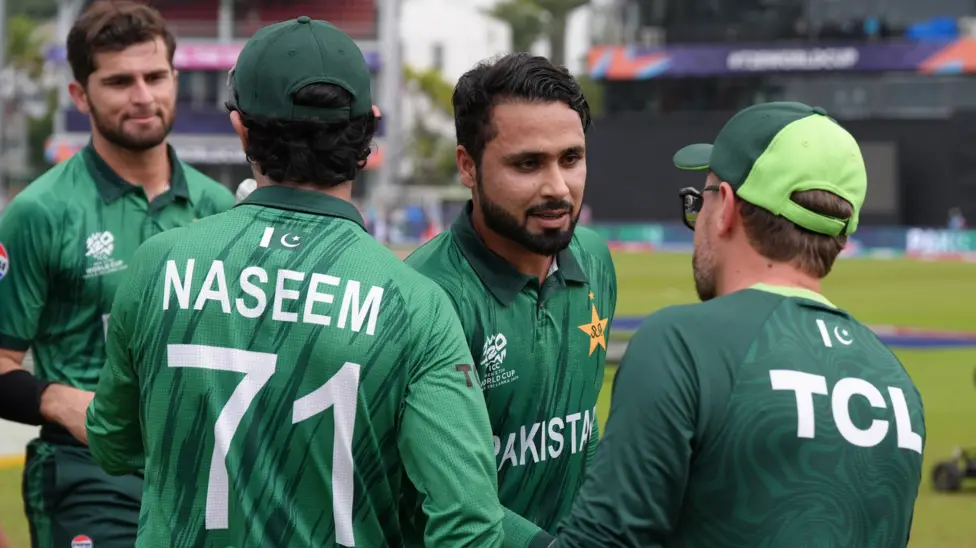
The talks are expected to focus on Pakistan’s intention to withdraw from its group-stage match against India on 15 February, a decision announced by Pakistan’s government following Bangladesh’s earlier withdrawal from the competition.
Bangladesh’s Withdrawal Sets the Chain Reaction
The crisis began when Bangladesh pulled out of the T20 World Cup, which is being co-hosted by India and Sri Lanka, after the ICC rejected a request to relocate their matches away from Indian venues. The Bangladeshi board cited growing political tensions and concerns over player safety as the primary reasons for their decision.
Following the ICC’s refusal, Bangladesh formally withdrew, creating shockwaves across the cricketing world and placing the tournament’s integrity under scrutiny just days after its opening fixtures.
Pakistan Government Steps In
In response to Bangladesh’s withdrawal, Pakistan’s government announced that its national team would boycott the highly anticipated clash against India. Prime Minister Shehbaz Sharif stated that the move was made in solidarity with Bangladesh, describing it as a decision taken to “support” a fellow cricketing nation amid escalating political pressure.
While the PCB has not formally confirmed the boycott from a cricketing standpoint, it has acknowledged that the directive came from government authorities, placing the board in a complex position between political instruction and sporting obligation.
Sporting Consequences of a Boycott
If Pakistan proceed with the boycott, the team would forfeit the match and automatically lose the points available. Such an outcome could significantly impact the tournament standings and potentially alter qualification scenarios later in the competition.
However, the sporting implications are only part of the problem. The absence of an India–Pakistan match—arguably the most watched and commercially powerful fixture in global cricket—would be a devastating blow to the tournament’s value.
Financial Stakes Are Enormous
An India–Pakistan clash is widely regarded as cricket’s most lucrative event, generating massive television audiences, sponsorship revenue, and global attention. Any cancellation or boycott of the fixture would have serious financial ramifications, not just for the ICC but also for broadcasters, sponsors, and host boards.
Industry sources suggest the loss of this single match could trigger disputes over existing ICC broadcasting and commercial rights agreements, particularly if partners feel the tournament has been materially weakened.
Threat to ICC Rights Deals
The situation is further complicated by the fact that the ICC’s current global television and commercial rights deals are set to expire after the 2027 World Cup. Continued instability, political interference, and uncertainty around marquee fixtures could reduce confidence among future bidders.
Broadcast partners may seek compensation or renegotiation if the absence of high-profile matches diminishes the value of the product they have paid for. This could lead to prolonged legal and commercial disputes, further damaging the sport’s global governance.
ICC Under Pressure
The ICC now finds itself under intense pressure to balance political realities with sporting integrity. While the organisation maintains that it does not intervene in political matters, critics argue that years of inaction and inconsistent decision-making have allowed such crises to escalate.
The meeting in Lahore is expected to explore whether compromise solutions—such as neutral venues, scheduling adjustments, or diplomatic mediation—remain possible at such a late stage.
Bangladesh’s Role in Discussions
The attendance of Ameenul Islam, president of the Bangladesh Cricket Board, signals that Bangladesh’s withdrawal will also be addressed. ICC officials may attempt to persuade Bangladesh to reconsider their position or explore alternative arrangements that could allow their return without further destabilising the tournament.
Whether Bangladesh are open to such discussions remains unclear, particularly after their initial request to move matches was rejected.
Broader Impact on International Cricket
Beyond the immediate tournament, the controversy highlights deeper structural problems in international cricket governance. Political tensions between nations have increasingly spilled into the sport, affecting scheduling, hosting rights, and player availability.
Observers warn that unless the ICC establishes firmer policies and more transparent decision-making processes, similar disputes could threaten future global events.
What Happens Next?
Sunday’s meeting in Lahore could prove pivotal. If Pakistan confirm their boycott, the ICC will face the unprecedented challenge of managing a World Cup without its most iconic fixture. Conversely, if a resolution is reached, it may require significant concessions from all parties involved.
Either way, the outcome will set a powerful precedent for how international cricket handles political pressure going forward.
For now, uncertainty hangs over the tournament, with administrators, players, broadcasters, and fans awaiting clarity on whether cricket’s most famous rivalry will take place—or be lost to politics.
For ongoing updates, expert analysis, and full T20 World Cup coverage, visit:
👉 https://netsports247.com