
Chaos After Old Firm Clash as Celtic and Rangers Fans Invade Pitch at Ibrox
Tensions boiled over after the famous Celtic F.C. versus Rangers F.C. rivalry match when clashes broke out between supporters following a dramatic cup tie in Glasgow. The intense scenes unfolded at Ibrox Stadium after Celtic defeated Rangers in a thrilling penalty shootout to secure their place in the quarter-finals of the Scottish Cup.
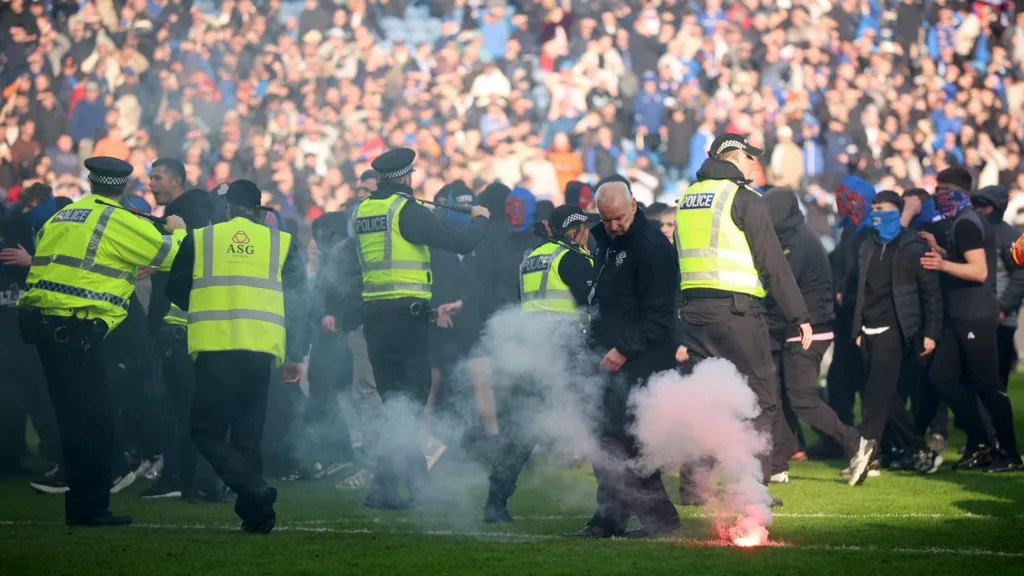
The match itself had already been filled with excitement and tension, but events following the final whistle quickly escalated into disorder. Celtic supporters poured onto the pitch in celebration after their team triumphed 4-2 in the penalty shootout. However, the celebrations soon turned chaotic as Rangers fans also entered the field, leading to confrontations between the rival groups.
Police officers and stadium stewards were forced to intervene as they attempted to separate the supporters. The situation quickly became volatile as flares and pyrotechnics were thrown while fans confronted each other near the pitch area. Authorities worked to form a human barricade in an effort to prevent the situation from spiraling further out of control.
Police Scotland later confirmed that several individuals had been arrested in connection with the disorder. Officers described the scenes that unfolded as unacceptable and condemned the behaviour of those involved.
Chief Superintendent Kate Stephen spoke strongly about the incidents, describing them as deeply troubling and disgraceful. She emphasized that the violent conduct displayed by a minority of supporters had no place in football or society more broadly.
According to Stephen, officers and stadium staff faced aggressive and hostile behaviour for an extended period of time while trying to restore order. Some individuals involved in the clashes had reportedly armed themselves with objects intended to cause harm, making the situation even more dangerous.
As a result of the unrest, both police officers and members of the public suffered injuries. Stephen praised the efforts of the officers and stewards who worked to manage the situation and prevent the violence from escalating further.
Despite the chaos that initially erupted, the disorder eventually subsided. Police and security personnel successfully created a barrier between the two groups of supporters, which helped restore calm. Fans gradually returned to their seats in the stands as the situation stabilized.
The events were particularly significant because it marked the first time in several years that Celtic supporters had been granted a full allocation of seats in the Broomloan Road Stand at Ibrox.
Historically, large numbers of away fans were allowed to attend Old Firm matches. In the past, approximately 7,500 Celtic supporters would occupy the Broomloan Road Stand during derby games. However, tensions between the two clubs led to the away fan allocation being reduced to fewer than 1,000 seats in 2018.
Since then, the number of visiting supporters permitted at matches between the two clubs has fluctuated significantly. At times, allocations have dropped as low as around 750 fans, and on some occasions away supporters were not permitted at all. These changes were largely the result of ongoing disagreements between the clubs regarding ticket distribution.
Police also revealed that the security operation during the match had already faced difficulties earlier in the day. Some supporters reportedly entered the Broomloan Stand without valid tickets, which caused complications for stadium security.
As a result, turnstiles were temporarily closed while officials attempted to manage the situation. These issues delayed the security process and added to the tension surrounding the match.
The Scottish Football Association responded quickly to the incidents, strongly condemning the actions of the supporters who entered the pitch and became involved in the disturbances. The governing body confirmed that a formal investigation into the events would begin immediately.
Officials stated that they would work closely with both clubs and law enforcement authorities to determine exactly what happened and to identify those responsible for the disorder.
Meanwhile, Scotland’s minister for victims and community safety, Siobhan Brown, also expressed concern over the scenes that unfolded at Ibrox. She described the behaviour of some supporters as completely unacceptable and warned about the dangers posed by the use of pyrotechnics during crowded events.
Brown pointed out that flares and other fireworks could easily have caused serious injuries if they had struck players, fans, or security personnel. She emphasized the importance of maintaining safety at sporting events and ensuring that football matches remain welcoming environments for families and communities.
The minister also noted that the Scottish Government had recently conducted a consultation regarding potential changes to legislation governing football-related disorder.
One of the proposals under consideration involves extending the powers available to authorities to impose Football Banning Orders (FBOs) on supporters who engage in violent or disruptive behaviour.
Currently, these orders can be applied when individuals are convicted of violence or disorder connected to football matches. Those who receive a banning order may be prohibited from attending football games anywhere in the United Kingdom for up to ten years.
Brown confirmed that the government is reviewing the feedback from the consultation and considering further steps that could strengthen measures designed to prevent future incidents.
In the immediate aftermath of the match, both clubs chose not to issue official statements regarding the disturbances. Representatives for Celtic and Rangers told reporters that they would comment at a later time once more information became available.
Following the match, Martin O’Neill, the manager of Celtic, was asked about the events that took place on the pitch. However, he admitted that he was still caught up in the excitement of the victory and had not yet fully reflected on the situation.
O’Neill acknowledged that large numbers of fans had spilled onto the pitch at the final whistle but declined to comment extensively on the incident. He said he would take time to consider the matter and speak about it in greater detail later.
On the Rangers side, head coach Danny Rohl said he had not witnessed the disturbances himself because he was already in the tunnel area when the chaos began. As a result, he was unable to provide an immediate assessment of what had occurred.
The Old Firm rivalry between Celtic and Rangers is widely regarded as one of the most intense in world football. Matches between the two Glasgow clubs are known for their passionate atmosphere, both inside the stadium and across the city.
While the rivalry often produces thrilling football and unforgettable moments, the events at Ibrox highlight the ongoing challenges of managing large crowds and preventing disorder during high-profile matches.
Authorities are now focused on investigating the incidents, identifying those responsible, and ensuring that appropriate action is taken.
For more sports news and updates, visit:
https://netsports247.com