
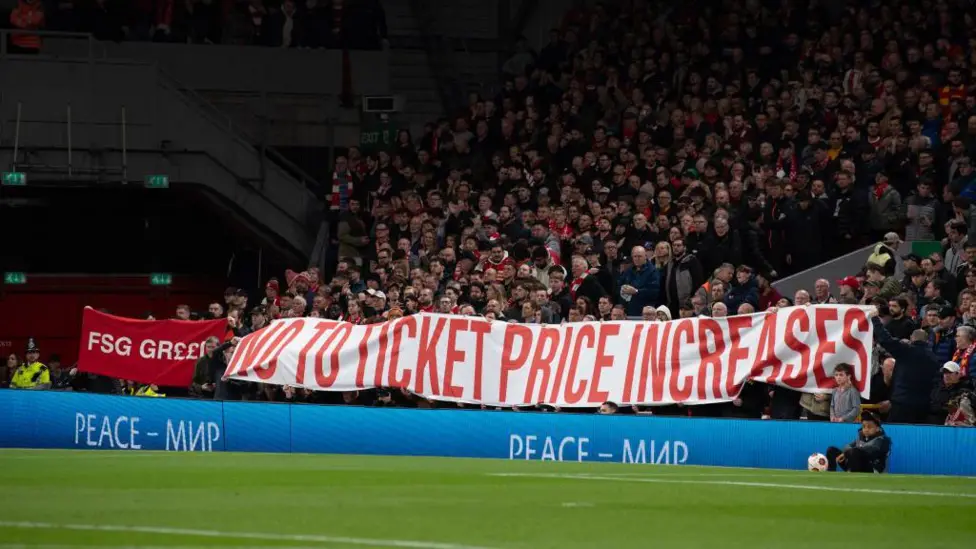
Supporters of Liverpool FC are preparing to make a powerful statement ahead of their upcoming Premier League clash with Fulham FC at Anfield. As the players go through their pre-match warm-ups, there may be noticeably fewer fans inside the stadium than usual. This is not due to lack of interest, but rather a coordinated protest led by the supporters’ group Spirit of Shankly.
The group has launched a campaign titled “not a pound in the ground,” encouraging fans to delay entering the stadium and instead spend their money at local businesses around the Anfield area. The idea is to demonstrate dissatisfaction with the club’s decision to increase ticket prices over the next three seasons, while simultaneously supporting the local community that surrounds the club.
This protest marks the beginning of what could become a broader and more sustained movement. Spirit of Shankly has made it clear that this is just the first step in a series of planned actions aimed at challenging the club’s pricing strategy. According to the group, the decision to raise ticket prices has been made despite clear and widespread opposition from supporters.
At the heart of the issue is Liverpool’s announcement in late March that ticket prices will rise in line with the consumer price index (CPI) over the next three years. For the upcoming season, this means season ticket holders will pay between £21.50 and £27 more, while matchday tickets for other fans will increase by approximately £1.25 to £1.75 per game.
Although these individual increases may seem modest, the cumulative effect over three seasons is significant. By 2028, some supporters could be paying around £100 more for their season tickets. If inflation rises further due to global economic pressures, these costs could increase even more.
What makes this decision particularly controversial is its multi-year nature. It is the first time a club in the Premier League has announced ticket price increases spanning multiple seasons in advance. By the start of the 2028–29 campaign, Liverpool will have raised ticket prices in five out of six seasons, a trend that many fans find troubling.
Financially, Liverpool remains one of the most successful clubs in Europe. According to UEFA’s financial reports, the club generates an average of £74 per fan per ticket, including general admission and hospitality. Last year alone, Liverpool earned around £120 million in ticket revenue—a figure boosted by the expansion of the Anfield Road stand.
On a per-match basis, the club brings in approximately £4.5 million from ticket sales, ranking them among the top earners in European football. The planned price increases are expected to generate an additional £1.5 to £2 million annually. While this may seem beneficial from a business perspective, many supporters question whether such increases are necessary given the club’s already substantial درآمد.
Liverpool has defended its decision by pointing to rising operational costs. The club reports that matchday expenses have increased by 85% since the 2016–17 season. Additionally, utility costs have more than doubled, business rates have surged by 286%, and staff wages—excluding player salaries—have risen by 73%.
From the club’s perspective, linking ticket prices to inflation provides a level of predictability and transparency. They argue that this approach allows fans to plan ahead and understand how prices will change over time. However, many supporters remain unconvinced.
For groups like Spirit of Shankly, the issue goes beyond numbers. They see it as a question of identity and values. Is Liverpool a club rooted in its community and supporters, or is it becoming increasingly driven by commercial interests? This debate has struck a chord with fans, many of whom feel that loyalty is being taken for granted.
The protest campaign emphasizes that this is not just about consultation anymore—it is about action. Supporters believe that if such decisions go unchallenged, they could set a precedent not only for Liverpool but for clubs across the league. The concern is that other teams may adopt similar pricing strategies, leading to a broader trend of rising costs for fans.
This concern is shared by organizations like the Football Supporters’ Association, which has been actively campaigning against ticket price increases. Their “Stop Exploiting Loyalty” initiative has brought together fan groups from all 20 Premier League clubs, highlighting the widespread nature of the issue.
Historically, Liverpool fans have demonstrated that collective action can lead to change. In 2016, a mass walkout protest against a proposed £77 ticket price forced the club’s owners to reconsider and ultimately reverse their decision. That success serves as inspiration for current efforts.
However, the current situation presents new challenges. The introduction of multi-year pricing plans could limit opportunities for ongoing dialogue between clubs and supporters. Critics argue that this approach effectively locks in price increases, reducing the ability of fans to influence decisions in the future.
Industry experts have also weighed in on the debate. Former Liverpool CEO Christian Purslow has expressed concerns about the النادي’s strategy, suggesting that alienating loyal supporters could have long-term consequences. He questioned whether a club generating hundreds of millions in revenue truly needs to place additional financial pressure on its fanbase.
The ripple effects of this issue are already being felt across English football. Protests related to ticket pricing and fan treatment have become increasingly common. At clubs like Manchester United and Manchester City, supporters have voiced concerns over seating changes designed to accommodate higher-paying hospitality customers.
Similarly, fans of Tottenham Hotspur and Nottingham Forest have protested against reductions in concessionary tickets for younger and older supporters. These developments point to a broader shift in football, where commercial priorities are increasingly influencing decisions.
For many fans, the fear is that traditional supporters may gradually be priced out of attending matches. This could lead to a تغییر in the atmosphere and culture of stadiums, as long-time fans are replaced by those who can afford higher prices. Such a تحول would fundamentally alter the تجربة of live football.
Thomas Concannon of the Football Supporters’ Association has emphasized the importance of collective action. He believes that fans across all clubs should pay attention to what is happening at Liverpool, as it could shape the future of ticket pricing throughout the league.
Ultimately, the situation highlights the ongoing tension between football as a business and football as a community. While clubs must remain financially sustainable, they also rely on the passion and loyalty of their supporters.
As Liverpool prepare to face Fulham, the protest at Anfield will serve as a visible reminder of this संघर्ष. Whether it leads to meaningful change remains to be seen, but it has already sparked an important conversation about the future of the game.
For more football news, fan reactions, and in-depth sports coverage, visit: https://netsports247.com