
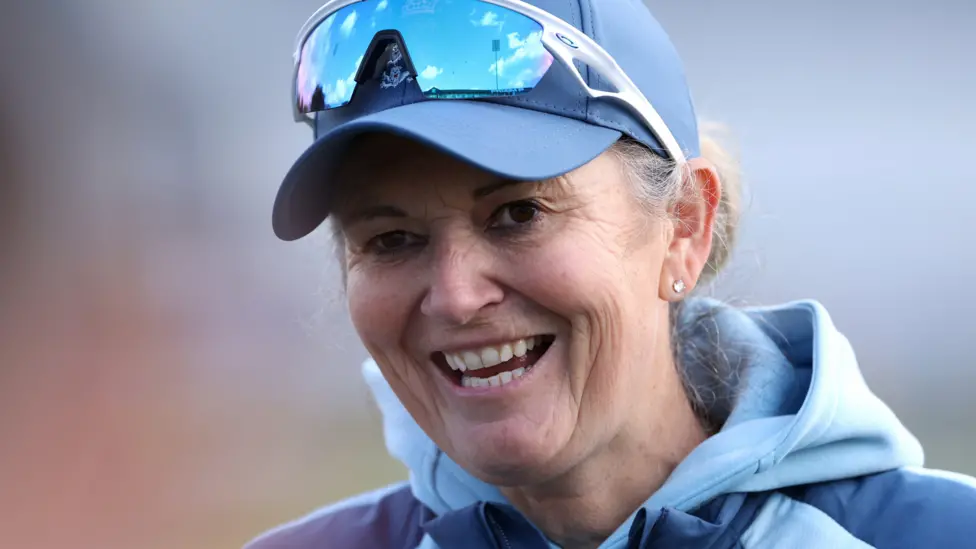
After weeks of preparation and build-up, England are now entering the most crucial phase of their World Cup journey. Following a rain-interrupted 50-over series against New Zealand, attention now shifts to the T20 format. Head coach Charlotte Edwards has six T20 matches at her disposal, beginning with Wednesday’s clash against the White Ferns, to fine-tune combinations and finalize her squad before the tournament officially begins on 12 June.
Although Edwards has been strategically planning for months, several key decisions remain unresolved. The upcoming matches will serve as a testing ground to address these uncertainties and ensure the team is fully prepared for the global stage.
One of the biggest talking points is England’s spin department. The emergence of 18-year-old Tilly Corteen-Coleman has added an exciting new dimension to the squad. Making her international debut in the ODI series against New Zealand, she impressed with her composure and confidence, even acknowledging that she still has room for improvement. Her performance has validated Edwards’ long-standing belief in her potential.
However, her rise has created a selection dilemma. Sophie Ecclestone, assuming she is fit, remains a guaranteed starter and a cornerstone of England’s bowling attack. The real question lies in choosing her spin partner. Linsey Smith, another left-arm spinner, presents a strong case. Known for her unique slingy action and ability to bowl effectively during the powerplay, Smith was one of England’s standout performers in the previous 50-over World Cup.
Corteen-Coleman, on the other hand, offers control and maturity beyond her years. Her impressive figures during a high-scoring T20 practice match earlier this year further strengthen her case. While playing all three left-arm spinners is an option, it could weaken the batting lineup by forcing out players like Charlie Dean, ultimately creating imbalance in the team.
Fitness concerns also loom large over England’s preparations. Captain Nat Sciver-Brunt is currently recovering from a minor calf injury and has already missed the ODI series. She is also unavailable for the T20 matches against New Zealand, making her recovery a top priority. Her role as an all-rounder is crucial, and England will need her fully fit for the World Cup.
Similarly, Sophie Ecclestone has been dealing with a quad issue and has had limited match practice this season. Batter Sophia Dunkley, expected to open alongside Danni Wyatt-Hodge, has also struggled with a knee problem, limiting her appearances in recent months.
Fast bowler Issy Wong adds to the list of fitness concerns. Although initially included in the squad for the first ODI, she was withdrawn due to hamstring tightness. Fortunately, the injury was minor, and she is now available for the T20 series. Managing player fitness effectively will be critical as England approaches the tournament.
Another area of debate is the inclusion of all-rounders Freya Kemp and Dani Gibson. Both players have recently returned from injuries and were part of the ODI series against New Zealand, although they failed to make a significant impact. Edwards has a known preference for all-rounders, as they provide flexibility in both batting and bowling departments.
Kemp, a left-handed batter capable of hitting big shots, is expected to resume bowling after a long injury layoff. Gibson, who recently recovered from a stress fracture, adds depth with her pace and batting abilities. However, including both players in the lineup could limit opportunities for specialist bowlers.
This leads to another critical question: should England rely on just one frontline fast bowler? If the team opts for multiple all-rounders alongside spinners like Ecclestone and Dean, there may only be room for one specialist seamer. Lauren Bell is the frontrunner for this role, having established herself as a key figure in England’s bowling attack over the past 18 months.
While all-rounders like Kemp, Gibson, and Sciver-Brunt can provide additional bowling options, their effectiveness will depend on their fitness and form. Against stronger teams like India or Australia in the knockout stages, England might need more specialized pace options.
On the batting front, several players appear certain to feature in the playing XI. Sophia Dunkley, Danni Wyatt-Hodge, and former captain Heather Knight are expected to form the core of the batting lineup. Wyatt-Hodge, in particular, has been in excellent form, scoring heavily in domestic cricket.
This leaves Alice Capsey in a somewhat uncertain role. Once considered a rising star, Capsey has yet to fully establish herself in international cricket. Despite being an off-spinning all-rounder, she has been designated as the backup wicketkeeper for the World Cup squad—a decision that has raised eyebrows.
Although Capsey has some experience as a wicketkeeper from her early cricketing days, she has rarely taken on the role at the professional level. England have been working on her wicketkeeping skills during training camps, but the lack of match experience remains a concern.
If first-choice wicketkeeper Amy Jones were to suffer an injury, Capsey might be required to step in. However, given Jones’ strong fitness record, this scenario is unlikely. Still, the question remains whether England should provide Capsey with some match practice behind the stumps before the World Cup begins.
Overall, England’s preparations are entering a decisive phase. While the team possesses immense talent and depth, the final combinations will depend on form, fitness, and tactical decisions made in the coming weeks. The T20 series against New Zealand and subsequent matches against India will play a crucial role in shaping the squad.
As the countdown to the World Cup continues, England must quickly resolve these uncertainties to ensure they are fully equipped to compete at the highest level. For more sports updates, visit: https://netsports247.com