

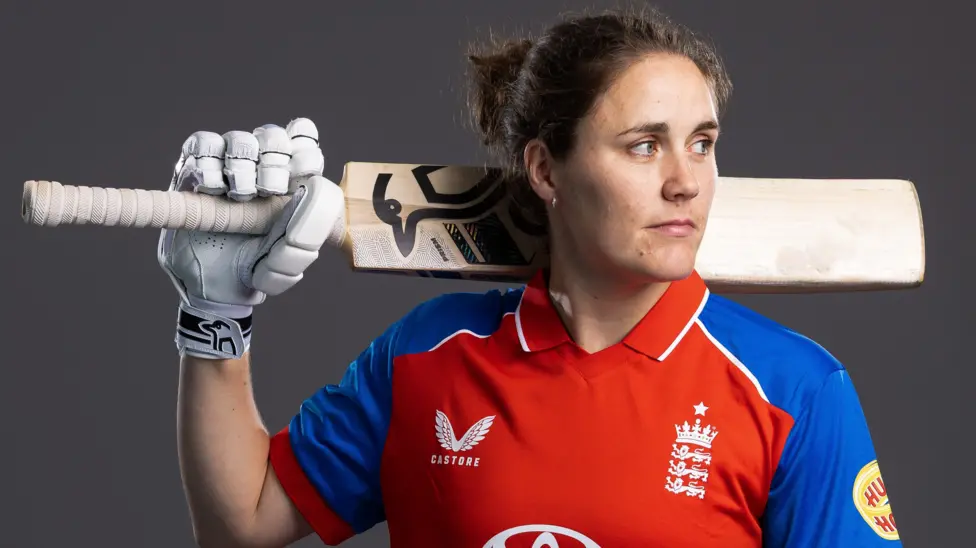
England’s women’s cricket team has decided not to impose a blanket ban on social media use during the upcoming Women’s T20 World Cup, which will be hosted on home soil this summer. Instead, the team management is focusing on providing players with the necessary support and tools to manage the pressures and challenges that come with online platforms during such a high-profile tournament.
This approach marks a shift from the strategy adopted during England’s triumphant 2017 Women’s Cricket World Cup campaign. At that time, players collectively agreed to step away from X (formerly known as Twitter), although some continued to use Instagram. The digital landscape, however, has evolved significantly since then, and the role of social media in athletes’ lives has become much more prominent.
Current captain Nat Sciver-Brunt highlighted this change in perspective, emphasizing that modern players—particularly younger ones—view social media as an integral part of their daily lives. According to her, enforcing a strict ban would not only be impractical but could also feel unreasonable to many members of the squad.
“If you were to ask some of the younger players to completely come off social media, they would probably be shocked,” Sciver-Brunt explained in an interview. “The reality is that things have changed, and we now have better ways of managing it.”
Rather than enforcing rigid rules, the team is allowing individuals to make their own decisions regarding their social media use. At the same time, support systems are in place to ensure players feel comfortable and protected while engaging online. These include guidance on handling negative comments, as well as technological tools designed to filter or block harmful content.
Social media plays a multifaceted role in the lives of modern athletes. Beyond personal expression, it serves as a valuable platform for building a personal brand, connecting with fans, and securing sponsorship deals. For many players, it represents an additional source of income and an opportunity to promote both themselves and the sport.
Sciver-Brunt spoke about these aspects while attending the unveiling of a billboard in London’s Piccadilly Circus. The display features her alongside teammates Sophia Dunkley and Lauren Bell, symbolizing the growing visibility and popularity of women’s cricket. This kind of exposure is a testament to how far the game has come since 2017, when such recognition was far less common.
Despite embracing the benefits of social media, Sciver-Brunt acknowledged the challenges it presents. As a professional athlete, she understands that criticism and scrutiny are unavoidable. However, she believes in maintaining a balanced perspective and avoiding excessive engagement with negative content.
The England and Wales Cricket Board (ECB) has taken proactive steps to support players in this regard. By collaborating with independent technology companies, the ECB monitors players’ accounts for abusive or harmful comments. These systems can automatically filter out offensive language and prevent certain types of content from appearing in players’ feeds.
Reflecting on her experiences from the 2017 tournament, Sciver-Brunt noted how much the digital environment has changed. Back then, social media did not dominate daily life to the same extent it does today. Now, with increased screen time and constant connectivity, it is nearly impossible to avoid online interactions entirely.
“Nowadays, you spend so much time on your phone that you’re bound to come across things,” she said. “Personally, I try not to read too many articles or comments because it can be overwhelming.”
She also pointed out the dual nature of social media. On one hand, it can be uplifting and rewarding when players are performing well and receiving positive feedback. On the other hand, it can quickly become a source of negativity and stress during challenging periods. For this reason, she strives to remain level-headed and not let online opinions affect her performance or mindset.
In addition to discussions about social media, Sciver-Brunt provided an update on her fitness ahead of the tournament. The 33-year-old all-rounder has missed England’s international fixtures this summer due to a calf injury. However, she expressed confidence that she will be fit in time for the opening match against Sri Lanka at Edgbaston.
As part of her preparation, she plans to participate in two warm-up matches against India and Australia in Cardiff. During these games, she is expected to play primarily as a batter rather than an all-rounder, as she continues to manage her recovery.
While she remains open to contributing with the ball later in the tournament, Sciver-Brunt indicated that England’s current bowling lineup is strong enough to cover all bases. This flexibility allows her to focus on regaining full fitness without rushing back into bowling duties.
“I might bowl a few overs later in the competition if needed,” she said. “But for now, the priority is to ensure I’m fully fit and ready to contribute with the bat.”
Encouragingly, she reported that her batting form has been consistent during practice sessions. Being able to train regularly with the bat has given her confidence heading into the tournament.
England’s preparations have been boosted by a strong finish to their pre-World Cup campaign. The team secured an impressive victory against India, successfully chasing down a target of 181 runs in Taunton to win the series. Prior to that, they also recorded a notable win over defending champions New Zealand.
Following these performances, head coach Charlotte Edwards confirmed that Sciver-Brunt is likely to return to her usual position at number three in the batting order. However, her absence as a bowler could influence team selection, with all-rounders Dani Gibson and Freya Kemp expected to retain their places.
Young star Alice Capsey has also strengthened her case for inclusion after delivering an outstanding performance, scoring 81 runs in the successful chase against India. Meanwhile, Heather Knight’s return to form adds further depth to the batting lineup.
As a result, there may be tough decisions ahead regarding team selection. Opener Sophia Dunkley could potentially be the player most at risk of making way for Sciver-Brunt’s return.
During Sciver-Brunt’s absence, Charlie Dean has stepped in as captain and received praise for her leadership. Sciver-Brunt revealed that the two have been in regular communication and commended Dean for handling the responsibility with confidence and composure.
“She’s done an excellent job,” Sciver-Brunt said. “It’s been a great opportunity for her to develop her leadership skills. Every captain has their own style, and it’s important to trust that rather than trying to copy someone else.”
As England prepares for the Women’s T20 World Cup, the team appears well-balanced and focused. By adopting a flexible approach to social media and prioritizing player well-being, they aim to create an environment where athletes can perform at their best both on and off the field.
For more sports news and updates, visit https://netsports247.com/