
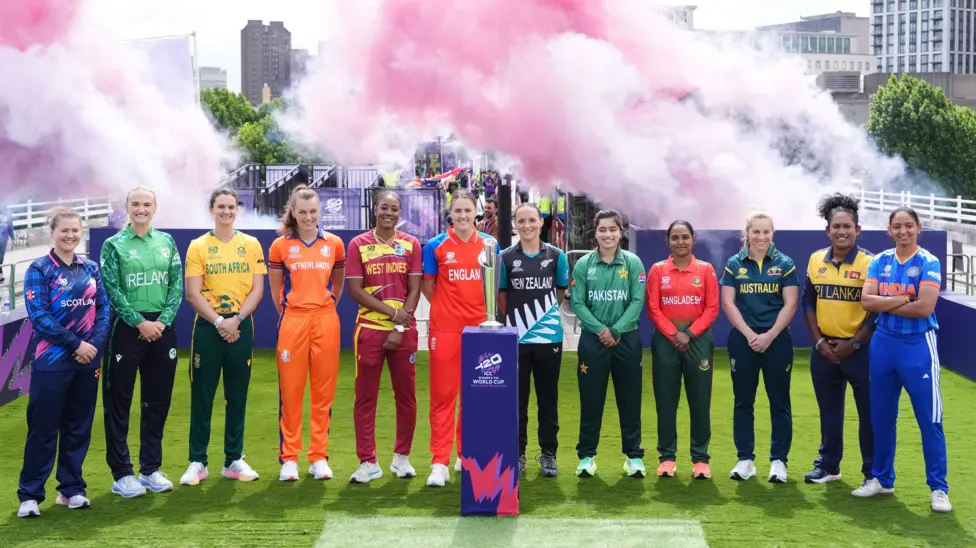
The Women’s T20 World Cup is set to begin on Friday, with host nation England facing Sri Lanka in the opening match at Edgbaston. The tournament promises to deliver exciting cricket, featuring some of the best teams in the world competing for one of the sport’s most prestigious titles.
Australia, the most successful team in the history of the competition with six titles, once again enter the tournament as strong favourites. However, they face stiff competition from several other sides, including reigning 50-over world champions India and a South African team that has consistently reached major finals in recent years. Each of these teams brings its own strengths and ambitions into the tournament, making the race for the trophy highly competitive.
England, as the host nation, will be hoping to take advantage of familiar conditions and home support. Their recent series victory against India has boosted confidence within the squad, and history is on their side, as England have never lost a World Cup tournament when hosting it. This adds an extra layer of expectation and excitement for both the players and the fans.
The competition features 12 teams divided into two groups of six. Each team will compete in a round-robin format within their group, with the top two sides advancing to the semi-finals. The tournament will culminate in the final at Lord’s on 5 July, a fitting venue for such a prestigious event.
In Group One, Australia will be aiming to reclaim their dominance after falling short in recent global tournaments. Despite their strong reputation, they were eliminated in the semi-finals of the 2024 T20 World Cup and also missed out on the title in last year’s 50-over competition. Under new leadership following Alyssa Healy’s retirement, they will be determined to prove themselves once again. All-rounder Annabel Sutherland is expected to play a key role in their campaign, and many believe Australia will ultimately emerge as champions.
India, fresh from their success in the 50-over format, have the potential to achieve even greater heights by adding a T20 title to their collection. Their players are accustomed to performing under pressure, thanks in part to the Women’s Premier League. While their batting lineup is packed with power hitters, questions remain about their bowling consistency. Being placed in a highly competitive group could pose challenges, and an early exit cannot be ruled out despite their capabilities. Bharti Fulmali is one of the players to watch for India.
South Africa, meanwhile, have developed a reputation for reaching finals but struggling to secure victories in those decisive matches. Having appeared in three consecutive world finals, they will be eager to break that pattern. The return of experienced fast bowler Shabnim Ismail strengthens their attack, especially when paired with Marizanne Kapp. Under the leadership of Laura Wolvaardt, they are a formidable side capable of reaching the latter stages, although they may fall short of lifting the trophy.
Pakistan face a difficult challenge in Group One, where they will compete against some of the strongest teams in the tournament. While their bowling attack has shown promise, their batting lineup lacks the power needed to consistently compete at the highest level. Captain Fatima Sana will be under the spotlight, as she looks to lead by example and make a strong impression. Although Pakistan may secure a few wins, progressing to the semi-finals appears unlikely.
Bangladesh share similar strengths and weaknesses with Pakistan. Their bowling unit is capable of troubling opposition teams, but their batting lacks the experience and firepower required to chase or set competitive totals against top-tier sides. Without a robust domestic system, building depth in the squad remains a challenge. Young fast bowler Marufa Akter is a player to keep an eye on as Bangladesh look to make an impact.
The Netherlands provide one of the most inspiring stories of the tournament. As a non-professional side, their qualification for the World Cup is a significant achievement. Players like captain Babette de Leede and experienced batter Sterre Kalis will play crucial roles. Despite the odds stacked against them, their participation highlights the growth of the game and offers valuable exposure at the highest level.
In Group Two, England will be aiming to capitalize on their home advantage and recent improvements. Under the guidance of head coach Charlotte Edwards, the team has adopted a strategy that emphasizes all-rounders, providing greater flexibility in both batting and bowling. Players like Freya Kemp and Dani Gibson exemplify this approach. England’s goal will be to overcome past disappointments and reach the final, with many predicting them to finish as runners-up.
New Zealand, the defending champions, enter the tournament with less pressure but also lower expectations. Their victory in 2024 came as a surprise, and they have struggled with consistency since then. Uncertainty in their batting order and reliance on key players like Sophie Devine and Melie Kerr could hinder their progress. This tournament may also mark the final appearances for several experienced players, adding an emotional dimension to their campaign.
The West Indies are known for their unpredictability, which makes them both exciting and challenging opponents. With powerful hitters like Hayley Matthews and Deandra Dottin at the top of the order, they have the potential to dominate on their day. However, inconsistency in their bowling could prove to be a weakness. If they can find balance, they may reach the semi-finals, although progressing further could be difficult.
Scotland are considered underdogs but have shown significant development in recent years. Many of their players regularly compete in domestic cricket in the UK, which has accelerated their progress. The return of Kirstie Gordon adds experience to the squad. While they may struggle to advance beyond the group stage, they have the potential to cause an upset or two.
Ireland face a challenging task in Group Two, particularly with the absence of key player Laura Delany due to injury. Their batting relies heavily on Gaby Lewis and Orla Prendergast, and maintaining consistency across matches could be difficult. Although they have shown glimpses of promise in recent series, progressing to the knockout stage appears unlikely.
Sri Lanka, England’s opponents in the opening match, have a strong bowling attack but are heavily reliant on star player Chamari Athapaththu. While she is capable of delivering match-winning performances, the team needs greater support from other players to compete effectively. Limited opportunities to play at the highest level also impact their development, making it challenging to compete against stronger teams.
Overall, the Women’s T20 World Cup promises to be a thrilling competition, showcasing a mix of established powerhouses and emerging teams. With different playing styles, strategies, and narratives, the tournament highlights the growth and diversity of women’s cricket on the global stage.
For more sports news and updates, visit: https://netsports247.com