
Football’s rule-making body is preparing to discuss a range of potential amendments to the Laws of the Game at a key meeting on Tuesday, with several proposals that could shape the way the sport is played and officiated next season. These discussions, set to take place at the International Football Association Board (Ifab) meeting in London, will cover a number of important topics, from how red cards are awarded to tweaks to offside interpretations, goalkeeper conduct, time-wasting and the continued evolution of video assistant referee (VAR) protocols. Any decisions made at this meeting will form part of the process that could lead to law changes being applied at the Fifa World Cup and in domestic leagues around the world next season.
The International Football Association Board, commonly known as Ifab, is the organisation responsible for overseeing the Laws of the Game in football. It is made up of representatives from world governing body Fifa and the football associations of England, Scotland, Wales and Northern Ireland. Each of the British associations holds one vote, while Fifa holds a block of four — giving eight votes in total. For any proposed change to be passed, it must receive at least six votes at the annual general meeting in Cardiff on 28 February. If approved, changes would formally come into effect from 1 July, although they may be adopted earlier at major tournaments such as the World Cup or in leagues that follow a calendar-year season.
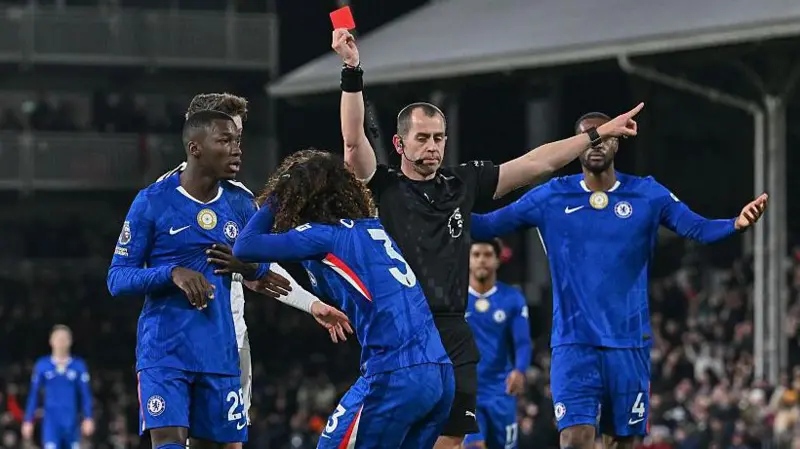
One of the most significant items under consideration relates to how red cards are awarded for denying an obvious goalscoring opportunity — an offence widely referred to by the acronym Dogso. Under the current laws, a defender is sent off only if they prevent an attacker who is clearly through on goal from scoring. In practical terms, this means the focus is on whether the player who was fouled had a direct chance to score. However, Ifab is now considering a revision that would broaden the scope of the rule so that it also covers situations where an attacker’s team-mate, rather than the fouled player, was in prime position to score.
The main change under discussion would be to add the wording “location and number of attackers” to the criteria referees must assess when judging whether a Dogso foul has occurred. This means that if a defender stops a promising attack where an off-the-ball team-mate of the fouled player was well-placed to score, the foul could be judged as denying an obvious goalscoring opportunity and result in a red card — even if the player who was fouled did not have a direct shot on goal themselves. Proponents of this change argue that it better reflects the dynamic nature of modern football, where quick passing and team movement often create goalscoring chances that involve several attackers rather than a single player running through on goal. By considering the positioning and number of attackers, referees could apply the law in a way that acknowledges these collective attacking scenarios.
Another linked proposal under scrutiny is whether the current requirement to issue a yellow card after a Dogso foul should remain when the referee plays advantage and a goal is subsequently scored. Presently, even if the attacking team benefits from the advantage and finds the net, the defender who committed the foul is still supposed to be cautioned. Ifab is now exploring whether this automatic booking should be removed, on the basis that if an attack successfully results in a goal, the attacking team has ultimately not been denied a scoring opportunity. In such cases, critics of the current wording argue, a further disciplinary sanction may be unnecessary.
To illustrate this point, a notable example from last season involved Aston Villa’s Leon Bailey fouling Liverpool’s Mohamed Salah when Salah was in a clear scoring position. The referee missed the incident, and the ball ran free to Darwin Nunez, who went on to score. Under the current laws, Bailey should have been shown a yellow card for denying Salah an obvious goalscoring opportunity — even though a goal was scored anyway. The proposed adjustment would mean no yellow card in such instances, recognising that the team’s attack was not ultimately thwarted.
Despite significant attention on Dogso revisions, one of the more talked-about proposals — the so-called “daylight” offside idea championed by Arsene Wenger — is now expected to be shelved. Wenger had suggested altering the offside law so that an attacker could only be adjudged offside if part of their body clearly in line with the last defender was closer to the goal than both the ball and the defender. In essence, the aim was to ensure there was clearer “daylight” between the attacker and the defender before an offside flag was raised, which supporters hoped would lead to more attacking play and reduce tight VAR decisions. However, this concept has struggled to gain wide support, and Ifab members are likely to favour alternative ideas that they see as fairer to defensive teams and less likely to produce fresh controversies. The exact alternative under consideration hasn’t been fully detailed yet, but the mood within Ifab seems to be toward preserving a balanced offside framework rather than pursuing radical reinterpretation.
Goalkeeper conduct is another area that will be debated. Time-wasting by goalkeepers, particularly later in matches when their teams are protecting a lead, has become an increasing point of frustration for fans, coaches and opponents alike. One idea being discussed is the introduction of tactical timeouts or stricter limits on how long a goalkeeper can hold onto the ball before releasing it. Supporters of this proposal argue that it could reduce unnecessary delays in play and improve the flow of matches, but such an adjustment would represent a fairly bold change and is likely to attract significant discussion about its practical implications.
Time-wasting more generally remains a broader concern for the law-makers. This includes delays in restarting play after stoppages, taking excessive time over throw-ins and free-kicks, and players lingering on the pitch during substitutions. Referees already have some discretion to penalise such actions under the current laws, but Ifab is considering whether clearer guidelines or strengthened enforcement tools are needed to crack down on deliberate delays and ensure that the game remains fast-paced and entertaining.
The use of VAR continues to be a hot topic across world football, and although no sweeping overhaul is expected, Ifab is set to examine potential refinements to VAR protocols. Discussions may include clarifying when VAR should intervene and improving the transparency of decisions for players, coaches and supporters. Communication has often been a sticking point, with calls for more detailed explanations and greater consistency across competitions. The aim of any tweaks would be to retain the benefits of video review — such as correcting clear errors — while cutting down on unnecessary stoppages or confusing outcomes.
Tuesday’s London meeting will be a key step in the process of debating and refining these proposals, but it is not the final stage. Any measures that receive support at this forum will then need approval at Ifab’s annual general meeting on 28 February in Cardiff. At that meeting, votes will be cast by each of the UK’s football associations and by Fifa’s four-vote block, and decisions will be made on whether to adopt any proposed law changes.
If approved, the updated laws would officially take effect from 1 July, although competitions with different calendars could choose to implement them earlier, including the Fifa World Cup and leagues that begin new seasons before July. This means that some of these potential changes could be seen in competitive action sooner than later.
Overall, these discussions reflect Ifab’s ongoing efforts to adapt football’s laws to the evolving demands of the modern game. By looking at how red cards are awarded, fine-tuning disciplinary regulations, tackling time-wasting and continuing to refine VAR, the sport’s lawmakers are aiming to balance fairness, clarity and entertainment value. As always, any changes will likely stimulate debate among fans, pundits and professionals alike — which is exactly the kind of passionate discussion that football thrives on.
For more updates on football law changes and the latest sports news, visit https://netsports247.com.