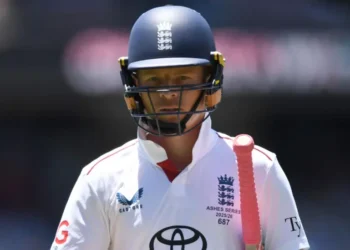

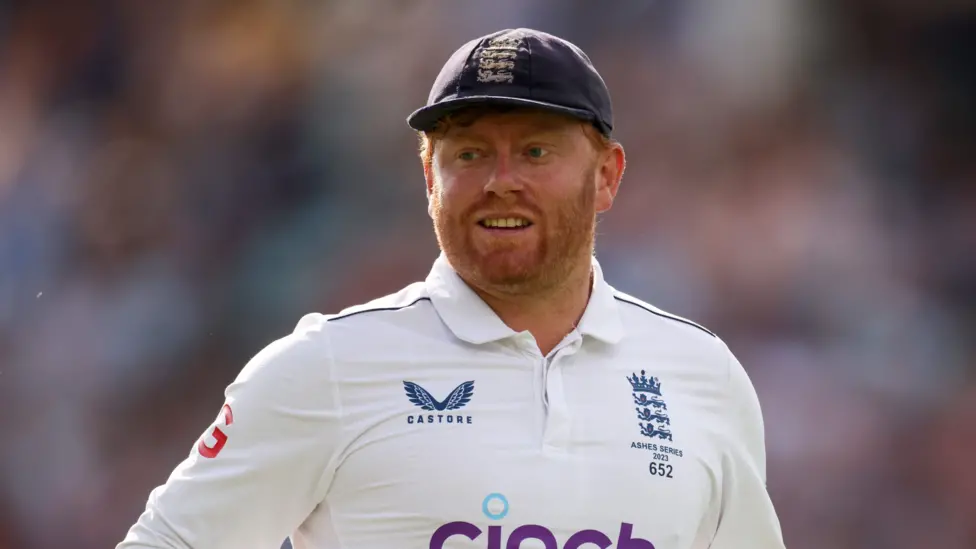
Jonny Bairstow has openly criticized the current England cricket setup, arguing that the team environment has lost an essential element of care and accountability. His comments come amid continued fallout from England’s disappointing performance in the The Ashes, where they suffered a heavy 4-1 defeat that exposed multiple issues both on and off the field.
Despite the poor نتائج, it was recently confirmed that head coach Brendon McCullum, managing director Rob Key, and Test captain Ben Stokes will all remain in their roles. This decision has sparked debate among fans and former players, with Bairstow now adding his voice to the growing criticism.
Bairstow, who was once a central figure in England’s resurgence under McCullum and Stokes in 2022, believes that the current system lacks genuine concern for players. According to him, the idea that everyone in the setup truly “cares” is misleading. He argues that once a player is part of the system, they are supported and included, but as soon as they are dropped, they are effectively forgotten.
This perspective is shaped by his own experience. After enjoying a remarkable run of form in 2022—scoring four centuries in the early matches of the new regime—Bairstow suffered a serious leg injury later that year. Although he fought his way back into the side and featured in the 2023 Ashes, his performances were inconsistent, and he was eventually dropped in 2024. His last Test appearance came against India national cricket team in March 2024, marking his 100th Test cap.
The England and Wales Cricket Board (ECB) conducted a review following the Ashes defeat, highlighting issues such as poor planning, underwhelming performances, and off-field distractions. The tour exposed weaknesses in both squad management and preparation, raising serious questions about the team’s direction.
One of the major concerns raised by Bairstow relates to player fitness and workload management. He pointed out that several players, particularly fast bowlers, were selected despite lacking adequate match practice. For instance, Mark Wood was included in the squad even though he had missed the entire domestic summer due to knee surgery. As a result, Wood was only able to play one Test before breaking down with another injury.
Bairstow believes this approach is flawed. He argues that players cannot be expected to perform at the highest level without consistent game time and proper preparation. Fast bowlers, in particular, require regular overs to maintain fitness and rhythm. Expecting someone like Wood—who bowls at extreme pace—to return from injury and immediately perform without sufficient workload is unrealistic and increases the risk of further injuries.
He expressed sympathy for Wood, stating that the system had not treated him fairly. According to Bairstow, the lack of proper planning and support contributed directly to the bowler’s struggles. This reflects a broader issue within the setup, where players are sometimes pushed into high-pressure situations without adequate preparation.
Another key criticism revolves around team selection and the perceived lack of competition for places. During the Ashes, England persisted with underperforming batters such as Zak Crawley and Ollie Pope, rather than giving opportunities to players who had excelled in county cricket. This decision was later acknowledged by Rob Key, who admitted that the management may have placed too much emphasis on loyalty.
Bairstow argues that this approach can lead to complacency. When players feel secure in their positions without strong competition, their performance levels may drop. He emphasized the importance of accountability, suggesting that players need to be constantly challenged to maintain high standards. Without that pressure, the overall quality of the team can decline.
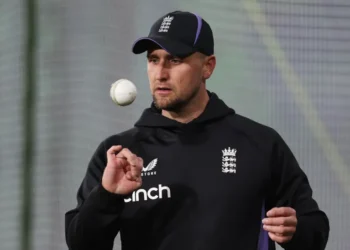
This sentiment is echoed by other players as well. Liam Livingstone recently criticized the England setup, revealing that he was told he “cares too much” when he expressed concerns about team culture. Such comments have raised questions about whether the current environment discourages constructive criticism and honest feedback.
When asked about his own chances of returning to the England side, Bairstow appeared uncertain. He suggested that based on recent patterns, a recall may not be part of the selectors’ plans. However, he hinted that strong performances in domestic cricket—such as scoring multiple centuries early in the season—could force the issue and reopen the conversation.
In the meantime, Bairstow has focused on his role in county cricket. He captained Yorkshire County Cricket Club in the County Championship last season and is set to continue in that role, as well as leading the team in the T20 Blast. His involvement at the county level highlights the importance of domestic cricket as a pathway for players seeking to return to the international stage.
The relationship between the England setup and county cricket has also come under scrutiny. In response to criticism, the ECB has announced the creation of a “county insight group,” aimed at improving communication and ensuring that domestic performances are given greater consideration in selection decisions.
While Bairstow welcomed this initiative, he questioned why the disconnect had occurred in the first place. He يرى that rebuilding relationships suggests there were underlying issues that had been ignored for some time. For players in county cricket, the perception that the England team had become a “closed shop” has been a source of frustration.
Gavin Hamilton, Yorkshire’s general cricket manager, acknowledged these concerns. He noted that there could soon be several खुली positions in the Test team, which would create opportunities for players performing well at the domestic level. However, he also admitted that in recent years, it may have felt difficult for county players to break into the national side.
Hamilton emphasized that if the Test team were consistently successful, limited opportunities would be understandable. However, given England’s struggles, it is only natural for players and fans to question selection decisions and demand greater inclusivity.
Ultimately, Bairstow’s comments highlight deeper issues within English cricket. His call to “bring the care back” is not just about individual players—it reflects a broader concern about culture, accountability, and long-term planning. For England to rebuild after their Ashes disappointment, they must address these concerns and create an environment where players feel supported, challenged, and valued.
As the team looks ahead, the focus will be on learning from past mistakes and implementing meaningful changes. Whether the current leadership can deliver those improvements remains to be seen, but one thing is clear: voices like Bairstow’s are pushing for a more balanced and player-focused approach.
For more cricket news, updates, and expert analysis, visit: https://netsports247.com/