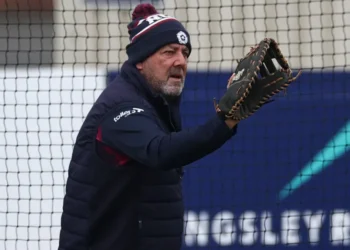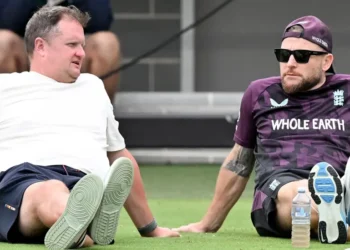

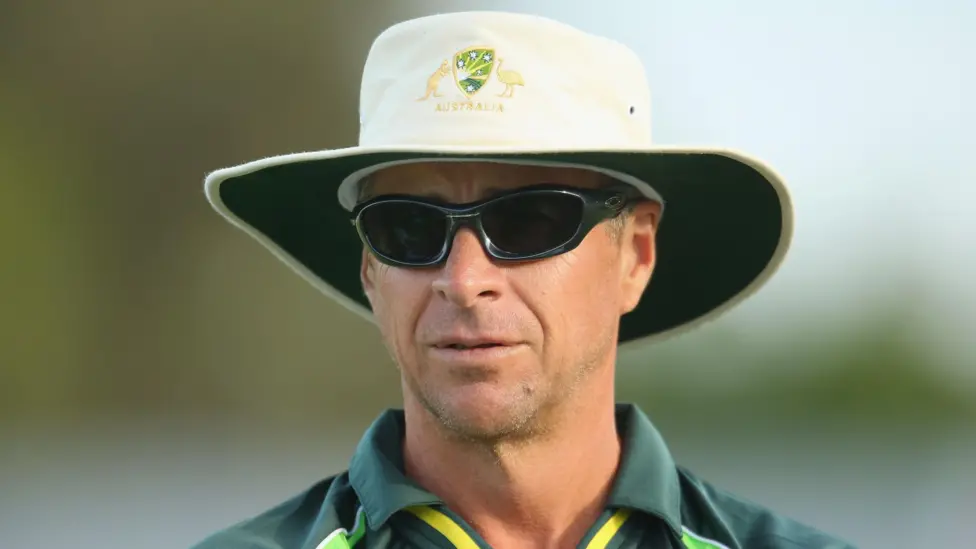
England have strengthened their coaching structure once again by bringing back Troy Cooley as their national pace-bowling lead, marking a notable return for one of the most influential figures from English cricket’s modern history.
The 60-year-old Australian, who played a key role in England’s legendary 2005 Ashes triumph, officially rejoins the set-up nearly two decades after departing in 2006. His reappointment comes during a period of transition for England’s coaching staff, as head coach Brendon McCullum continues to reshape the backroom team across formats.
While England recently recruited Carl Hopkinson as a short-term fielding coach following a difficult Ashes series plagued by dropped catches, Cooley’s return is not a reaction to England’s 4-1 defeat in Australia. Instead, it is understood that discussions around his comeback had been ongoing for some time and form part of a broader strategy to strengthen England’s fast-bowling pathway.
England have been without a permanent fast-bowling coach attached to the men’s senior team since Jon Lewis stepped away during McCullum’s first summer as Test coach in 2022. In the absence of a full-time specialist, several experienced figures—including James Anderson, Tim Southee and David Saker—have provided support in more informal, consultancy-style roles.
Cooley’s appointment brings greater structure and continuity. According to an official statement from the England and Wales Cricket Board (ECB), he will be “responsible for the development and coaching of fast bowlers across England Men, England Lions and Young Lions”. His remit covers the entire fast-bowling pathway, from emerging talent to established international players.
Although Cooley will spend time working directly with the senior men’s team, his role is not limited to the Test side alone. England have indicated that additional fast-bowling coaches may still be brought in when required, depending on schedules and specific needs. Cooley will operate above Neil Killeen, who was appointed England’s elite fast-bowling coach in 2023 and remains a key figure in the development system.
Since leaving England nearly 20 years ago, Cooley has built an impressive coaching résumé. He has worked extensively with Cricket Australia, contributing to their pace-bowling depth, and has also been involved with India’s National Cricket Academy. His experience across different cricketing cultures and environments is expected to benefit England’s next generation of fast bowlers.
Despite the appointment adding another senior figure to the coaching structure, McCullum had previously aimed to streamline England’s backroom staff. However, recent events have highlighted areas where specialist input is required—particularly in fielding and bowling.
England’s Ashes tour was undermined by poor catching, with the team dropping 18 chances across the series. The lack of a dedicated fielding coach during that campaign was widely questioned, prompting the temporary return of Carl Hopkinson.
Hopkinson initially joined England’s coaching group after the Ashes to address those shortcomings, but he departed at the end of 2024. His exit coincided with McCullum expanding his role to include England’s white-ball teams alongside his responsibilities as Test coach.
Now, Hopkinson is set to return once again, this time focusing on the T20 leg of England’s tour of Sri Lanka and the World Cup that follows. His reappointment reflects England’s belief that specialist fielding coaching can make a decisive difference, especially in limited-overs cricket.
England’s white-ball captain Harry Brook underlined that importance, stressing how fine margins often determine results in shorter formats. “In white-ball cricket it makes an even bigger difference—you can win or lose a game from a dropped catch,” Brook explained. “We felt it was a good decision to bring in a fielding coach and try to make that area of our game a little more neat. It can win you a game.”
Brook also praised Hopkinson’s expertise, adding that the squad is looking forward to working with him again as England prepare for major upcoming tournaments.
The combination of Cooley’s return and Hopkinson’s reappointment signals a subtle shift in McCullum’s approach. While the original aim was to reduce the size of the backroom team, recent results have reinforced the value of targeted, specialist coaching—particularly in areas such as fast bowling and fielding, where small improvements can have a significant impact.
With England entering a busy period across all formats, Cooley’s experience, leadership and technical knowledge are expected to play a key role in shaping the future of England’s pace attack. His return also brings a sense of continuity, linking the success of the 2005 Ashes era with England’s ambitions in the modern game.
👉 Read more at: https://netsports247.com