
Thomas Tuchel and his England national football team were given a stark reminder of how crucial Harry Kane is to their success after suffering a disappointing defeat against Japan national football team at Wembley. The performance raised serious concerns about England’s attacking capabilities, especially with the World Cup fast approaching.
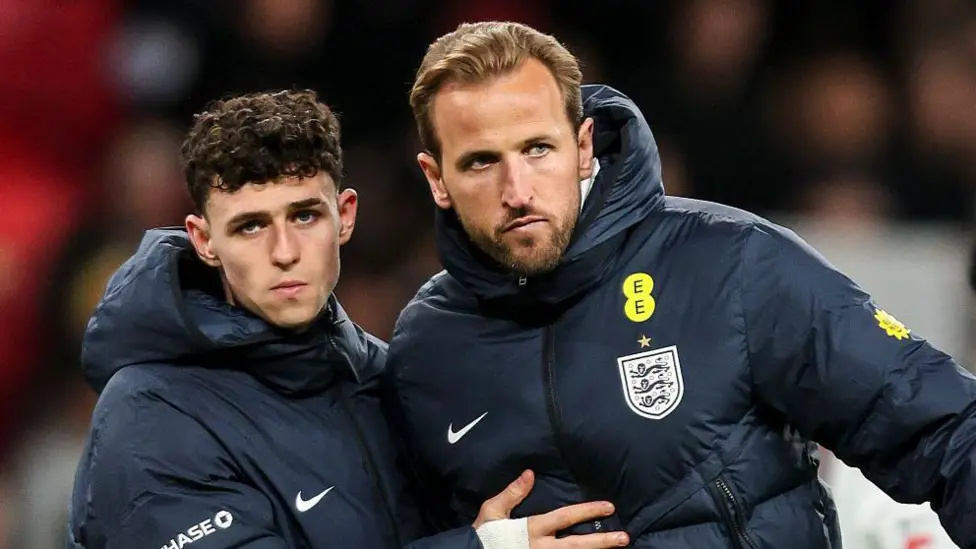
Kane, England’s captain and all-time leading goalscorer, was not included in the squad due to what was described as a minor training issue. Although he was present at Wembley, he was rested and did not participate in the match. However, even a short-term absence from such an influential player was enough to expose significant weaknesses in England’s attacking setup.
The result and performance suggested that Kane’s presence may be the key factor determining whether England can achieve success at the upcoming World Cup. Without him, the team appeared to lack direction, creativity, and a clinical edge in front of goal. This has raised concerns about what might happen if he were unavailable for more important fixtures.
England had already shown signs of struggle without Kane in their previous match against Uruguay national football team, where they were held to a draw. The defeat against Japan only reinforced the notion that Kane is irreplaceable within the current squad.
The statistics underline his importance. Since making his international debut in 2015, Kane has either scored or assisted a significant portion of England’s goals. His contributions go beyond just finishing chances; he plays a vital role in linking up play, creating opportunities, and leading the team on the pitch.
With just over two months remaining before England’s World Cup opener against Croatia national football team, any potential injury to Kane would represent a major setback. The lack of a reliable alternative striker has become a pressing issue for Tuchel and his coaching staff.
During this international break, several players were given opportunities to stake a claim as Kane’s backup. Dominic Solanke and Dominic Calvert-Lewin were among those tested in the traditional number nine role. However, neither player managed to make a convincing case for themselves, leaving doubts about their ability to step up on the biggest stage.
Tuchel also experimented with a different tactical approach by deploying Phil Foden as a false nine. While Foden worked tirelessly and showed commitment, the experiment ultimately proved ineffective. The system failed to produce the desired attacking output, and Tuchel abandoned the idea before the hour mark, opting to bring on a more conventional striker.
This tactical adjustment highlighted the lack of viable solutions available to England in Kane’s absence. Foden, despite his technical ability, is not a natural striker, and asking him to fill that role disrupted the team’s attacking structure. The experiment appeared more like a desperate attempt to compensate for the absence of a genuine goal scorer.
As the match progressed, England’s frustration became increasingly evident. In the latter stages, they resorted to a more direct and less sophisticated approach, sending long balls forward in an attempt to create chances. Defender Harry Maguire was even pushed forward to use his physical presence in the opposition box.
While this tactic briefly threatened Japan’s defense, it ultimately lacked finesse and effectiveness. One notable moment saw Maguire come close to scoring, only for his header to be cleared off the line by Yukinari Sugawara. However, such moments were rare, and England struggled to create meaningful opportunities throughout the game.
The match was part of a series of friendlies organized as a send-off before the World Cup. However, instead of boosting confidence, the performances against Uruguay and Japan raised more questions than answers. The defeat was met with frustration from fans, many of whom expressed their disappointment with boos at the final whistle.
Despite the negative outcome, Tuchel defended his team by emphasizing the importance of facing strong opponents in preparation for the tournament. Matches against high-quality teams like Uruguay and Japan were intended to provide valuable insights and help identify areas for improvement.
However, the central issue remains unresolved: what happens if Kane is unavailable? Even Tuchel appears to lack a clear answer. The drop in quality when Kane is absent is significant, and it highlights a broader problem within English football—the shortage of top-level strikers.
Former England goalkeeper Paul Robinson commented on the situation, describing it as a major concern for both the team and its supporters. He noted that none of the alternative strikers have demonstrated the ability to replace Kane effectively, which explains the experimental tactics being used.
Tuchel responded to questions about reliance on Kane by drawing comparisons to other international teams. He pointed out that Lionel Messi is central to Argentina’s success, just as Cristiano Ronaldo plays a key role for Portugal. According to Tuchel, depending on a world-class player is a normal aspect of international football.
While this comparison is valid, it does not fully address the issue. Teams like Argentina and Portugal still have additional attacking options capable of stepping up when needed. England, on the other hand, appear to lack depth in the striker position.
The decline in the number of English strikers performing at the highest level has become increasingly apparent. In the current Premier League season, only a small number of English forwards have made a significant impact. Among them, Liam Delap stands out as one of the few younger players showing promise.
Veteran forward Danny Welbeck and Calvert-Lewin are among the limited number of English strikers to have reached double figures in goals this season. This is a stark contrast to earlier eras, when a much larger pool of domestic strikers consistently delivered high goal tallies.
The situation highlights a long-term issue within English football development. The lack of emerging strikers capable of competing at the highest level has left the national team heavily reliant on Kane. As he approaches the later stages of his career, the need to develop a successor becomes increasingly urgent.
Kane’s move to Bayern Munich in 2023 has also had an impact, reducing his presence in the Premier League and further emphasizing the gap in quality among English forwards. While his performances in Germany have remained strong, the national team’s dependence on him continues to grow.
In conclusion, England’s defeat to Japan served as a sobering reminder of their reliance on Harry Kane. The match exposed significant weaknesses in attack and highlighted the lack of viable alternatives. As the World Cup approaches, ensuring Kane’s fitness will be crucial to England’s hopes. Without him, their chances of success appear significantly diminished.