
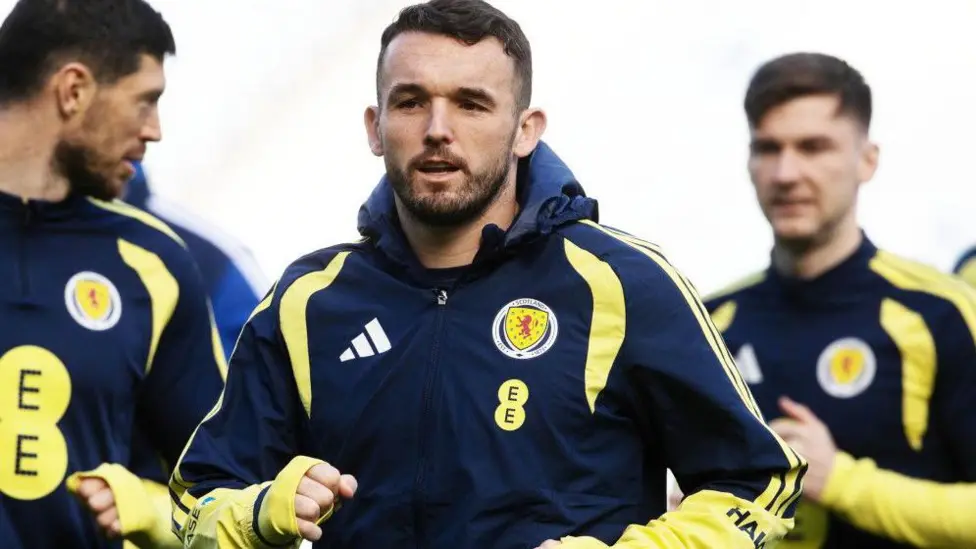
John McGinn is preparing to mark a remarkable milestone in his international career, nearly a decade after earning his first cap for Scotland national football team. However, just a few months ago, the experienced midfielder feared he might miss out on the most significant moment of his career—representing his country at a FIFA World Cup after a 28-year absence.
Now 31 years old, McGinn has become one of Scotland’s most reliable and influential players, earning 84 caps since his debut. Yet, his journey to this point has not been without challenges. Earlier this year, he faced a major setback when he sustained a knee injury while playing for Aston Villa in a match against Everton.
The injury occurred in mid-January and immediately raised concerns about his availability for the upcoming World Cup. McGinn recalled the moment vividly, describing how he knew something was wrong as soon as it happened. After attempting to block a pass early in the game, he felt discomfort in his knee and quickly signaled for medical assistance.
At the time, McGinn feared the worst. Having seen other players suffer long-term knee injuries, he worried that his World Cup dream might be over. The uncertainty during the initial assessment period only added to his anxiety. He admitted that he was genuinely frightened, as such injuries can often require lengthy recovery periods.
Fortunately, medical scans revealed that the damage was less severe than initially feared. While surgery was still necessary—the first major operation of his career—the prognosis was relatively positive. Doctors estimated a recovery period of six to eight weeks, offering McGinn hope that he could return in time for crucial matches.
Initially, McGinn considered trying to continue playing without undergoing surgery, given the importance of the fixtures for his club. However, as the days passed, swelling in his knee increased, and it became clear that medical intervention was unavoidable. He ultimately chose to prioritize his long-term health, acknowledging that at this stage of his career, taking unnecessary risks would be unwise.
His recovery process proved to be both challenging and rewarding. McGinn worked tirelessly to regain fitness and managed to return to action ahead of schedule, completing his rehabilitation in just six weeks. His determination paid off, as he quickly made an impact upon his return to the pitch.
During his absence, Aston Villa experienced a dip in form, winning only one of seven matches. However, since McGinn’s return, the team has shown significant improvement, securing three victories in four games. The midfielder has played a key role in this resurgence, even contributing goals in consecutive matches.
Although Aston Villa’s hopes of winning the Premier League title appear slim, with Arsenal holding a substantial lead, the club remains firmly in contention for a top-four finish. They are currently competing closely with Manchester United and Liverpool for a place in the UEFA Champions League.
McGinn believes this season is crucial for Aston Villa, as the club aims to establish itself among England’s elite teams. He reflected on the disappointment of narrowly missing out on Champions League qualification in the previous campaign, a setback that has motivated the squad to push harder this season.
In addition to their domestic ambitions, Aston Villa is also preparing for a Europa League quarter-final clash against Bologna. McGinn sees this as another opportunity for the team to demonstrate its progress and compete at a high level.
Interestingly, McGinn draws parallels between Aston Villa’s resurgence and Scotland’s recent success. Both teams have worked hard to return to positions of prominence after years of underachievement. For McGinn, being part of this transformation at both club and international levels is a source of immense pride.
Reflecting on his international career, McGinn recalled his debut in March 2016 under then-manager Gordon Strachan. Scotland secured a 1-0 victory over Denmark in that match, marking the beginning of McGinn’s journey with the national team.
At the time, expectations were relatively low, as Scotland had not qualified for a major tournament. However, the team has since undergone significant development, evolving into a more competitive and cohesive unit. McGinn believes the progress made over the years has been remarkable.
Despite acknowledging that Scotland’s recent qualifying campaign may not have featured their best performances, McGinn emphasized that the team achieved its primary objective—securing qualification for the World Cup. For a nation often considered an underdog, this accomplishment is a testament to their determination and resilience.
One of the key strengths of the current Scotland squad is its leadership. Players such as Andy Robertson, Scott McTominay, and Ryan Christie bring valuable experience from competing at high levels. Many members of the squad have also served as captains for their respective clubs, contributing to a strong leadership culture within the team.
McGinn believes that this combination of experience, character, and belief sets Scotland apart. While they may lack the resources and depth of larger footballing nations, their unity and determination compensate for these limitations. According to him, these qualities cannot be easily replicated or purchased—they are built over time through shared experiences.
Looking ahead to the World Cup, McGinn sees the tournament as an opportunity for Scotland to prove themselves on the global stage. Having participated in recent major tournaments without fully showcasing their potential, the team is eager to deliver stronger performances this time.
For McGinn personally, the journey has been nothing short of extraordinary. He admitted that he never imagined he would one day represent Scotland at the highest level. The memory of seeing his name on the team sheet for the first time remains vivid, filled with excitement and nervous energy.
Now, nearly ten years later, the prospect of playing in a World Cup feels surreal. It represents the culmination of years of hard work, perseverance, and dedication. For McGinn, it is a dream come true and a moment he hopes to cherish for the rest of his life.
Off the field, football success runs in the McGinn family. His brothers have also enjoyed notable achievements this season. Paul McGinn has been a key figure in defense for Motherwell, while Stephen McGinn is making strides as a first-team coach with Falkirk.
Their collective success has brought a sense of joy and pride to the family, with frequent positive updates shared in their group chats. McGinn described this season as one of the most rewarding periods for all three brothers.
In conclusion, John McGinn’s story is one of resilience and determination. From overcoming injury setbacks to playing a pivotal role in Scotland’s World Cup qualification, he has demonstrated unwavering commitment to his club and country. As Scotland prepares for its long-awaited return to the World Cup, McGinn stands ready to contribute to what could be a historic chapter in the nation’s football journey.