
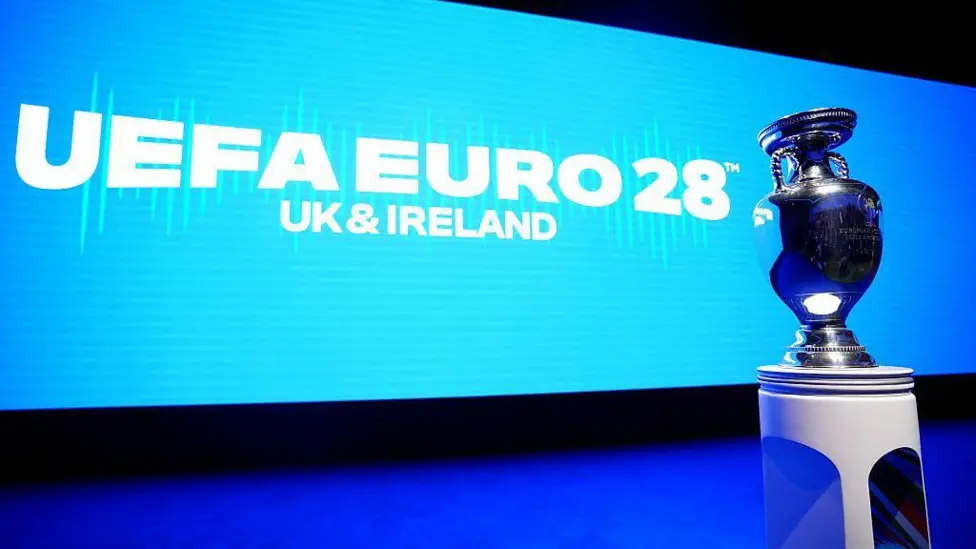
UEFA is preparing to make football more accessible for supporters by largely freezing ticket prices for Euro 2028. This move stands in clear contrast to the significantly higher and often controversial pricing structure seen at the upcoming FIFA World Cup 2026.
The European Championship, which will be hosted across England, Scotland, Wales, and the Republic of Ireland, aims to prioritize affordability for fans. UEFA has confirmed that around 40% of all tickets will fall under its “Fans First” categories, ensuring that a significant portion of supporters can attend matches without facing excessive costs.
Looking back at Euro 2024 in Germany, ticket prices for group-stage matches were set at 30 euros (£26) for the lowest tier and 60 euros (£52) for the next level. UEFA’s intention for Euro 2028 is to maintain similar pricing, keeping entry-level tickets under £30 and the next tier below £60. This approach reflects a commitment to maintaining affordability despite rising costs in global sports events.
There will be four primary ticket categories available for Euro 2028, along with a limited number of premium VIP+ packages. These higher-end offerings are expected to generate additional revenue, allowing UEFA to subsidize ticket prices for general supporters. While pricing for the more expensive categories has not yet been finalized, it is likely they will remain competitive compared to recent tournaments.
In contrast, ticket pricing for the 2026 World Cup has drawn widespread criticism. Organised by FIFA, the tournament in North America has seen steep costs for fans. Initially, the cheapest group-stage tickets for matches involving England were priced at $220 (£167), while premium seats reached as high as $700 (£523). This significant price gap has led to frustration among supporters.
When comparing the two tournaments, the difference becomes even more apparent. A fan attending Euro 2028 could potentially watch all three group-stage matches for roughly the same price as a single mid-tier World Cup ticket. This stark contrast highlights UEFA’s efforts to keep football accessible to a broader audience.
Under pressure from fans and criticism from various groups, FIFA eventually introduced a limited allocation of lower-priced tickets at $60 (£45). However, these tickets represent only a small fraction of the total available, covering all 104 matches in the tournament. As a result, many supporters still find World Cup attendance financially challenging.
Beyond ticket prices, additional costs associated with attending World Cup matches have also sparked controversy. Reports suggest that parking fees at stadiums in the United States are exceptionally high. On average, fans may need to pay around $175 (£133) for parking, with prices at venues like MetLife Stadium reaching $225 (£171) for group-stage matches. In comparison, UEFA’s ticket pricing structure means that multiple Euro 2028 matches could cost less than a single parking space at the World Cup.
UEFA is also making efforts to improve ticket availability for fans of participating nations. Approximately 10,000 tickets per country will be reserved for each group-stage match, ensuring that supporters have a fair opportunity to attend games involving their teams. This is significantly higher than the allocation provided by FIFA, which has offered fewer than 4,000 tickets per national association despite larger stadium capacities.
Another major difference lies in pricing strategies. FIFA has implemented dynamic pricing, meaning ticket costs can fluctuate based on demand. This approach often leads to higher prices as matches become more popular. UEFA, on the other hand, has confirmed that it will not use dynamic pricing for Euro 2028, providing greater transparency and stability for fans.
Accessibility for disabled supporters is another area where UEFA and FIFA differ. At the World Cup, disabled fans are required to pay full ticket prices and are not guaranteed a complimentary ticket for a companion. UEFA has taken a more inclusive approach, allowing disabled supporters to purchase tickets in the lowest price categories and request a free companion ticket if needed.
Resale policies further highlight the contrast between the two organizations. UEFA plans to allow ticket resales only at face value, preventing price inflation in secondary markets. FIFA’s system, however, permits resale at higher prices, with the organization taking a 30% commission—split equally between buyers and sellers. This has been a point of contention among fans who feel the system prioritizes profit over accessibility.
Details regarding the full pricing structure and ticket sales timeline for Euro 2028 are expected to be announced in autumn 2027. The first sales phase will likely begin shortly after the tournament draw in December. As with most major competitions, ticket prices are expected to increase as the tournament progresses into the knockout stages.
However, even the most expensive tickets at Euro 2028 are expected to remain far more affordable than those at the World Cup. For example, premium tickets for the semi-finals and final of the World Cup at MetLife Stadium have been priced as high as £3,119. In contrast, equivalent tickets at Euro 2024 cost just 95 euros (£82.50), illustrating the vast difference in pricing philosophy.
Euro 2028 will be held across multiple iconic venues. In England, matches will take place at stadiums such as Everton Stadium, Manchester City’s Etihad Stadium, St James’ Park, Tottenham Hotspur Stadium, Villa Park, and Wembley Stadium. Scotland will host games at Hampden Park in Glasgow, while Wales will use the National Stadium in Cardiff. The Republic of Ireland will host matches at Dublin Arena.
Overall, UEFA’s approach to Euro 2028 reflects a clear effort to prioritize fans and maintain the traditional accessibility of football. By freezing ticket prices, increasing allocations, and ensuring fair resale practices, the organization aims to create a more inclusive and enjoyable experience for supporters.
In contrast, FIFA’s pricing strategies for the World Cup have raised questions about the commercialization of the sport and its impact on ordinary fans. As the two tournaments approach, the differences in their approaches may shape future expectations for how major sporting events are organized and priced.