
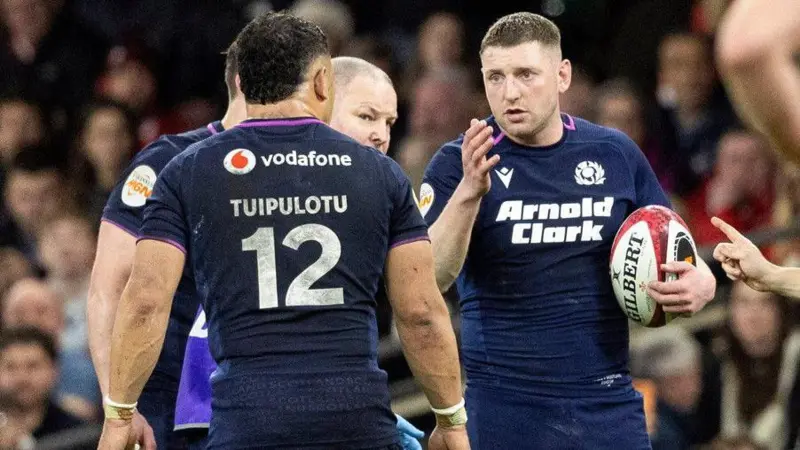
When unbeaten France national rugby union team travel to Murrayfield Stadium this Saturday for the penultimate round of the Six Nations Championship, Scotland will face their toughest examination of the campaign. Every dimension of their performance — tactical awareness, physical resilience, aerial security, and mental sharpness — will be pushed to its limits.
France, the reigning champions, have swept aside Ireland, Wales, and Italy in commanding fashion. They remain the only side still capable of achieving a Grand Slam this year. Scotland and England are the final obstacles standing between Fabien Galthie’s team and a clean sweep.
For Scotland, however, the stakes are equally high. A victory would not only derail France’s perfect run but would also place Gregor Townsend’s side in contention for their first-ever Six Nations title heading into a decisive final-round clash in Dublin. To make that dream realistic, Scotland must deliver precision rugby across several crucial areas.
The Battle in the Air
Modern Test rugby has evolved significantly since adjustments to the escort rule placed greater emphasis on contestable kicking. France have mastered this area throughout the tournament.
They have kicked more frequently than any other team in this year’s Six Nations. More impressively, they have recovered possession from their own kicks at a higher rate than their rivals — nine more successful regathers than Ireland, who sit next best in that metric.
France’s aerial dominance is not simply about territory; it is a genuine attacking weapon. They regularly turn high balls into scoring opportunities. In their recent victory over Italy, flying winger Louis Bielle-Biarrey capitalised after captain Antoine Dupont reacted sharply to loose ball chaos created by an aerial contest involving Theo Attisogbe.
Scotland, to their credit, have also been efficient under the high ball. They rank second in percentage of retained kicks. Scrum-half Ben White leads the individual standings for regathered kicks with 10 successful takes.
Earlier in the tournament, Kyle Steyn and Jamie Dobie played pivotal roles in winning aerial contests against England. Dobie’s campaign was unfortunately cut short through injury, but Scotland still possess options.
Duhan van der Merwe returned against Wales, while Darcy Graham made an immediate impact off the bench, finishing a crucial try after Finn Russell took a lightning-quick restart.
There is also speculation that Glasgow’s Kyle Rowe could feature in the back three alongside Blair Kinghorn and Steyn. Rowe’s versatility — comfortable at full-back or wing — combined with his strength under high balls and counter-attacking instincts, could prove valuable.
Regardless of selection, Scotland must be close to flawless. France do not rely solely on towering kicks; they also deploy cross-field chips, clever dinks, and grubbers that exploit narrow defensive alignments. Defensive positioning in the backfield will be just as important as winning the initial contest.
Matching France’s Power Game
Although France have dazzled with their flair, their traditional physical dominance remains a cornerstone of their success.
Second-row Emmanuel Meafou, standing 6ft 8in and weighing 145kg, epitomises their size advantage. Combined with a dynamic back row, France have carried for more metres than any other side in the Championship and average more gain per carry.
Defensively, they boast the six most dominant tacklers in the tournament. Their collisions consistently halt opposition momentum and create turnover opportunities.
In last year’s meeting in Paris, Scotland competed fiercely for 60 minutes. A disallowed try for Huw Jones and a costly knock-on from Graham that led to a French counter-attack shifted the balance. Ultimately, France’s physical superiority told in the final quarter, allowing them to pull clear and clinch the title.
To avoid a repeat, Scotland must withstand sustained physical pressure. Home support at Murrayfield will help fuel their energy levels. Bench impact will also be crucial.
One major factor could be the fitness of number eight Jack Dempsey. Initially expected to miss the remainder of the tournament with a bicep injury sustained against England, Dempsey has returned to the squad and may feature. As Scotland’s most forceful ball carrier, his presence would add direct power to match France’s heavy artillery.
Meanwhile, flanker Rory Darge has recorded eight turnovers — the highest in the competition. Slowing France’s ruck speed could disrupt their rhythm and limit Dupont’s influence.
Scotland also lead the Championship for fewest missed tackles. That defensive accuracy must continue. Set-piece solidity, particularly at scrum and lineout, will be vital to prevent France from building platforms for sustained pressure.
The Importance of a Fast Start
Perhaps the most critical lesson from Scotland’s campaign so far is the need for a sharper beginning.
Against Italy in torrential Rome conditions, Scotland were punished for a sluggish opening. In Cardiff, they again found themselves under pressure before rallying late.
France, by contrast, have exploded out of the blocks in every fixture. They have scored six tries within the opening quarter across their three matches. Ireland trailed 22-0 by half-time in Paris. Wales conceded inside 90 seconds. Italy were 19 points down before the half-hour mark.
If Scotland allow France early momentum, the contest could be effectively decided before it truly settles.
Townsend’s men demonstrated what is possible with their blistering 17-0 start against England. Replicating that intensity, accuracy, and discipline is essential. France are unlikely to be as forgiving as England were, but early scoreboard pressure could alter the psychological dynamic.
The Bigger Picture
Beyond tactical details lies a broader narrative. Scotland have never lifted the Six Nations title outright. A win over France would send them into the final weekend in Dublin with history within reach.
To achieve that, they must win the aerial exchanges, blunt France’s power game, and begin with ruthless intent. They must combine composure with aggression, precision with passion.
At Murrayfield, in front of a fervent home crowd, Scotland have an opportunity not just to spoil a Grand Slam — but to redefine their own championship legacy.
Full rugby coverage and analysis: https://netsports247.com