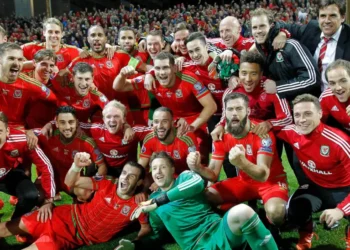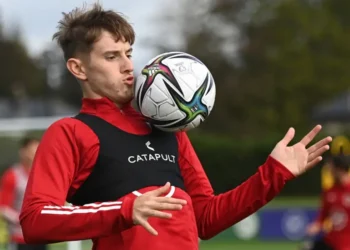


As preparations intensify ahead of the upcoming FIFA World Cup, Steve Clarke and his Scotland national football team squad are entering a crucial phase. This training camp marks their first gathering since the memorable clash against Denmark national football team, but the focus has now shifted firmly toward fine-tuning their preparations for the global tournament, which is just over two months away.
This week’s camp carries added importance, as it represents the final opportunity for Clarke and his coaching staff to assess players and refine tactics before the squad reconvenes in June. With two high-profile friendly matches against Japan national football team and Ivory Coast national football team on the horizon, several key questions need answering if Scotland are to make a meaningful impact on the world stage.
A surprise inclusion: Is Findlay Curtis ready now?
One of the biggest talking points surrounding Clarke’s latest squad selection is the unexpected inclusion of Findlay Curtis. Rather than selecting more established players from clubs like Heart of Midlothian F.C. or Motherwell F.C., Clarke opted to call up the teenage winger currently impressing at Kilmarnock F.C..
Curtis’ rise has been nothing short of remarkable. Just a few months ago, during Scotland’s dramatic 4-2 victory over Denmark, he was not even part of the Under-21 setup and watched the match as a fan. Now, at just 19 years old, he finds himself on the brink of potentially earning a place in a World Cup squad.
Currently on loan from Rangers F.C., Curtis has been developing under the guidance of former Scotland international Neil McCann. His performances have been instrumental in Kilmarnock’s fight to retain their place in the Scottish Premiership. Most recently, he delivered an eye-catching display by scoring in a crucial win against Livingston F.C..
Assistant coach Steven Naismith has praised Curtis for his determination and willingness to seek regular playing time rather than remain a fringe player at Rangers. According to Naismith, the youngster possesses an instinctive attacking style, combining pace with directness and the confidence to take on defenders—qualities Scotland have been lacking in recent years.
Former midfielder Scott Allan also highlighted Curtis’ ability to carry the ball forward, especially in the absence of players like Ben Doak, who is still recovering from injury. While Curtis is still refining aspects of his game—particularly his final delivery—his raw pace and attacking intent could provide a much-needed dimension to Scotland’s play.
The key question now is whether Curtis is ready to contribute immediately or if he remains a prospect for the future. The upcoming friendlies will likely determine whether he can handle the demands of international football at the highest level.
Balancing results and performances
Despite achieving qualification success, questions remain about the overall performance level of Clarke’s Scotland side. Finishing top of their group and securing a place at the World Cup for the first time in nearly 30 years is undoubtedly a major accomplishment. However, the journey has not been without criticism.
Throughout the qualifying campaign, performances often failed to match the results. On several occasions, the team struggled to impose themselves on matches, leading to frustration among supporters. In fact, the team was even booed by sections of their own fans during certain games.
Ironically, some of Scotland’s most impressive displays came in the UEFA Nations League, where a tactical shift to a 4-3-2-1 formation brought improved performances against stronger opposition. However, results during that campaign did not reflect the quality of play, creating a puzzling contrast between style and outcome.
The team’s inability to consistently control matches has been a recurring theme under Clarke. While fans do not necessarily expect total dominance, there is a growing desire for a more adventurous approach. Scotland’s most memorable performances have often come when they embrace a more open and aggressive style, rather than adopting a cautious strategy.
The famous victory over Denmark serves as a prime example. On that night, Scotland played with freedom and intensity, producing a thrilling performance that energized supporters. However, such displays have been the exception rather than the norm.
Going forward, Clarke faces the challenge of finding the right balance between defensive solidity and attacking ambition. The upcoming friendlies against Japan and Ivory Coast provide an ideal opportunity to experiment with tactics and build confidence. A strong showing in these matches could reignite belief among fans and create momentum heading into the World Cup.
The ongoing goalkeeping dilemma
Another major concern for Scotland is the persistent uncertainty surrounding the goalkeeping position. The likely first-choice option remains Angus Gunn, who has already earned 20 international caps and featured in previous major tournaments under Clarke.
However, Gunn’s lack of regular club football is a significant issue. Currently at Nottingham Forest F.C., he has seen very limited action this season, playing only 45 minutes and failing to start a match since October. This lack of match fitness raises concerns about his readiness for high-pressure international fixtures.
An alternative option could be veteran goalkeeper Craig Gordon, but at 43 years old and currently dealing with injury, his availability remains uncertain. If he cannot recover in time, Clarke may have to rely on Gunn despite his inactivity.
Other potential choices include Liam Kelly of Rangers and Scott Bain, who plays for Celtic F.C.. However, both players have had limited playing time, leaving Scotland without a clearly match-sharp goalkeeper.
A similar issue exists in the right-back position. Injuries to Aaron Hickey and limited opportunities for Nathan Patterson and Anthony Ralston have created uncertainty in that area as well.
Despite these challenges, Gunn has performed admirably for Scotland in previous matches, even while lacking club minutes. He played a key role in keeping clean sheets against Denmark and Belarus national football team during the qualifiers. However, the concern is whether prolonged inactivity will eventually impact his form.
The upcoming fixtures will be crucial in assessing Gunn’s readiness and determining whether alternative solutions need to be explored.
Final thoughts
As Scotland enter the final phase of their World Cup preparations, the stakes are higher than ever. Clarke must use this camp wisely to address key issues, integrate emerging talents like Findlay Curtis, and establish a clear tactical identity.
The friendlies against Japan and Ivory Coast will serve as an important اختبار, offering valuable insights into the team’s strengths and weaknesses. With the World Cup fast approaching, every decision made now could have a significant impact on Scotland’s performance on the global stage.
For fans, there is a mixture of excitement and चिंता. Qualification alone is a major achievement, but expectations are growing. Supporters want to see a team that not only competes but also plays with confidence and ambition.
Ultimately, the success of Scotland’s campaign will depend on Clarke’s ability to strike the right balance—between youth and experience, caution and creativity, and preparation and performance.
For more football news, updates, and in-depth analysis, visit: https://netsports247.com/