
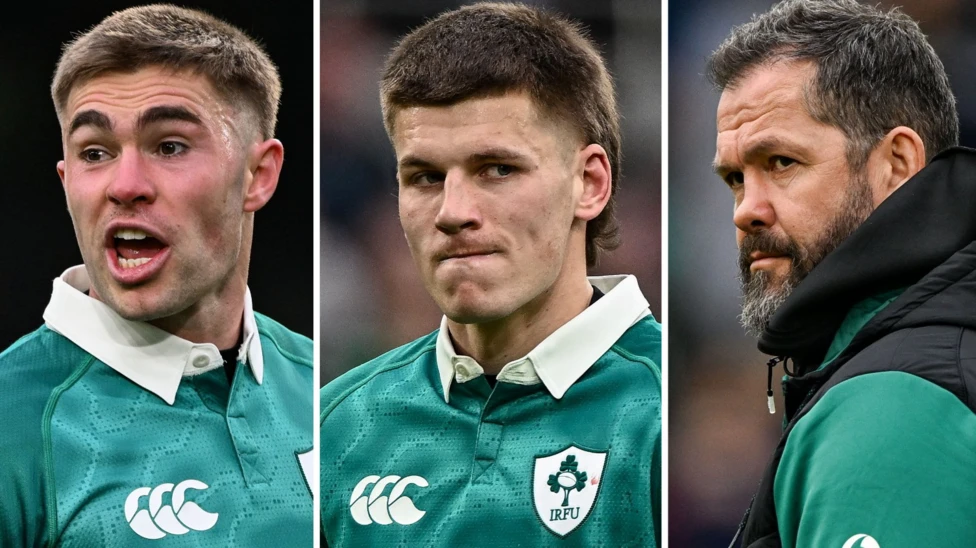
Ireland head coach Andy Farrell has delivered a passionate and heartfelt appeal to critics targeting his young fly-halves, urging so-called “keyboard warriors” to think carefully about the impact of their words on developing players like Sam Prendergast and Jack Crowley.
Farrell did not hold back as he addressed what he described as a “damaging” public narrative surrounding Ireland’s number 10 position. Over the past year, intense debate has surrounded the pecking order at fly-half, with Crowley and Prendergast sharing responsibilities in the Six Nations and other Test matches. The scrutiny, while part of elite sport, has at times crossed a line, according to Farrell.
Crowley was a central figure in Ireland’s victorious 2024 Six Nations campaign, playing every minute of the championship and guiding the team with maturity and composure. However, since then, Prendergast has been handed significant opportunities, starting six of Ireland’s last seven championship matches. Farrell’s rotation policy has sparked discussion among fans and pundits alike, with opinions often sharply divided.
In Ireland’s recent win over Italy in Dublin, Prendergast endured a challenging outing. Although Ireland ultimately secured victory, the young Leinster playmaker struggled to find rhythm and missed two conversion attempts before being replaced. Crowley entered the contest and injected tempo and urgency into Ireland’s attack, helping swing momentum back in the hosts’ favour.
Despite the team’s success, Farrell’s post-match comments revealed deeper concerns—not about tactics or selection—but about the growing negativity surrounding his players.
He questioned whether critics truly wanted Ireland to succeed, suggesting that relentless online criticism can be harmful to young athletes still finding their feet in international rugby. Farrell emphasized that both Prendergast and Crowley are strong personalities, capable of handling pressure, but warned that persistent negativity can still take its toll.
According to Farrell, the constant back-and-forth debate between supporters of each fly-half risks undermining both players. He acknowledged that elite sport naturally brings scrutiny, yet he urged supporters to channel their passion more constructively. In his view, representing Ireland should unite fans behind players rather than divide opinion in a way that damages confidence.
Farrell described the online discourse as potentially “damaging,” particularly for young players navigating the unforgiving environment of Test rugby. The Ireland boss made it clear that his concern extends beyond tactical considerations; he is invested in protecting the mental well-being and long-term development of his squad members.
Crowley’s cameo against Italy highlighted the depth Ireland possess at fly-half. The 26-year-old played with confidence and urgency, accelerating the tempo and challenging the Italian defence with quick distribution and smart kicking. While his performance drew praise, it was not without a blemish. Late in the game, with Ireland chasing a bonus-point try, Crowley accidentally kicked the ball dead—an error that left him visibly frustrated.
Farrell, however, was quick to defend him. He insisted that Crowley’s overall contribution far outweighed the late mistake. In his assessment, the Munster man did far more good than harm and should feel proud of his display. Farrell’s supportive tone reinforced his broader message: players must be allowed to grow, learn, and make mistakes without facing excessive public backlash.
Turning back to Prendergast, Farrell acknowledged that the 21-year-old would naturally feel disappointed about missed kicks and moments that didn’t go his way. Yet he expressed complete faith in the youngster’s future. Prendergast made his Ireland debut in November 2024 and has been fast-tracked into a high-pressure role. Farrell rejected suggestions that he had exposed the Leinster player to Test rugby too early.
Instead, he maintained that Prendergast earned his opportunities through outstanding club performances and that continued exposure at international level will accelerate his development. Farrell believes that both Prendergast and Crowley—and others in the squad—will become the players they aspire to be through experience, resilience, and learning from difficult moments.
The debate surrounding Ireland’s fly-half position has been further amplified by last year’s British and Irish Lions tour to Australia. Neither Crowley nor Prendergast was selected, intensifying competition and discussion at home. However, Farrell’s stance remains consistent: selection decisions are based on form and long-term strategy, not public pressure.
While the spotlight has focused heavily on the fly-half battle, Ireland’s victory over Italy offered several encouraging signs ahead of their showdown with England.
Robert Baloucoune marked his Six Nations debut with a decisive try, his first Ireland appearance since 2022 providing a timely reminder of his finishing ability. Stuart McCloskey delivered another influential midfield display, registering two try assists and maintaining Ireland’s physical edge in attack. James Lowe, recalled after being dropped for the defeat to France, produced what Farrell described as an “outstanding” performance on the wing.
These contributions reflect Ireland’s growing depth across positions, yet the team remains aware that sterner tests lie ahead. England, despite suffering a setback against Scotland at Murrayfield, will arrive motivated and determined to reassert themselves.
Farrell acknowledged that Ireland cannot afford complacency. While some may frame the upcoming clash as an opportunity to play without pressure, he dismissed that notion. Ireland always aim to win and to improve, regardless of circumstances.
The Ireland coach’s comments ultimately centered on unity and perspective. Rugby, at its core, is a team sport built on collective effort and mutual support. Farrell believes supporters play a vital role in that ecosystem. Constructive passion can lift players; destructive criticism can hinder them.
His plea to “cop on and try to help” was not merely emotional rhetoric but a reminder that behind every jersey number is a young athlete navigating immense expectations. In a digital age where opinions are shared instantly and widely, Farrell’s message resonated as both protective and pragmatic.
As Ireland prepare for their crucial encounter with England, the focus will return to on-field execution—game management, defensive intensity, and clinical finishing. Yet the conversation sparked by Farrell’s remarks may linger longer than the match itself.
For more rugby news and updates, visit:
👉 https://netsports247.com