
The Laws of Cricket are set to undergo significant changes aimed at making the sport more affordable and sustainable for amateur players, as the Marylebone Cricket Club (MCC) prepares to permit the use of bats that were previously deemed illegal.
The MCC confirmed that amendments to Law 5.8, titled “Categories of bat”, will come into force on 1 October 2026 as part of a new edition of the Laws of Cricket. Among the 73 changes announced, the most eye-catching decision is the approval of laminated bats for use in open-age recreational cricket.
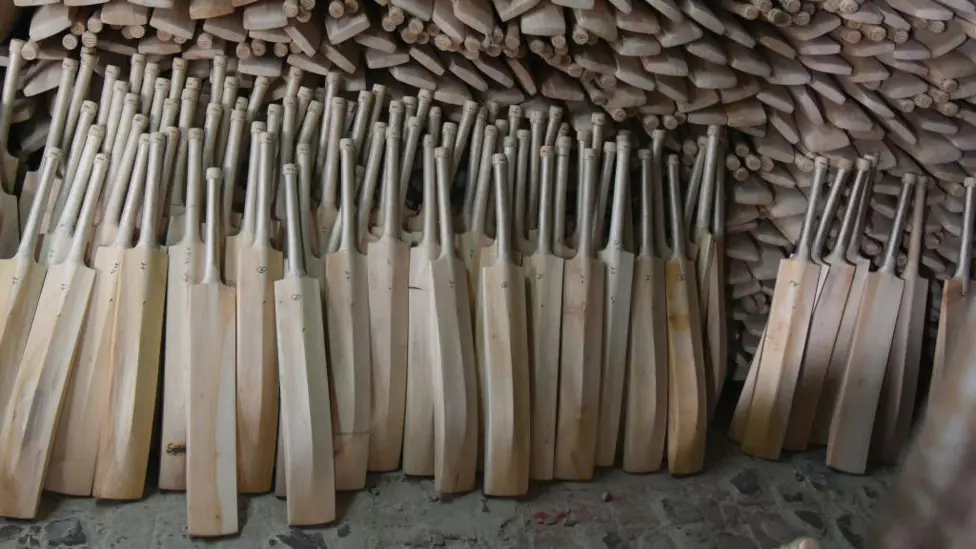
These bats, officially classified as Type D bats, can be made from up to three separate pieces of wood. Until now, they were restricted exclusively to junior cricket. From October 2026, however, adult amateur players will also be allowed to use them, marking a major shift in long-standing equipment regulations.
The MCC says the decision has been driven by the rising cost of cricket bats, largely due to the increasing scarcity and expense of English willow, the traditional material used to make high-quality bats.
Laminated bats typically feature an English willow face combined with cheaper backing materials, such as Kashmir willow, which is more readily available but generally considered to offer lower performance. While these bats may not match the feel or prestige of premium single-piece blades, they are significantly more affordable.
At elite levels of the sport, the traditional bat design is expected to remain unchanged. Types A, B and C bats – which are crafted from a single, solid piece of willow – will continue to dominate professional cricket, where performance standards are paramount.
In addition to permitting laminated construction, the updated laws will also allow manufacturers to use non-willow materials behind the bat’s face. This opens the door to further innovation while keeping the visible striking surface consistent with cricketing tradition.
MCC Laws manager Fraser Stewart explained that the decision followed extensive testing carried out in collaboration with bat manufacturers. According to Stewart, concerns that Type D bats might provide an unfair advantage were thoroughly assessed.
“Any performance benefit from these bats is marginal at best,” Stewart told BBC Sport. “If we can help lower-level players by making the game more affordable without altering how cricket is played, then it’s a sensible step.”
Affordability has become a pressing issue in cricket, particularly at grassroots level. Over recent years, the price of bats has surged dramatically, with some high-end models now retailing for close to £1,000.
Industry figures suggest bat prices have trebled in some markets due to rising demand, especially from South Asia, where cricket participation has grown rapidly. Combined with limited supplies of English willow, this has put pressure on manufacturers and players alike.
“There simply isn’t enough willow to meet global demand,” Stewart added. “We need to think about sustainability. Using more of each tree and exploring alternatives makes sense for the long-term health of the sport.”
The MCC hosted a conference at Lord’s last year, bringing together key figures from across cricket to discuss the future of bat manufacturing. One of the central themes was how to reduce reliance on English willow while maintaining safety and balance within the game.
Manufacturers have largely welcomed the changes, recognising the difficulty of keeping costs down while sourcing premium materials. According to Stewart, bat makers do not want to price amateur players out of the sport.
Beyond laminated bats, the MCC is also investigating the potential use of alternative materials. Scientists from the University of Cambridge have previously suggested bamboo as a possible substitute for willow, citing its strength and sustainability.
Other ideas, such as graphite-backed bats, have resurfaced in discussions. These were banned in 2006 after concerns they could fundamentally alter the balance between bat and ball. The MCC remains cautious, particularly about player safety and the risk of increasing ball speeds off the bat.
Alongside bat regulations, the new edition of the Laws of Cricket includes a wide range of additional updates designed to modernise the sport and improve clarity.
One notable development is the completion of efforts to remove gendered language from the Laws, making them more inclusive. The MCC has also focused on simplifying wording, recognising that many players, officials and fans worldwide do not speak English as a first language.
A significant change affecting multi-day cricket involves Law 12.5.2. Under the revised rule, the final over of a day’s play will no longer end early if a wicket falls. Instead, the full over must be completed, preserving continuity and avoiding lost drama.
The MCC explained that ending an over early does not actually save time, as the remaining balls must still be bowled the following day. Continuing the over also ensures fairness and maintains momentum.
Ball regulations have also been tightened. Under Law 4.1, junior and women’s cricket balls will now fall into three clearly defined size and weight categories, labelled sizes 1, 2 and 3. This standardisation aims to ensure consistency across all levels of the game.
Several other law changes have been introduced to clarify on-field decisions:
• Fielders will now be allowed only one airborne touch after jumping from outside the boundary to complete a catch. Any further contact outside the field of play will result in a boundary.
• Wicketkeepers may stand with gloves in front of the stumps during the bowler’s run-up, but must be fully behind the stumps once the ball is released.
• Captains are no longer permitted to declare the final innings of a match.
• Batters may abandon a run without penalty unless the short run is deliberately deceptive. If it is intentional, the fielding side gains the advantage of choosing which batter faces the next delivery.
• Overthrows are now clearly defined as intentional throws at the stumps, excluding accidental deflections.
• Umpires can call the ball dead once it is stationary or held by any fielder, not just the bowler or wicketkeeper.
Founded in 1787, the MCC has been the sole guardian of the Laws of Cricket for more than two centuries. These latest changes reflect its ongoing effort to balance tradition with innovation, ensuring cricket remains accessible, fair and sustainable for future generations.
For more cricket law updates, analysis and global sports news, visit https://netsports247.com