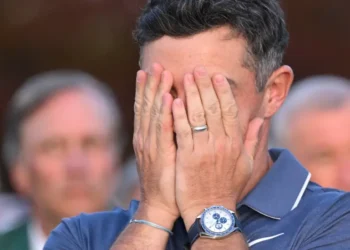

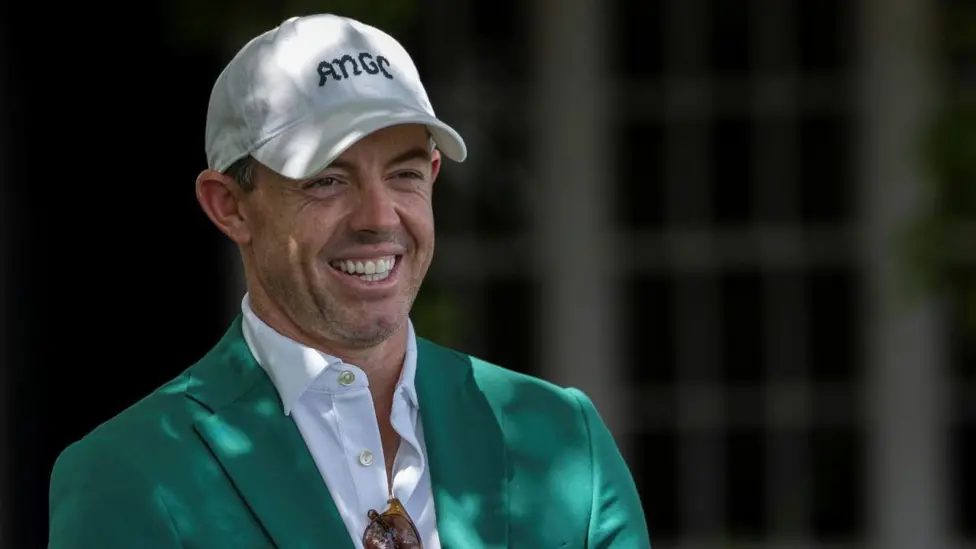
There are countless rewards that come with winning the Masters Tournament, and Rory McIlroy understands their significance better than most. While the iconic Green Jacket, the elegant silver trophy, and the lifetime privileges associated with Augusta National are all highly coveted, the greatest prize McIlroy gained from his victory last year is something far less tangible but far more meaningful—freedom.
For years, the Masters had been the one title that eluded McIlroy, despite his immense talent and success in other majors. Winning it finally completed his career Grand Slam, making him only the sixth player in history to achieve such a feat. That moment lifted a psychological burden that had weighed heavily on him for over a decade. The pressure, expectation, and constant reminders of what he had yet to accomplish all disappeared in an instant.
Now, as he returns to Augusta National Golf Club, McIlroy does so with a clear mind and renewed perspective. Unlike previous years, where every shot seemed to carry the weight of history, he approaches the tournament with a sense of calm and confidence. This mental clarity, he believes, will allow him to play more naturally and without hesitation.
Speaking ahead of the tournament, McIlroy expressed how comfortable he feels both physically and mentally. After spending several weeks preparing at home, he believes he is ready to handle whatever challenges the tournament presents. More importantly, he now knows that he has what it takes to win at Augusta, a realization that could prove invaluable.
The concept of freedom has been central to McIlroy’s mindset since his breakthrough victory. Immediately after winning the Masters, he described feeling “freed up,” a sentiment that reflects the emotional release he experienced. For years, the pursuit of this elusive title had defined his career narrative. Now that he has achieved it, he is no longer constrained by that singular goal.
Earlier in his career, McIlroy established himself as one of golf’s brightest stars by winning four major titles between 2011 and 2014. During that period, he was widely regarded as a generational talent destined to dominate the sport for years to come. However, what followed was an extended period without a major victory, marked by near misses and moments of heartbreak.
That drought finally ended with his Masters triumph, a victory that required not only skill but also resilience. Learning to cope with disappointment and manage expectations played a crucial role in his eventual success. By overcoming those challenges, McIlroy was able to unlock a new level of performance.
Despite the optimism surrounding his victory, the months that followed did not immediately bring further major success. At the PGA Championship, his first major appearance after winning the Masters, McIlroy struggled and finished well down the leaderboard. The tournament was also overshadowed by controversy involving his equipment, adding to the frustration of an already difficult week.
His form remained inconsistent at the US Open, where he once again failed to contend. However, a strong final round helped him salvage a respectable finish. It was during this period that McIlroy reflected on his journey, comparing his Masters victory to climbing Mount Everest. Having reached the summit, he acknowledged the need to find new goals and challenges to pursue.
The emotional highlight of his season came at the The Open Championship, held at Portrush in Northern Ireland. Competing in front of a home crowd, McIlroy experienced a special connection with the fans, even though he did not secure the title. The event served as a reminder of his enduring popularity and the support he continues to receive.
Now, after a break from major competition, McIlroy returns to Augusta with a different mindset. Instead of being urged to finally win the Masters, the conversation has shifted to whether he can achieve back-to-back victories. This change in narrative reflects the new position he occupies in the sport—as a defending champion rather than a hopeful contender.
Winning consecutive Masters titles is an exceptionally rare achievement. Only three players in history have managed to do so: Jack Nicklaus, Tiger Woods, and Nick Faldo. Joining this elite group would further cement McIlroy’s legacy and bring him level with Faldo’s total of six major championships.
However, the challenge of defending a title at Augusta is immense. The course is known for its demanding layout and unpredictable conditions, requiring precision and focus on every shot. Even a minor lapse in concentration can have significant consequences, making consistency a key factor in success.
Throughout his career, McIlroy has experimented with various approaches to mastering Augusta. He has adjusted his preparation routines, altered his mindset, and refined his playing style in search of the perfect formula. His eventual victory was the result of years of learning and adaptation.
This year, he embraces the responsibilities that come with being the reigning champion. These include hosting the traditional Champions Dinner, where past winners gather to celebrate the tournament’s history. McIlroy also participated in events such as the Augusta Women’s National Championship and the Drive, Chip and Putt National Finals, engaging with the next generation of golfers.
One particularly meaningful moment came when he had the opportunity to play a round at Augusta with his father, Gerry. This tradition, reserved for past champions, allowed McIlroy to share his success with someone who has been instrumental in his journey.
While these अतिरिक्त commitments can be demanding, they are also part of the unique experience of being a Masters champion. Some players have found it challenging to balance these responsibilities with their performance on the course. However, McIlroy appears to be embracing the experience, viewing it as a privilege rather than a distraction.
Heading into the tournament, McIlroy’s form presents a mixed picture. He recorded several top-10 finishes earlier in the season, indicating strong potential. However, a back injury forced him to withdraw from the Arnold Palmer Invitational and limited his performance at the Players Championship.
Since then, he has focused on recovery and preparation, aiming to be in peak condition for Augusta. The physically demanding nature of the course makes fitness an important factor, and McIlroy believes the break has allowed him to address any lingering issues.
Ultimately, his chances of success may depend more on his mental approach than his recent form. Over the years, he has developed greater confidence in his short game and putting, which has enabled him to play more aggressively. This evolution has been a key factor in his improved performances at Augusta.
McIlroy believes that the Masters could become the major where he enjoys the most success in the future. With the burden of expectation lifted, he is free to focus on building a legacy rather than chasing a single achievement.
In conclusion, Rory McIlroy’s journey to Masters glory has transformed not only his career but also his mindset. As he returns to Augusta, he does so with a sense of freedom and purpose that could prove निर्णायक in his quest for another title. Whether or not he succeeds, his story is a testament to perseverance, growth, and the pursuit of excellence.
For more golf news, updates, and in-depth sports coverage, visit https://netsports247.com