
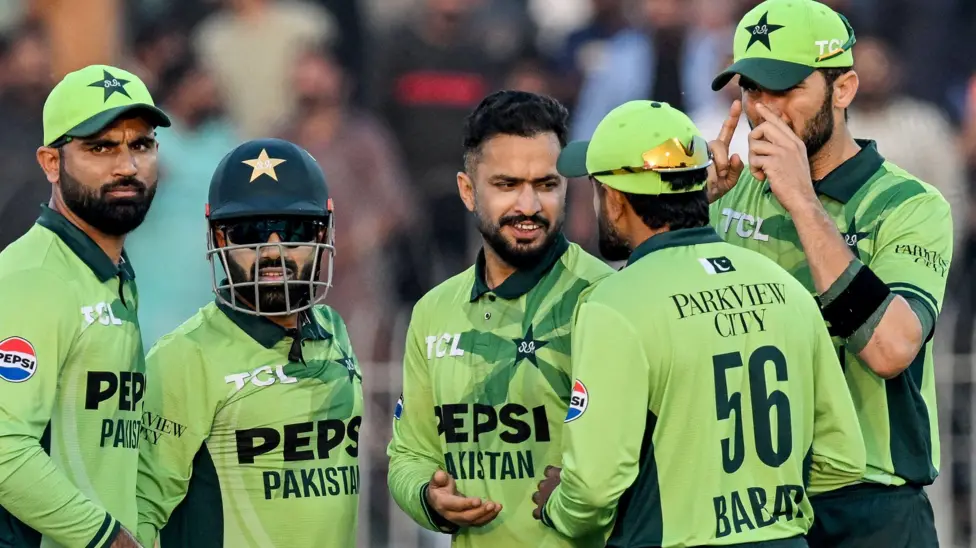
A final decision on whether Pakistan will participate in next month’s men’s T20 World Cup is expected to be reached by early next week, following high-level discussions involving the Pakistan Cricket Board (PCB) and the country’s political leadership. The uncertainty surrounding Pakistan’s involvement comes amid escalating geopolitical tensions in the region and Bangladesh’s recent withdrawal from the tournament.
PCB chairman Mohsin Naqvi met with Pakistan’s Prime Minister, Shahbaz Sharif, on Monday to deliberate the country’s position regarding the International Cricket Council (ICC) event. The talks were held after Bangladesh formally pulled out of the competition, prompting the ICC to replace them with Scotland.
The T20 World Cup is scheduled to be co-hosted by India and Sri Lanka from 7 February to 8 March. Following the meeting, Naqvi shared details on social media, stating that the discussion with the prime minister had been constructive and focused on assessing all available options.
“I had a productive meeting with Prime Minister Shahbaz Sharif, where I briefed him on the ICC situation,” Naqvi said in a post on X. “He directed that we resolve this matter while keeping all options open. It was agreed that the final decision will be taken either on Friday or next Monday.”
According to BBC Sport sources, Pakistan’s leadership is weighing multiple possibilities. These include a complete boycott of the tournament or a more targeted approach, such as refusing to play their scheduled match against India. Pakistan are set to face India on 15 February in Colombo, Sri Lanka, a neutral venue chosen under an agreement signed last year.
That agreement stipulates that whenever either India or Pakistan hosts an ICC event, matches between the two sides will be played at neutral locations. The arrangement was made to navigate longstanding political tensions that have severely limited bilateral sporting ties.
India and Pakistan have not played a bilateral men’s series since 2013, and India has not toured Pakistan since 2008. Encounters between the two cricketing rivals have been restricted to ICC tournaments and major global events, where neutral venues are often used to ensure security and diplomatic balance.
Pakistan’s deliberations follow Bangladesh’s withdrawal from the World Cup after the Bangladesh Cricket Board (BCB) raised concerns about player safety. The BCB had requested that its fixtures be moved away from India, citing growing political tensions between the two nations.
Bangladesh proposed that all their matches be played in Sri Lanka, the tournament’s co-host, but the ICC rejected the request. The governing body stated that there was no credible security threat that justified altering the published schedule.
Despite the ICC’s assurances, the BCB stood firm on its position, eventually leading to Bangladesh’s replacement by Scotland. BBC Sport understands that Pakistan supported Bangladesh’s stance during an emergency ICC board meeting held last Wednesday.
In a statement released on Saturday, the ICC confirmed Scotland’s inclusion and explained the reasoning behind its decision not to modify the tournament schedule.
“The ICC engaged with the BCB through multiple rounds of dialogue conducted in a transparent and constructive manner,” the statement said. “In light of these findings, and after careful consideration of the broader implications, the ICC determined that it was not appropriate to amend the published event schedule.”
The ICC also stressed that it was keen to avoid creating precedents that could compromise the perceived neutrality and fairness of ICC tournaments in the future.
Pakistan’s possible boycott would represent a major development for the competition, given the commercial and sporting significance of their participation—particularly their high-profile clash with India, which traditionally draws massive global audiences.
The ICC has been approached for comment regarding Pakistan’s ongoing deliberations, but no official response has yet been issued.
The political climate surrounding cricket in South Asia has grown increasingly complex in recent months. Earlier this month, the Board of Control for Cricket in India (BCCI) instructed Indian Premier League franchise Kolkata Knight Riders to release Bangladesh fast bowler Mustafizur Rahman due to diplomatic tensions.
That decision further highlighted how geopolitical issues are increasingly influencing cricketing decisions at both international and domestic levels.
For Pakistan, the stakes are high. A full withdrawal from the World Cup could strain relations with the ICC and impact future tournament planning, while selectively boycotting matches—particularly against India—could raise questions about consistency and fairness.
At the same time, Pakistani officials are under domestic pressure to take a strong stance in solidarity with Bangladesh and in response to broader regional developments. The PCB is therefore attempting to balance political considerations with sporting responsibilities.
As the deadline for a final decision approaches, uncertainty continues to surround Pakistan’s World Cup campaign. Fans, broadcasters, and tournament organisers will be watching closely to see how events unfold in the coming days.
For the latest updates on cricket, global tournaments, and breaking sports news, visit https://netsports247.com.