
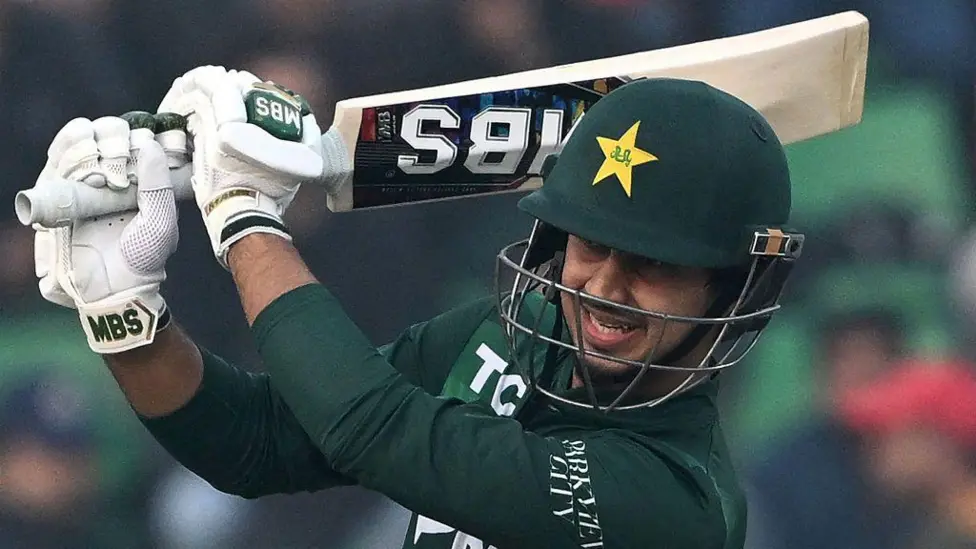
Pakistan Confirm World Cup Participation but Will Not Face India Amid Ongoing Tensions
Pakistan have confirmed their participation in this month’s men’s T20 World Cup, but the tournament will proceed without one of its most anticipated fixtures, as Pakistan will not play their scheduled match against India, the co-hosts of the competition.
The decision follows days of uncertainty, with Pakistan weighing up a potential boycott after Bangladesh withdrew from the tournament, citing security concerns over travelling to India. While Pakistan have ultimately chosen to take part in the event, their refusal to face India has triggered concern and criticism from the sport’s global governing body, the International Cricket Council (ICC).
Political Context Shapes Cricketing Decisions
Relations between Pakistan and India have been strained for over a decade, and the political climate has repeatedly spilled over into cricket. The two sides have not played each other outside men’s major ICC tournaments since 2013, while India have not toured Pakistan since 2008.
To manage these tensions, an agreement was signed last year stating that whenever either country hosts an ICC event, matches between Pakistan and India would be played at neutral venues. In line with that arrangement, the World Cup fixture between the two rivals was scheduled to take place in Colombo, Sri Lanka, rather than in India.
Despite the neutral location, Pakistan’s government opted to block participation in the high-profile clash.
Government Approval Comes With Conditions
In an official statement, the Pakistani government confirmed it had approved the national team’s participation in the T20 World Cup, but added a firm caveat.
“The Pakistan Cricket Team shall not take the field in the match scheduled on 15 February 2026 against India,” the statement said.
This conditional approval places Pakistan in an unusual position — competing in the global tournament while declining to play one of its fixtures.
ICC Pushback and Call for Resolution
The ICC responded swiftly, expressing dissatisfaction with Pakistan’s stance and warning that selective participation threatens the integrity of the tournament.
In a strongly worded statement, the ICC said it was awaiting formal communication from the Pakistan Cricket Board (PCB) but made its position clear.
“This position of selective participation is difficult to reconcile with the fundamental premise of a global sporting event, where all qualified teams are expected to compete on equal terms,” the ICC said.
“Selective participation undermines the spirit and sanctity of the competition.”
While acknowledging the authority of national governments, the ICC stressed that the decision was not in the best interests of the global game or its fans, including the millions of cricket supporters within Pakistan itself.
The governing body urged the PCB to carefully consider the long-term consequences and to work toward a “mutually acceptable resolution”.
Unclear Consequences for Boycott
At present, it remains unclear what penalties Pakistan could face for refusing to play the match against India. The ICC has not yet released the official playing conditions for this year’s tournament.
However, rules from the previous T20 World Cup provide a possible indication. Under those regulations, if a team refuses to play or concedes a match, the outcome may be recorded as a “Match Conceded” or “Match Awarded”, potentially granting points to the opposing team.
Such a result could have serious implications for Pakistan’s progress in the tournament, especially in a tightly contested group stage.
Squad Named, Approval Pending
Before the controversy escalated, Pakistan had already announced their squad for the 20-team tournament, which begins on 7 February. However, officials were careful to state that participation was subject to final government approval — a condition that has now been confirmed, albeit with restrictions.
Pakistan will enter the competition in strong form, having recently defeated Australia by 111 runs to complete an emphatic 3–0 T20 series sweep, boosting confidence within the squad.
Bangladesh Withdrawal Adds to Turmoil
Pakistan’s decision comes against the backdrop of Bangladesh’s withdrawal from the tournament. The Bangladesh Cricket Board (BCB) had requested that their matches be shifted from India to Sri Lanka, the tournament’s other co-host, citing safety concerns.
The ICC rejected the request last month, stating there was an “absence of any credible security threat”. Following that decision, Bangladesh chose to withdraw entirely, with Scotland stepping in as their replacement.
The episode has further highlighted the challenges of staging global sporting events amid regional political sensitivities.
Group A Picture Without an India Match
Pakistan have been placed in Group A alongside India, Namibia, the Netherlands and the United States. The absence of the Pakistan–India match — traditionally one of the most watched fixtures in world cricket — will be a significant blow to broadcasters, sponsors and fans.
It also raises questions about fairness, competitive balance and tournament logistics, especially if points are awarded without play.
Cricket Caught Between Politics and Sport
The situation once again underscores the difficulty of separating cricket from geopolitics in South Asia. While ICC tournaments are designed to bring nations together on a neutral sporting platform, political realities often intervene.
For Pakistan, the challenge now is to compete effectively while navigating diplomatic constraints. For the ICC, the task lies in preserving the credibility of the tournament while respecting national policies.
Whether a compromise can still be reached remains to be seen, but the clock is ticking as the World Cup approaches.
For full cricket news, World Cup updates and expert analysis, visit https://netsports247.com