
Senegal Calls for International Probe After CAF Awards AFCON 2025 to Morocco
The Senegalese government has demanded an “independent international investigation” into suspected corruption at the Confederation of African Football (CAF) after the governing body controversially stripped Senegal of the 2025 Africa Cup of Nations (AFCON) title, awarding it instead to Morocco. (netsports247.com)
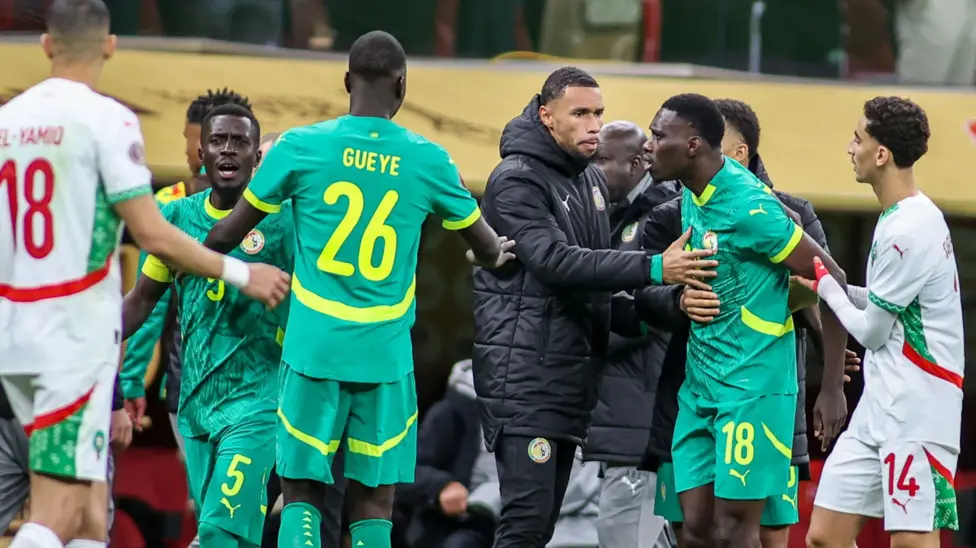
Senegal originally defeated Morocco 1-0 in the January final. However, CAF overturned the result after Senegal’s players staged a walk-off following the awarding of a stoppage-time penalty to the hosts. After a 17-minute delay, the players returned, and while Brahim Diaz’s penalty was saved, Senegal’s Pape Gueye scored in extra time. Despite this, CAF ruled in favor of Morocco, recording a 3-0 forfeit victory.
Senegal Rejects CAF Decision
The Senegalese government condemned CAF’s ruling as an “unprecedented and exceptionally serious decision”, accusing the body of misinterpreting regulations and rendering an “illegal and deeply unjust” judgment. “Senegal unequivocally rejects this unjustified attempt at dispossession,” officials stated, demanding accountability for what they called a politically influenced decision.
CAF has not yet publicly responded to these allegations.
Senegal Football Federation Appeals
The Senegalese Football Federation (FSF) confirmed that it would challenge CAF’s ruling at the Court of Arbitration for Sport (CAS). FSF Secretary General Abdoulaye Seydou Sow described the decision as “unfair, unprecedented, and unacceptable”, claiming it damaged the credibility of African football.
He added: “This decision is a breach of trust and not based on law. We feel the jury was there to carry out an order, not uphold the rules. We will defend our rights to the very end.”
Some Senegalese players have also suggested they will keep their winners’ medals. Everton and Senegal midfielder Idrissa Gueye said on social media: “We know what we experienced that evening in Rabat, and no one can take that away from us.”
International Reactions
The walk-off prompted the International Football Association Board (IFAB), the football lawmaking body, to consult on protocols for instances when players leave the field in protest. FIFA President Gianni Infantino called it “unacceptable”, stressing that leaving the pitch in protest must never be repeated.
The incident began when referee Jean Jacques Ndala awarded Morocco a penalty in the 98th minute after VAR advised a pitchside review of a challenge by El Hadji Malick Diouf on Brahim Diaz. Prior to this, Ndala had disallowed a Senegal goal by Ismaila Sarr, which had already angered Senegal’s coaching staff and players.
Senegal’s Complaints and Concerns
Throughout the tournament, Senegal had raised concerns about refereeing bias and security issues in Morocco. They argued that several decisions appeared to favor the hosts, including contentious calls and VAR interventions.
CAF’s ruling also partially addressed a separate incident involving Moroccan ball boys, who reportedly interfered with Senegal goalkeeper Edouard Mendy during the final, attempting to remove his gloves and towels. One incident even saw reserve goalkeeper Yehvann Diouf tackled and dragged across the floor. CAF reduced the Moroccan FA’s fine for this behavior, as well as for fans shining lasers at players.
Allegations of Political Interference
CAF’s former disciplinary chief, Raymond Hack, questioned the impartiality of the ruling, citing potential political influence, as the President of the Moroccan Football Association, Fouzi Lekjaa, serves as CAF’s first vice-president.
Hack told BBC World Service: “The referee allowed the game to continue into extra time, implying he was satisfied the match could proceed. Only the referee can end a game—not the governing body. The game should be won on the pitch, not in a boardroom.”
Hack added that the Moroccan players could have played under protest if they disagreed with the decision, which would have been a more standard method to contest a ruling during the match. He also warned that CAS could take up to six months to issue a verdict on Senegal’s appeal.
Divided Opinions Across Africa
Reactions across Africa are mixed. Moroccan journalist Jalal Bounar stated that CAF’s decision was met with “great excitement” in Morocco, as the country celebrated the title. Meanwhile, North African journalist Maher Mezahi highlighted widespread anger, saying CAF’s reputation had again been tarnished, comparing it to past controversial decisions like Togo’s AFCON 2010 ban after a gun attack on their team bus.
Historical Context of Walk-Offs in Football
While Senegal’s sanction is unprecedented, football has a history of teams walking off in protest:
- Czechoslovakia v Belgium, 1920: Players abandoned the Olympic final after a disputed penalty. Belgium were awarded gold.
- Lille v Manchester United, 2007: Lille players left the field over a late free-kick but returned to complete the match. UEFA fined them £42,000.
- AC Milan v Pro Patria, 2013: Kevin-Prince Boateng walked off a friendly due to racist abuse; FIFA praised his stance but did not condone the action.
- PSG v Istanbul Basaksehir, 2020: Both sides left the pitch after racist remarks; the match was replayed the following day.
- Fenerbahce v Galatasaray, 2024: Fenerbahce withdrew after one minute in the Super Cup; Galatasaray awarded a 3-0 win.
- Colombe Sportive du Sud v Panthere du Nde, 2026: Cameroonian Super Cup match abandoned after controversial referee decisions; outcome pending.
These incidents show that while walk-offs are rare, they often lead to complex disciplinary action and debates over fairness in football governance.
Conclusion
The CAF decision to award Morocco the 2025 AFCON title continues to ignite controversy. Senegal has rejected the ruling, pursued legal appeal, and called for an international investigation into CAF’s governance. As CAS deliberates, the football world watches closely, with debates on fairness, refereeing, and administrative influence dominating discussions across Africa.
CAF faces scrutiny not only for this decision but also for how it manages future disputes, with the incident likely prompting policy changes for handling in-game protests. Senegal’s insistence on defending their title highlights the ongoing tension between sporting integrity and administrative rulings in African football.
For updates on this story and African football news, visit:
https://netsports247.com