
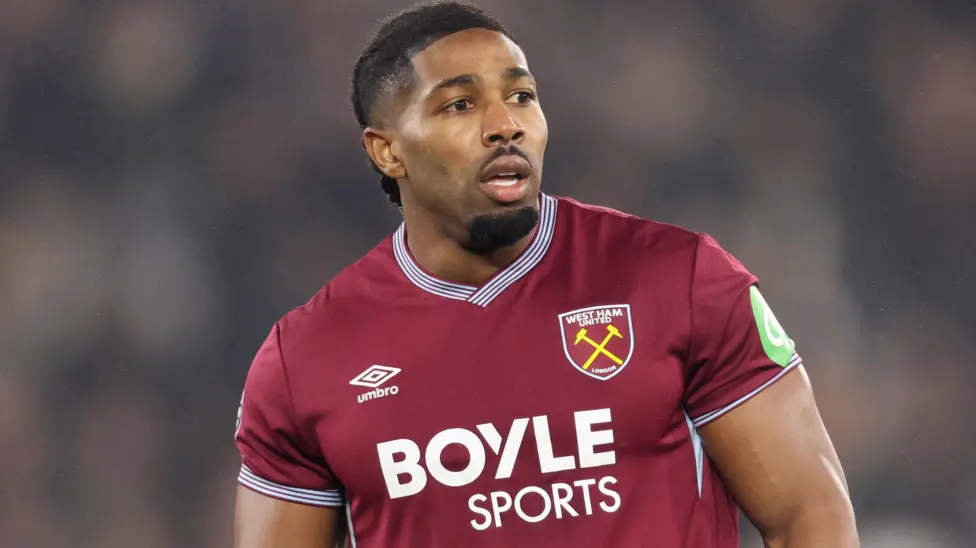
Adama Traore has reportedly been told to steer clear of weightlifting sessions at the training ground by Nuno Espirito Santo, in a decision that has raised eyebrows but reflects a specific tactical and physical strategy.
The powerful winger, now 30, is widely recognised for his extraordinary physique — a build often described as one of the most imposing in European football. Nuno himself labelled Traore’s muscular frame as “incredible,” attributing much of it to genetics. However, the manager also emphasised that the Spaniard already carries significant natural strength and mass, suggesting additional weight training may not benefit his overall performance.
Speaking ahead of West Ham’s Premier League clash with Fulham F.C., Nuno made it clear that he wants Traore to focus on maintaining mobility and sharpness rather than increasing muscle mass.
“I’ve told him to stay out of the gym,” Nuno explained. “He already carries enough weight. He’ll still do prevention and conditioning work, but no heavy lifting.”
The comments came shortly after a video surfaced on social media, posted by teammate Crysencio Summerville, showing Traore bench-pressing an impressive 145kg at the club’s Rush Green training facility. The footage seemed to contradict earlier remarks from Traore himself, who had previously claimed that he did not regularly lift weights.
Managing Power and Performance
Nuno’s reasoning highlights a nuanced understanding of player physiology. Traore’s explosive speed and direct dribbling style rely heavily on agility, acceleration, and balance. Excess muscle mass — particularly if not functionally integrated — can potentially hinder quick directional changes and endurance levels.
Rather than building additional bulk, the coaching staff want him concentrating on injury prevention, flexibility, and maintaining optimal match fitness. The manager drew a contrast with younger players who need to physically develop.
For instance, Under-21 defender Airidas Golambeckis was cited as someone who spends extended periods in the gym in order to build strength and size. In Golambeckis’ case, adding muscle is essential for competing physically at senior level. With Traore, the situation is reversed — refinement, not expansion, is the priority.
A January Move and Limited Minutes
Traore joined West Ham United in January in a deal reportedly worth up to £2 million, arriving from Fulham after making 20 appearances in all competitions earlier in the campaign. His move represented a low-risk addition of pace and experience as the Hammers battle to maintain their Premier League status.
However, since switching clubs, Traore’s involvement has been limited. He has made just four substitute appearances in the Premier League, with his only start coming in the FA Cup fourth-round victory over League One side Burton Albion.
The lack of regular minutes has prompted questions about his role within the squad. Yet Nuno, who previously coached Traore during his spell at Wolves, insists patience is required.
“He’s unique,” Nuno said. “There are not many players in world football who combine his pace, strength, and one-on-one ability. He’s a talent we must use properly, but adaptation takes time.”
Familiarity from Wolves Days
The managerial relationship between Nuno and Traore dates back to their time together at Wolverhampton Wanderers. Under Nuno’s guidance, Traore produced some of the most dynamic performances of his career, becoming a constant threat on the wing with his blistering pace and physical dominance.
That history may be one reason why Nuno feels confident tailoring Traore’s training regime. The Portuguese coach understands how to harness the winger’s strengths without compromising his explosiveness.
While critics sometimes question Traore’s final product in terms of goals and assists, his ability to stretch defences and create space for teammates remains highly valued. Against deep defensive blocks — common in relegation battles — his direct running can be a decisive weapon.
Survival Fight Ahead
West Ham face a tense final stretch of the Premier League season as they fight to secure safety. Squad rotation, impact substitutes, and tactical flexibility will all play key roles.
In this context, Traore’s profile as a game-changing substitute could prove invaluable. His capacity to unsettle tired defenders late in matches aligns with Nuno’s strategic approach.
The manager also pointed to Traore’s international pedigree, referencing his involvement with the Spain national team in recent years. That experience underlines his status as a high-level performer capable of competing at elite standards.
“He’s proven in England and with Spain,” Nuno added. “We’re talking about a top-level player.”
Balancing Strength and Speed
The debate surrounding Traore’s gym ban reflects broader conversations in modern football about optimal athletic conditioning. While strength training is vital for most professionals, the balance between muscle mass and functional agility varies depending on playing style and position.
For Traore, whose game depends on explosive acceleration and rapid changes of direction, maintaining peak mobility is essential. Overemphasis on hypertrophy could risk diminishing those qualities.
Nuno’s directive does not eliminate gym work entirely. Injury prevention exercises, mobility drills, and core stability remain part of the program. The distinction lies in avoiding heavy weightlifting that could add unnecessary bulk.
Looking Forward
As the season progresses, Traore’s opportunity to make a decisive impact may come at a critical moment. Whether starting matches or emerging from the bench, his raw physical gifts remain rare in world football.
If West Ham can channel his pace and power effectively — without overburdening his frame — he could become a key figure in their survival push.
For now, the message is clear: fewer bench presses, more focus on match sharpness.
Full Premier League coverage and updates: https://netsports247.com