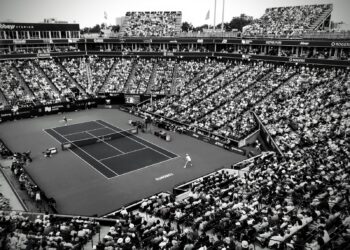


British number one Jack Draper’s return to the ATP Tour came to an end in the second round of the Dubai Tennis Championships after a hard-fought defeat to French player Arthur Rinderknech. The match marked an important step in Draper’s comeback journey following a lengthy injury lay-off, but it also highlighted the challenges that come with returning to top-level competition after months away from the circuit.
For more tennis news and updates, visit: https://netsports247.com
This tournament was Draper’s first appearance on the ATP Tour since the US Open six months earlier, making his participation in Dubai a significant milestone in his recovery. The 24-year-old had endured a frustrating period on the sidelines due to a bruised bone in his service arm, an issue that initially surfaced during the clay-court season in April and gradually worsened over time. Eventually, the discomfort became severe enough that he was forced to withdraw before his second-round match at the US Open in August, effectively ending his 2025 season prematurely.
Coming into Dubai, Draper had already taken a small but encouraging step back into competitive tennis by representing Great Britain in the Davis Cup qualifiers earlier in the month. He won one match during that event, ending a 164-day wait for a return to match action. That victory gave him confidence and momentum heading into his comeback on the men’s tour.
Draper began his campaign in Dubai with a solid straight-sets win over Quentin Halys, demonstrating glimpses of the high-level tennis that had previously taken him to a career-high ranking of world number four last summer. His performance in that opening match suggested that, despite the long absence, his core strengths — powerful groundstrokes, strong serving, and aggressive baseline play — were still very much intact.
However, the second-round encounter against world number 31 Arthur Rinderknech proved to be a sterner test. The match was closely contested and ultimately ended in a 7-5, 6-7 (4-7), 6-4 victory for the Frenchman. While Draper showed resilience and competitive spirit throughout the contest, he was unable to convert key opportunities at crucial moments.
The opening set was finely balanced, with Draper starting confidently on serve. He lost just two points across his first four service games, indicating strong control and composure early in the match. His serving rhythm looked assured, and he appeared comfortable dictating rallies from the baseline. Despite this promising start, the turning point came late in the set when he failed to capitalize on two break-point chances in the 11th game. That missed opportunity proved costly, as Rinderknech seized momentum and closed out the set in the following game.
In the second set, Draper faced early pressure and had to save three break points to keep the score level at 3-3. That moment showcased his mental toughness and determination, particularly considering his lack of recent match practice. From that point onward, he reset effectively and raised his level. He dominated his service games and lost only a single point across his next three holds, reflecting improved confidence and rhythm as the match progressed.
The Briton then delivered a strong performance in the tie-break, quickly establishing control by winning four of the first five points. He maintained that advantage with composed shot-making and disciplined play, eventually securing the tie-break to level the match at one set all. It was a significant response, especially given the physical and mental demands of playing long matches after an extended absence.
The deciding set, however, highlighted the fine margins at elite level tennis. Rinderknech managed to secure the decisive break, and although Draper fought hard to stay in contention, he could not create enough opportunities to recover. The Frenchman’s consistent serving and tactical variation on a quick surface made it difficult for Draper to generate sustained pressure in return games.
One of the key takeaways from the match was Draper’s visible determination to compete fully despite ongoing management of his arm injury. He wore a compression sleeve on his affected left arm throughout the match, a precaution that reflects his cautious approach to recovery. Even so, he produced several powerful winners, including a striking forehand clocked at 100mph, demonstrating that he was not holding back in terms of shot intensity.
Another notable adjustment in his game was the adoption of a platform serve stance. This technical change, where he stands with his feet slightly wider apart, is designed to allow a smoother weight transfer and reduce strain on the injured arm. Such modifications underline how carefully Draper and his team are managing his physical condition to prevent further setbacks.
While the defeat may appear disappointing on paper, there were several positives to take from Draper’s performance in Dubai. Considering he had not played a full ATP Tour event for six months, pushing a well-prepared and in-form opponent to three sets is an encouraging sign. His movement, shot selection, and mental resilience all suggested that he is gradually rediscovering his competitive edge.
The match also exposed some expected rustiness, particularly in his return games. Lack of recent court time was evident during critical stages, as Rinderknech’s strong and varied serve proved difficult to read and counter. This is a common challenge for players returning from long injury breaks, as timing and reaction sharpness often take time to fully return.
Despite the loss, Draper himself had previously expressed pride in simply being back on tour after what he described as a difficult eight-month period filled with setbacks and “down moments.” That emotional and psychological aspect of recovery is often overlooked but plays a major role in an athlete’s return to peak performance.
His world ranking has slipped to 15th due to the extended absence, but that drop is understandable given the limited opportunities to earn points during his recovery phase. With regular match play now resuming, he will likely focus on rebuilding consistency and gradually climbing back up the rankings.
Looking ahead, Draper’s next major challenge will be at Indian Wells, where he is set to defend the biggest title of his career. Heading into such a prestigious tournament with valuable match experience from Dubai could prove highly beneficial. Even though he did not progress deep into the draw, the competitive minutes on court will help improve his match fitness and confidence.
Ultimately, this tournament served as an important stepping stone rather than a final judgment on his form. Once the immediate frustration of defeat fades, Draper and his team are likely to reflect positively on the progress made. Completing multiple matches without any major physical setbacks is arguably the most significant victory at this stage of his comeback.
In summary, Jack Draper’s second-round exit in Dubai should be viewed within the broader context of his recovery journey. After a long injury lay-off, returning to the ATP Tour and competing strongly against a top-40 opponent is a promising sign. With careful injury management, tactical adjustments, and growing match sharpness, Draper appears to be on the right path as he continues rebuilding his form ahead of the crucial tournaments ahead.
For more sports and tennis coverage, visit: https://netsports247.com