
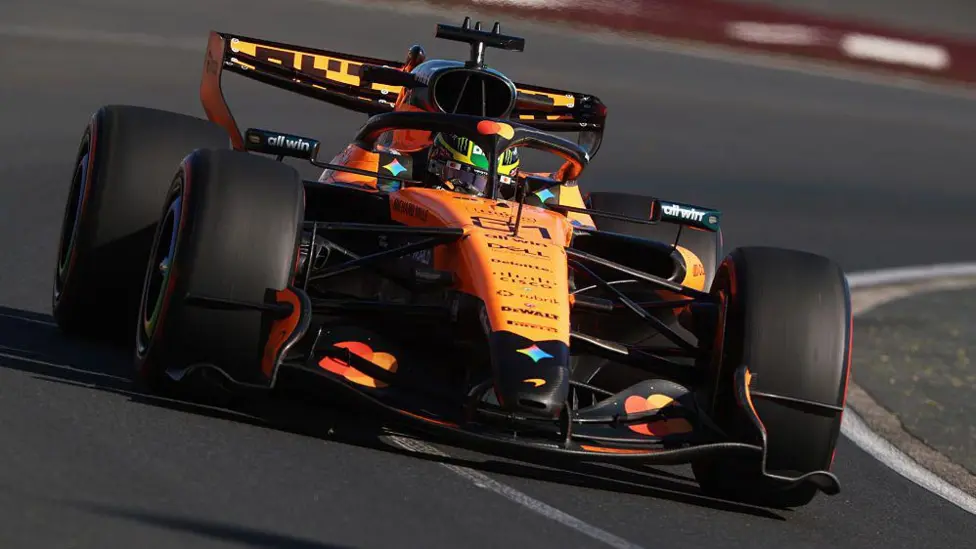
Australian Grand Prix practice sessions kicked off the new Formula One season with plenty of intrigue, surprises, and uncertainty as teams began adapting to the sport’s most significant regulation overhaul in years. By the end of Friday’s running, Oscar Piastri delivered a standout performance for McLaren, finishing at the top of the timing sheets and setting the early benchmark for the weekend.
While attention naturally gravitated toward the fastest laps at the front of the grid, a major talking point of the day was the worrying situation unfolding at Aston Martin, who appeared to be struggling significantly at the rear of the field. Their difficulties were so severe that they ended the day roughly five seconds slower than the pace set by Piastri — an enormous gap by modern Formula 1 standards.
Piastri Leads the Pack
Driving in front of his home crowd in Melbourne, Piastri showed strong pace in the second practice session. His fastest lap placed him 0.214 seconds ahead of rising Italian star Kimi Antonelli, who impressed while driving for Mercedes.
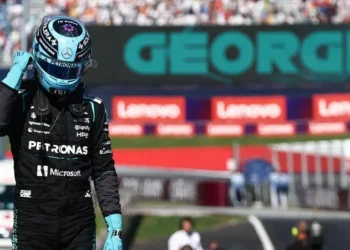
Antonelli’s experienced teammate George Russell completed the top three, demonstrating the consistent speed Mercedes appeared to possess throughout the day.
Behind them came the two drivers from Ferrari, with Lewis Hamilton edging ahead of teammate Charles Leclerc in fourth place. Meanwhile, reigning champion Max Verstappen placed sixth for Red Bull Racing, though his pace was somewhat disguised by technical issues and an off-track moment.
The defending world champion Lando Norris finished seventh for McLaren after encountering a gearbox issue during the first session that disrupted his running.
Uncertainty Around New Engine Rules
Despite the headline times, teams admitted that the competitive order remains far from clear. The 2026 season introduces sweeping technical changes, particularly around the hybrid power units.
The new regulations split power generation almost evenly between the traditional internal combustion engine and electric energy deployment. This means that effective management of the hybrid system — especially energy recovery and deployment — will be critical to performance.
Drivers and engineers alike spent much of Friday experimenting with different energy strategies in order to understand how to maximize lap times under the new rules.
This learning process created uncertainty, making it difficult to interpret the timesheets with complete confidence.
Mercedes Shows Long-Run Strength
While single-lap pace grabbed the headlines, race simulations suggested Mercedes might currently hold the advantage.
Late in the second practice session, Russell produced an impressive sequence of laps during a race-distance simulation. His pace appeared to be roughly six-tenths of a second faster per lap than several rivals — a potentially significant margin.
That display reinforced the widespread belief in the paddock that Mercedes could be one of the teams to beat this season.
Ferrari’s Leclerc acknowledged the impressive speed from the Silver Arrows.
He admitted that although Ferrari showed promise earlier in the day, Mercedes appeared stronger once teams began revealing more of their true pace.
Leclerc explained that while teams often hide performance during practice sessions by running heavier fuel loads or conservative engine settings, Mercedes’ long-run pace still looked formidable.
Ferrari Slightly Behind Early Leaders
Coming into the season, Ferrari were widely tipped as serious contenders for the championship.
The team spent much of Friday near the top of the timing screens. However, by the end of the second session they had slipped slightly behind McLaren and Mercedes.
Leclerc admitted the early signs suggested Ferrari might have some ground to make up, particularly in race pace.
He noted that the difference to Mercedes appeared larger than he would have preferred at such an early stage of the weekend.
Piastri Encouraged by McLaren Pace
For Piastri, the strong performance represented an encouraging start to the season.
He explained that once drivers begin to understand how the car behaves under the new regulations, there can be substantial gains in lap time.
According to the Australian driver, McLaren felt competitive but had not expected to dominate the field outright.
Instead, the team believed it was operating close to the level of Mercedes and Ferrari, with only small differences separating the leading teams.
Antonelli Learning Quickly
Young Mercedes driver Antonelli described the practice sessions as an intense learning experience.
The Italian rookie explained that every lap provided more understanding of both the circuit and the car’s behavior under the new rules.
He emphasized that the battle among the top teams appears extremely close, predicting a tight fight involving Ferrari, McLaren, and Red Bull throughout the weekend.
Verstappen’s Pace Concealed
Verstappen’s sixth-place position did not necessarily reflect his true potential.
The Dutch driver encountered issues while attempting his soft-tyre qualifying runs and later ran wide at the high-speed Turn 10 during a longer race simulation.
Those setbacks prevented him from posting a truly representative lap time.
Given Red Bull’s reputation for extracting performance quickly over a race weekend, few observers are ready to rule out Verstappen as a contender.
Aston Martin Facing Major Problems
While the front-running teams battled closely, the most dramatic story unfolded at Aston Martin.
Their struggles appear to stem primarily from problems with their Honda power unit.
Team principal Adrian Newey spoke openly about the difficulties during two press conferences.
He admitted that the team currently feels powerless to resolve the engine issues quickly.
Star driver Fernando Alonso missed the entire first practice session due to vibration problems originating from the engine.
When he returned in the second session, he managed only 17 laps and finished last on the timesheets, nearly five seconds slower than Piastri.
Battery Failures Creating Panic
According to Newey, the vibrations produced by the engine are causing severe damage to the hybrid batteries.
He revealed that Aston Martin currently has only two functioning batteries remaining — a worrying situation given the number of sessions still to come during the weekend.
The engineer admitted that if the current rate of battery damage continues, the team could soon face a serious operational crisis.
Alonso’s Frustration
Alonso acknowledged that the lack of track time severely limited the team’s ability to understand their car.
Aston Martin brought an entirely new aerodynamic package to the race weekend, and the team had hoped to spend practice sessions learning how best to operate it.
However, the technical problems prevented meaningful progress.
The two-time world champion also expressed disappointment that Honda had been unable to supply more replacement batteries.
Remaining Positions
Behind the top six drivers, the remainder of the top ten featured several strong performances.
Arvid Lindblad, an 18-year-old rookie driving for Racing Bulls, impressed with a solid lap time that placed him just behind Norris.
The second Red Bull entry driven by Isack Hadjar also appeared competitive.
Meanwhile Esteban Ocon delivered a respectable performance for Haas F1 Team, finishing inside the top ten.
His teammate Oliver Bearman narrowly missed the top ten in 11th place.
Track Conditions May Skew Results
It is important to note that practice times do not always reflect true performance levels.
Teams ran their fastest laps at different moments during the session, meaning track conditions varied significantly.
Mercedes completed their qualifying simulations relatively early, when the circuit was slower, while Piastri set his best time later as the surface improved.
For that reason, the competitive picture remains uncertain heading into qualifying.
A Fascinating Weekend Ahead
Friday’s practice sessions have set the stage for what could be an unpredictable opening race of the season.
McLaren showed encouraging speed through Piastri, Mercedes displayed strong race pace, Ferrari remain close contenders, and Red Bull’s true performance is still unclear.
At the same time, Aston Martin faces a race against time simply to resolve reliability issues and keep both cars running.
As teams continue to decode the complexities of the new engine regulations, the Australian Grand Prix weekend promises plenty more drama before the first race of the season is decided.
For more motorsport news and Formula 1 updates, visit:
https://netsports247.com