
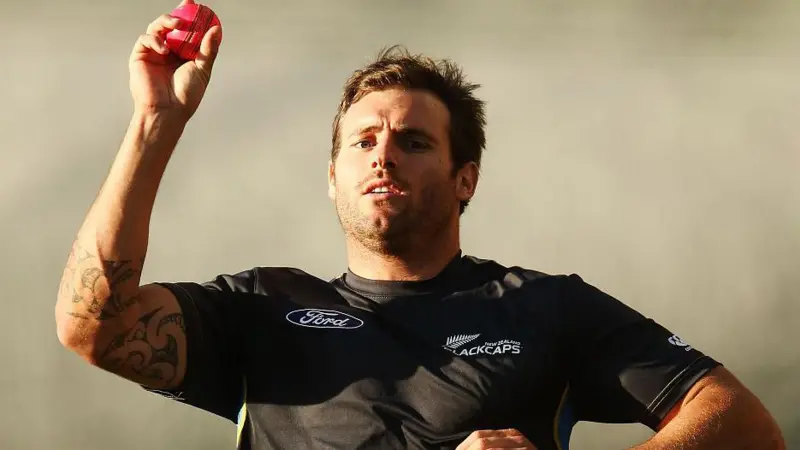
Former New Zealand international all-rounder Doug Bracewell has admitted to using cocaine during his stint in English county cricket, following a positive drugs test linked to Essex’s final County Championship match of the previous season. The case has resulted in a two-year ban from the sport and brings further scrutiny to his professional conduct, marking another setback in a career that has already seen disciplinary issues.
The positive test was recorded on 25 September, which was the second day of Essex’s match against Somerset in Chelmsford. Bracewell had played an active role in the opening day of the fixture, opening the bowling and taking two wickets as Somerset reached 339 for six. However, he was not required to bat on the second day of the match, which Essex ultimately went on to win comfortably by seven wickets.
According to details confirmed by the Cricket Regulator, Bracewell was officially notified of the failed drugs test in November. He later responded in December, acknowledging that he had taken cocaine after the first day of play, during the early hours of the following morning.
Bracewell had joined Essex late in the season, signing on for the final three County Championship matches. His brief spell in English domestic cricket was intended to strengthen the squad during the closing stages of the campaign, but it ended in controversy following the positive test and subsequent investigation.
After being informed of the outcome, Bracewell made the decision to retire from professional cricket on 28 December. Despite his retirement announcement, disciplinary proceedings continued, and the Cricket Regulator has since confirmed that he will serve a two-year period of ineligibility from the sport.
Importantly, Bracewell has accepted the sanction imposed on him, meaning he will not contest the ruling. Essex County Cricket Club, meanwhile, will not face any punishment in relation to the incident. The club issued a formal statement acknowledging the situation and confirming its position.
Essex stated that all players and staff are expected to maintain high professional standards and that Bracewell’s behaviour did not meet those expectations. While the club made clear that it does not condone the actions that led to the ban, it also expressed a willingness to support the player through rehabilitation in accordance with its internal policies.
Bracewell comes from a well-known cricketing family in New Zealand. His uncle, John Bracewell, played 28 Test matches for the national team and later became involved in coaching and cricket administration. His cousin, Michael Bracewell, is also an active international cricketer and represents the New Zealand national team, known as the Black Caps. Doug Bracewell himself has played 69 international matches across all formats for New Zealand during his career, contributing as both a seam bowler and lower-order batsman.
This is not the first time Bracewell has faced disciplinary action related to substance use. In 2024, he previously served a one-month suspension for cocaine use, raising concerns about repeated behaviour and compliance with professional standards. The latest sanction is significantly more severe, reflecting the seriousness of the repeated offence under anti-doping and anti-drug regulations.
The case highlights ongoing efforts by cricket authorities to enforce strict anti-drug policies within the sport. Professional players are subject to regular testing, and violations involving recreational drugs such as cocaine are treated as serious breaches of conduct, even if they occur outside match hours. The governing bodies emphasise that players are responsible for maintaining discipline at all times, given their role as professional athletes and public figures.
Bracewell’s situation also reflects the challenges faced by players transitioning between international cricket and domestic contracts, particularly in short-term overseas stints like county cricket. His signing with Essex was intended to provide experience and depth to the squad, but his time there has now ended under disciplinary circumstances rather than sporting performance.
Despite the seriousness of the case, Essex’s response has included a focus on welfare and rehabilitation. While the club supports the regulatory decision, it has also indicated that it will provide assistance to Bracewell where possible, suggesting an emphasis on helping him address personal issues beyond the disciplinary outcome.
The Cricket Regulator’s decision ensures that Bracewell will be unable to participate in professional cricket for two years, effectively placing a major pause on his playing career. Given that he had already announced his retirement, it is unclear whether he intends to return to the sport after the suspension period expires.
Overall, the case represents a significant disciplinary moment in Bracewell’s career, combining elements of repeated anti-doping breaches, retirement from professional cricket, and formal sanctioning by governing authorities. It also reinforces the strict enforcement framework that exists within professional cricket regarding substance misuse, regardless of when or where it occurs.