

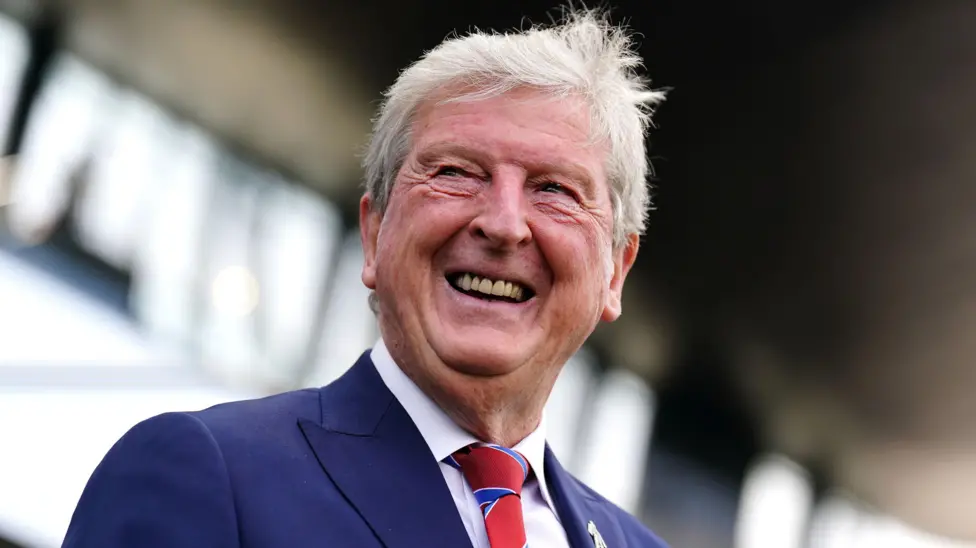
Roy Hodgson Returns to Management After 50 Years as Bristol City Gamble on Experience
The idea of marking half a century in football management might, for many, involve reflection, relaxation, and a step away from the touchline. But for Roy Hodgson, celebration comes in a very different form—by stepping back into the dugout once again.
At 78 years old, the former England manager has made a surprising return to management, taking charge of Bristol City for the final stretch of the season. This unexpected move has captured attention across the football world, not only because of Hodgson’s age, but also because it marks a return to a club that dismissed him more than four decades ago.
A career that refuses to slow down
Hodgson’s managerial journey began in 1976 with Halmstads BK in Sweden, launching a career that has spanned continents, cultures, and competitions. Over the decades, he has managed club and international teams, earning a reputation as one of football’s most experienced and respected figures.
When he left Crystal Palace in February 2024, it seemed like the natural conclusion to a long and distinguished career. Many assumed he would finally retire, perhaps dedicating more time to his personal interests, including his well-known love of literature, with authors like Milan Kundera, John Updike, and Philip Roth among his favorites.
Instead, Hodgson has chosen to return to the pressures and unpredictability of football management, once again proving that the sport’s pull is difficult to resist.
A short-term mission at Bristol City
Hodgson steps in following the dismissal of Gerhard Struber, taking over for the final seven matches of the Championship season. While the appointment is temporary, it is one of the most unexpected developments of the campaign.
Currently sitting mid-table, Bristol City began the season with ambitions of securing a play-off place. However, inconsistent performances have left them underperforming, and the club now faces the challenge of stabilizing results and restoring confidence.
Hodgson’s role is clear: steady the team, calm tensions among supporters, and guide the club safely through the remainder of the season.
Football’s irresistible pull for veteran managers
Hodgson’s return is not an isolated case. Across the footballing world, several veteran managers continue to defy expectations by returning to high-pressure roles well into their later years.
Martin O’Neill, at 74, has also been active, taking charge of Celtic for a second spell this season. His involvement in a competitive title race highlights how experience remains highly valued in the modern game.
Similarly, Neil Warnock, aged 77, recently returned to manage Torquay United on a short-term basis.
Meanwhile, speculation has even surrounded Harry Redknapp, who at 79 has expressed willingness to return to Tottenham Hotspur if the opportunity arises. While such a move may seem unlikely, Hodgson’s comeback shows that in football, surprises are never far away.
A career of highs and setbacks
Hodgson’s reputation is built on a career filled with both success and disappointment. While he is widely respected within the game, his tenure at some high-profile clubs brought significant challenges.
His time at Liverpool in 2010 remains one of the most difficult periods of his career. Taking charge during a time of financial uncertainty, he struggled to achieve results and never fully gained the support of fans. His tenure lasted just seven months, ending with the team languishing in the lower half of the Premier League table.
Similarly, his spell as England manager brought mixed results. While he guided the team through multiple tournaments, there were notable disappointments, including elimination at the group stage of the 2014 FIFA World Cup and a shocking defeat to Iceland at UEFA Euro 2016.
Despite these setbacks, Hodgson’s broader career tells a more positive story.
Achievements across Europe
Hodgson’s success in Scandinavia is particularly noteworthy. At Halmstad, he won league titles in 1976 and 1979, establishing himself as a pioneering figure in Swedish football.
He later achieved even greater success with Malmo FF, leading them to five consecutive league championships. His achievements in the region earned him legendary status and laid the foundation for opportunities elsewhere in Europe.
In Switzerland, Hodgson managed Neuchatel Xamax before taking charge of the national team. Under his leadership, Switzerland qualified for the 1994 World Cup and Euro 96, marking a period of significant progress.
His success led to a move to Inter Milan, where he guided the team to the final of the 1997 UEFA Cup. Although they lost to Schalke 04, the achievement remains one of the highlights of his managerial career.
A reputation for stability
Beyond trophies and finals, Hodgson has built a reputation as a manager capable of bringing stability to struggling clubs. Teams like Fulham, West Bromwich Albion, and Crystal Palace all benefited from his ability to organize teams and steer them away from relegation threats.
This ability to steady the ship is precisely why Bristol City have turned to him at this stage of the season.
A challenging environment at Bristol City
Hodgson’s return to Bristol City comes at a time of uncertainty. The club currently sits in the lower half of the Championship table, and frustration among supporters has been growing.
Chief executive Charlie Boss will hope that Hodgson’s calm and experienced approach can help ease tensions and restore confidence within the squad.
Interestingly, Hodgson’s previous spell at the club was also marked by financial difficulties, making this return something of a full-circle moment. Once again, he finds himself tasked with stabilizing a team during a challenging period.
A short-term solution with long-term implications
While Hodgson’s appointment is expected to last only until the end of the season, his influence could have lasting effects. Bristol City are in the process of restructuring, including plans to appoint a sporting director and eventually a new head coach.
In this context, Hodgson’s experience will be invaluable. His role is not just about results, but also about ensuring a smooth transition and setting the foundation for future progress.
Conclusion
Roy Hodgson’s return to management is a testament to his enduring passion for football. Even after 50 years in the game, he remains driven to contribute, guide, and compete.
His appointment at Bristol City may be temporary, but it highlights the continued relevance of experience in modern football. As the season draws to a close, all eyes will be on whether Hodgson can once again prove his ability to steady a club in turbulent times.
For more football news and updates, visit: https://netsports247.com/