
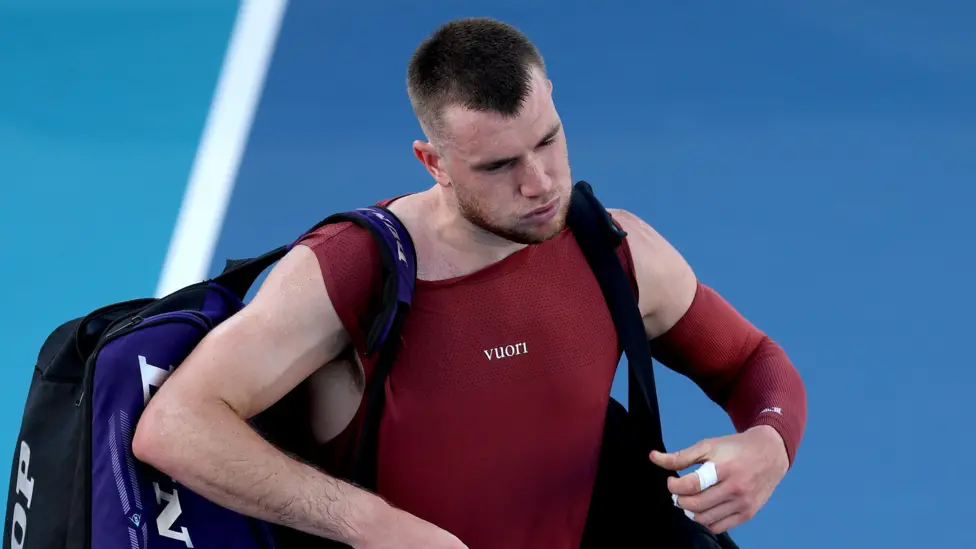
British tennis star Jack Draper has made the decision to withdraw from the upcoming Monte Carlo Masters as he continues a careful and measured recovery from an arm injury that has significantly impacted his recent career.
The 24-year-old, who has emerged as one of Britain’s most promising talents, is taking a cautious approach after dealing with a bruised bone in his left serving arm. This injury previously forced him out of action for approximately six months, interrupting his momentum and raising concerns about his long-term fitness.
A Gradual Return to Competitive Tennis
After a lengthy rehabilitation period, Draper recently returned to the professional circuit and has competed in three tournaments within a five-week span. His comeback began on a positive note at the Dubai Tennis Championships, where he secured a victory that signaled encouraging progress in his recovery.
Building on that momentum, Draper delivered one of the standout moments of his return at Indian Wells, where he defeated tennis legend Novak Djokovic on his way to reaching the quarter-finals. The win demonstrated that, despite his injury struggles, Draper remains capable of competing at the highest level.
However, his run of matches also highlighted the importance of managing his workload carefully. At the Miami Open, Draper was defeated in his opening match by Reilly Opelka. While the result itself was disappointing, Draper reported feeling physically strong after the match, suggesting that his recovery is progressing in the right direction.
Why Skipping Monte Carlo Makes Sense
Despite feeling relatively fit, Draper and his team have opted to skip the Monte Carlo Masters, which marks the beginning of the European clay-court season. This prestigious tournament, starting on 5 April, is one of the most important stops on the ATP calendar and typically attracts the world’s top players.
However, given Draper’s recent injury history and the demanding nature of the clay season, the decision to withdraw reflects a strategic choice aimed at preserving his long-term health. With eight months still remaining in the tennis season, pushing too hard too soon could risk aggravating his injury.
Instead of competing in Monte Carlo, Draper plans to remain in London, focusing on training, improving his physical condition, and fine-tuning his game. This approach allows him to build strength gradually while avoiding unnecessary strain.
A Busy Season Ahead
The clay-court swing is one of the most physically demanding periods in professional tennis. Following Monte Carlo, players typically compete in major tournaments such as the Madrid Open and the Italian Open before the season culminates at the French Open in early June.
Draper’s decision to skip the opening event of this stretch suggests he is prioritizing quality over quantity. By carefully selecting when to compete, he aims to ensure that he is in peak condition for the most important tournaments later in the season.
Interestingly, Draper is not the only high-profile player to withdraw from Monte Carlo. Other notable names, including Djokovic and Taylor Fritz, have also opted out, highlighting how players are increasingly managing their schedules to maintain fitness throughout a long and demanding season.
Looking Ahead to Grass-Court Season
Following the clay-court campaign, the ATP Tour quickly transitions to the grass-court season. This is a particularly significant period for Draper, as he will have the opportunity to compete on home soil at prestigious events such as the Queen’s Club Championships and Wimbledon.
Draper has already shown promise on grass courts, and with the support of home fans, he will be eager to make a strong impression. Ensuring he is fully fit for these tournaments is likely a key factor behind his cautious approach now.
Impact on Rankings and British Tennis
Due to his extended absence from competition, Draper has experienced a drop in the ATP rankings. Once ranked as high as world number four, he has slipped to 25th and has been overtaken as British number one by Cameron Norrie.
While this may seem like a setback, rankings are often secondary to a player’s health and long-term development. Draper’s priority is clearly to return to full fitness, which will ultimately give him the best chance of climbing back up the rankings.
A History of Injury Challenges
Draper’s career has been marked by periods of physical difficulty, and his latest injury is part of a broader pattern. The issue with his serving arm first became noticeable during last year’s clay-court season, when he began experiencing discomfort.
Initially, Draper attempted to play through the pain, but the situation worsened. He ultimately withdrew from the US Open before his second-round match and made the difficult decision to cut his season short.
He also chose to skip the Australian Open earlier this year, further emphasizing his commitment to recovery.
A “Better Safe Than Sorry” Approach
Draper’s decision-making reflects a clear philosophy: prioritize long-term success over short-term gains. His team has adopted a “better safe than sorry” approach, recognizing the risks associated with rushing back from injury.
This strategy may require difficult choices, such as withdrawing from high-profile tournaments, but it also increases the likelihood of sustained success in the future.
Importantly, there are no indications that his latest withdrawal is due to a new setback. Instead, it is being described as a precautionary measure designed to protect his health.
Positive Signs for the Future
Despite the challenges he has faced, there are encouraging signs for Draper. He has been actively training on court and continues to build his fitness levels. His performances since returning suggest that he retains the talent and determination needed to compete at the highest level.
Draper is targeting a return to competitive action at the Barcelona Open in the coming weeks. This timeline allows him additional time to prepare while still participating in the clay-court season.
Conclusion
Jack Draper’s withdrawal from the Monte Carlo Masters highlights the importance of patience and smart decision-making in professional sport. While fans may be disappointed not to see him compete, his cautious approach reflects a commitment to long-term success.
By focusing on recovery, training, and gradual progress, Draper is positioning himself for a stronger and more sustainable return. With major tournaments on the horizon, including Wimbledon, his careful planning could ultimately pay off in a big way.
For more sports updates and latest news, visit: https://netsports247.com