
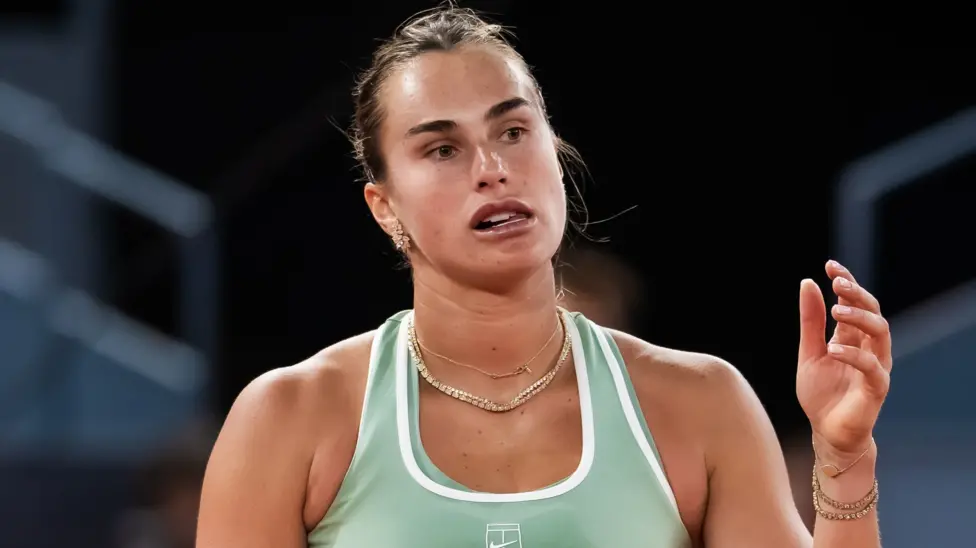
World number one Aryna Sabalenka has suggested that a boycott of one of tennis’s four Grand Slam tournaments could eventually become a reality if ongoing disagreements over prize money and player rights are not resolved. Her comments come amid growing tension between top-ranked players and the organizers of the sport’s biggest events.
The issue at hand revolves around how much of the revenue generated by Grand Slam tournaments is shared with the players. Leading figures from both the men’s and women’s tours, particularly those ranked inside the top 10, have been pushing for a larger percentage of the earnings. In addition to financial concerns, players are also seeking improved benefit structures and a stronger voice in decisions related to scheduling and tournament organization.
Until recently, many players had been cautious when discussing the possibility of extreme measures such as a strike or boycott. However, Sabalenka’s remarks in Rome, ahead of the Italian Open, signaled a shift in tone. She openly acknowledged that refusing to participate in a Grand Slam might ultimately be the only effective way for players to secure what they believe to be fair treatment.
Sabalenka emphasized the central role players play in the success of these tournaments. She argued that without the athletes, the events would lose their entertainment value and global appeal. According to her, this leverage gives players the ability to demand better conditions and a more equitable share of revenues.
Echoing this sentiment, fourth-ranked Coco Gauff expressed strong support for collective action. She stated that she could fully envision herself participating in a boycott, provided that it was a unified effort involving a large number of players. Gauff highlighted the importance of solidarity, noting that meaningful change often requires collective action rather than isolated efforts.
However, not all players are convinced that a boycott is the right approach. World number three Iga Swiatek acknowledged that players deserve a larger share of tournament revenues but described the idea of boycotting a Grand Slam as somewhat extreme. She emphasized the importance of dialogue and negotiation, suggesting that constructive discussions with governing bodies could lead to a mutually beneficial outcome.
Similarly, British player Emma Raducanu made it clear that she would not participate in any boycott. For Raducanu, Grand Slam tournaments hold a special significance that goes beyond financial considerations. She described them as the essence of tennis, offering experiences and achievements that cannot be measured purely in monetary terms.
The debate over prize money has been fueled by recent developments at major tournaments. At the French Open, held at Roland Garros, prize money has increased by 9.5% this year. While this represents a notable rise, players argue that it still falls short of their expectations. They believe that around 22% of the tournament’s revenue should be allocated to players, indicating a significant gap between current figures and their demands.
In contrast, other Grand Slam events have made more substantial increases. The prize fund at the US Open rose by approximately 20% last year, while the Australian Open saw an increase of nearly 16% earlier this year. Meanwhile, Wimbledon is expected to announce its prize money details in the coming weeks, which could further influence the ongoing discussions.
The question of whether a boycott is likely remains uncertain. Gauff reiterated that such action would only be feasible if players acted together. She pointed out that in other sports, major advancements in player rights have often been achieved through unionization and collective bargaining. This suggests that tennis players may need to adopt a more organized approach to strengthen their negotiating position.
World number two Elena Rybakina offered a more neutral perspective. While she has not been directly involved in the campaign, she indicated that she would support a boycott if it were backed by the majority of players. Her stance reflects a willingness to follow collective decisions rather than take a leading role in the movement.
On the other hand, Swiatek continued to advocate for dialogue over confrontation. She stressed the importance of maintaining open communication with tournament organizers and governing bodies. According to her, creating opportunities for discussion and negotiation is the most effective way to address the issues at hand.
Swiatek also pointed out the challenges of organizing a boycott in an individual sport like tennis. Unlike team sports, where players operate within a unified structure, tennis players compete independently against one another. This dynamic makes it more difficult to coordinate collective action and ensure widespread participation.
Raducanu’s perspective further highlights the complexity of the situation. Having recently withdrawn from the Italian Open due to post-viral symptoms, she emphasized her desire to compete in Grand Slam events whenever possible. For her, the prestige and personal fulfillment associated with these tournaments outweigh financial considerations.
Another prominent voice in the debate is Jessica Pegula, who has been a strong advocate for improved player conditions. Despite her support for the campaign, Pegula has expressed skepticism about the likelihood of a boycott. In a previous interview, she suggested that players value Grand Slam tournaments too highly to consider withdrawing from them.
Pegula’s comments reflect a broader sentiment among players, many of whom are seeking change but are reluctant to take drastic measures that could disrupt the sport. Instead, they are focusing on continued advocacy and negotiations to achieve their goals.
The ongoing dispute highlights the evolving relationship between players and tournament organizers. As the sport grows in popularity and generates increasing revenue, questions about fairness and distribution of wealth have become more prominent. Players are increasingly aware of their value and are seeking a greater share of the financial rewards.
At the same time, organizers must balance these demands with the costs of hosting large-scale events and maintaining the infrastructure required to support them. This creates a complex negotiation process, with both sides needing to find common ground.
As discussions continue, the possibility of a boycott remains a topic of debate rather than an imminent reality. While some players, like Sabalenka and Gauff, are open to the idea, others prefer a more measured approach focused on dialogue and compromise.
Ultimately, the outcome of this dispute will depend on the willingness of both players and organizers to engage in meaningful discussions and reach a fair agreement. Whether through negotiation or collective action, the goal remains the same: to create a system that reflects the contributions and value of the players while ensuring the continued success of the sport.
For more sports news and updates, visit: https://netsports247.com