
The opening round of the US PGA Championship delivered a dramatic and unexpected challenge for the world’s top golfers, as Aronimink Golf Club proved far more difficult than many had predicted. Pre-tournament discussions suggested that the Pennsylvania course might yield low scores, with some even speculating that the winning total could reach 15 to 20 under par. However, the reality turned out to be very different, as the course resisted such expectations and tested players to their limits.
At the end of the first round, only 32 players out of a field of 156 managed to finish under par, highlighting the demanding nature of the layout. Thick rough, undulating fairways, and firm, sloping greens combined to create a formidable test, leaving even the world’s elite struggling to maintain control.
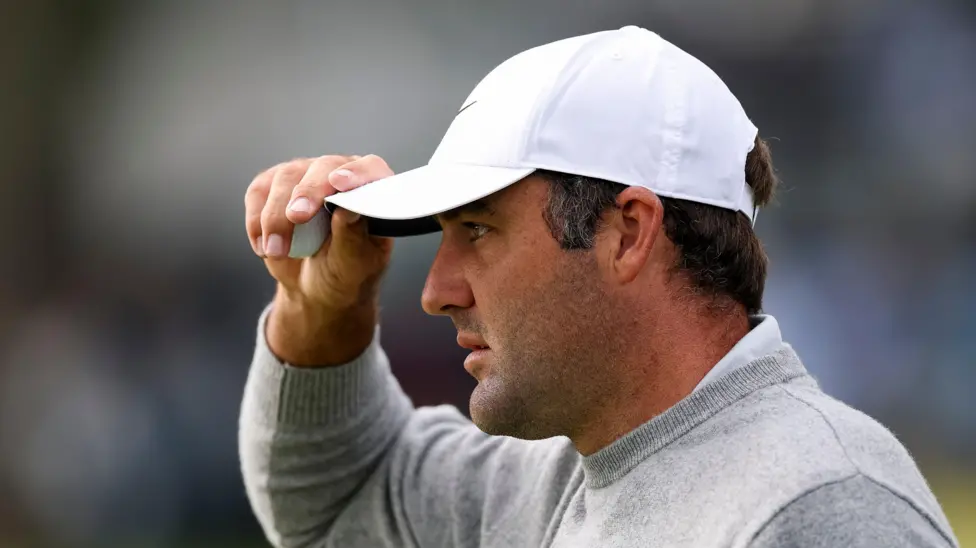
Leading the way was world number one Scottie Scheffler, who demonstrated his class with a composed and methodical performance. The defending champion carded a three-under-par 67 to share the lead in a seven-way tie. His round was characterized by precision and consistency, as he navigated the course with minimal mistakes and showcased his ability to remain calm under pressure.
Scheffler’s strong start is particularly notable given his recent struggles to begin tournaments quickly. This marked the first time in his career that he has held the lead after the opening round of a major championship, signaling a potential shift in his approach and confidence.
Joining Scheffler at the top of the leaderboard are several players who were not widely expected to contend. Germany’s Martin Kaymer and Stephan Jaeger, South Africa’s Aldrich Potgieter, Australia’s Min-Woo Lee, Japan’s Ryo Hisatsune, and American Alex Smalley all posted scores of three under par. Their presence at the summit adds an element of surprise to the tournament and reflects the unpredictable nature of the conditions.
Just one shot behind the leaders is a group of players at two under par, including Canada’s Corey Conners, American Patrick Reed, Ireland’s Shane Lowry, England’s Dan Brown, Sahith Theegala, Max Greyserman, and Xander Schauffele. Brown’s performance is particularly impressive, as it comes in his debut appearance at a major championship outside the UK.
Spain’s Jon Rahm, who finished one under par, suggested that course officials may have taken steps to increase the difficulty after hearing early predictions of low scoring. His comments underline the sense that Aronimink was deliberately set up to challenge players and prevent an easy scoring environment.
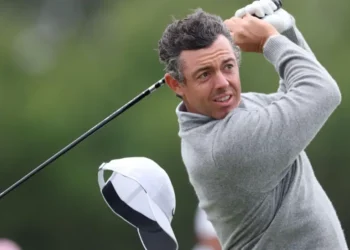
Among those who struggled most was Rory McIlroy, the world number two and recent Masters champion. McIlroy endured a difficult round, finishing four over par and seven shots off the lead. His performance was marred by inconsistent driving, which has been a recurring issue throughout his season.
Initially, McIlroy appeared to be managing the course effectively, but his round unraveled in the closing stages. He recorded four consecutive bogeys to finish with a score of 74, highlighting the punishing nature of Aronimink for even the smallest mistakes.
Reflecting on his performance, McIlroy acknowledged that missing fairways carried a greater penalty than he had anticipated. His inability to find the fairway consistently left him in challenging positions, forcing him to play from thick rough and limiting his scoring opportunities.
This struggle off the tee has been a persistent problem for McIlroy, even during his successful Masters campaign. At Augusta National, he was able to rely on his short game to recover from errant drives, but Aronimink offered no such margin for error.
Bryson DeChambeau, another player known for his power off the tee, also found himself in difficulty. He posted a score of 76, as his aggressive approach was undermined by poor execution around the greens. His struggles highlighted the importance of precision and touch over sheer distance on this particular course.
The greens at Aronimink proved to be one of the most challenging aspects of the layout. Their complex slopes and firm surfaces made putting extremely difficult, with many players struggling to judge pace and line. Even well-struck shots could quickly turn into costly mistakes if they failed to stop near the hole.
One notable example came when DeChambeau’s delicate chip on the 11th green rolled far beyond the target, illustrating how unforgiving the conditions could be. Such moments emphasized the need for careful course management and precise execution.
Patrick Reed stood out as the only player to complete a bogey-free round, an impressive achievement given the difficulty of the course. His performance demonstrates the value of consistency and discipline in navigating such a demanding environment.
English players Matt Fitzpatrick and Justin Rose, both considered among the favorites, managed to finish at level par. While not spectacular, their rounds kept them within reach of the leaders and highlighted their resilience in challenging conditions.
Former European Ryder Cup captain Paul McGinley observed that many players may have underestimated the difficulty of the course, particularly when playing from the rough. He also noted that the challenging greens contributed to the relatively low number of putts being holed.
Rory McIlroy’s frustrations were evident during his post-round interview, where his initial reaction summed up his disappointment. He pointed to a series of missed fairways as the key factor behind his struggles, detailing how errant drives on multiple holes left him in difficult positions.
His round began poorly with a bogey on the 10th hole after finding the rough and failing to reach the green with his second shot. Although he managed to stabilize his performance temporarily, the closing stretch proved too much to handle, resulting in a series of late bogeys.
McIlroy’s statistics tell the story of his round, with only five fairways hit throughout the day. This lack of accuracy made it extremely challenging to create scoring opportunities and maintain momentum.
Meanwhile, Martin Kaymer enjoyed a resurgence after a period of relative obscurity. The former world number one revealed that a comment made during the Champions Dinner had motivated him to perform well. Being asked whether he was still actively playing professional golf served as a wake-up call, inspiring him to prove his capabilities.
Kaymer’s recent struggles have been influenced by injuries and limited practice time since joining LIV Golf in 2022. However, his strong start at Aronimink suggests that he is regaining form and confidence.
Finally, the tournament also saw renewed focus on player behavior, following recent incidents at the Masters involving emotional outbursts. In response, the PGA of America introduced a code of conduct, warning players of potential penalties for inappropriate actions.
Jon Rahm and Justin Thomas both found themselves in situations that could attract scrutiny. Rahm accidentally struck a volunteer with debris after a frustrated swing, while Thomas showed visible anger during his round. Both incidents highlight the importance of maintaining composure under pressure.
As the tournament progresses, the challenging conditions at Aronimink are expected to continue playing a decisive role. With many top players struggling and an unexpected leaderboard taking shape, the US PGA Championship is already proving to be one of the most unpredictable and compelling events of the season.
For more sports news and updates, visit: https://netsports247.com