
Women’s Africa Cup of Nations 2026 Postponed Just Days Before Kick-off
The 2026 Women’s Africa Cup of Nations (WAFCON) has been unexpectedly postponed only days before the competition was scheduled to begin in Morocco. The announcement came from the Confederation of African Football (CAF), which confirmed that the tournament will now take place later in the year because of what it described as “unforeseen circumstances.”
Originally, the competition was scheduled to run from 17 March to 3 April 2026, with Morocco set to host the tournament for the third consecutive time. However, CAF has now rescheduled the event to 25 July through 16 August, leaving teams, players, and fans scrambling to adjust their plans after months of preparation.
CAF released a statement on Thursday explaining that the decision was made in order to guarantee the overall success of the tournament. While the governing body did not go into detail about the specific reasons behind the delay, it emphasized that preparations for the competition are ongoing and that the change was necessary to ensure the tournament meets the required standards.
Morocco’s Role as Host Nation
Morocco had been preparing to host another edition of the Women’s Africa Cup of Nations following its successful staging of recent tournaments. The country hosted the 2022 edition and also organized the delayed 2024 tournament, which was eventually played in 2025 due to scheduling complications.
Despite Morocco’s experience hosting major football events, there had already been growing uncertainty about whether the country would again stage the 2026 tournament. Reports circulating in recent weeks suggested the possibility of a change in host nation, which created anxiety among national teams and supporters.
Those concerns intensified after the dramatic scenes during the 2025 men’s Africa Cup of Nations final, where Morocco lost 1–0 to Senegal at the Stade Moulay Abdellah stadium in Rabat. The chaotic atmosphere surrounding that match sparked questions about tournament logistics and security arrangements.
Although CAF has confirmed the postponement of the women’s competition, the organization has not clarified whether Morocco will remain the host nation for the rescheduled tournament.
A Crucial Tournament for World Cup Qualification
The 2026 edition of WAFCON carries additional importance because it will also serve as a qualification pathway for the 2027 FIFA Women’s World Cup, which will be held in Brazil.
Sixteen teams had already secured their places in the expanded tournament, and the group stage draw was completed on 15 January. However, CAF had yet to release the full match schedule before announcing the postponement.
For many teams, preparations were already well underway. National squads had organized training camps, friendly matches, and travel plans, all of which now need to be adjusted following the unexpected delay.
Concerns Over Women’s Football in Africa
The postponement has once again raised questions about the level of priority given to women’s football across the African continent. Critics argue that women’s competitions often face scheduling disruptions that would be unlikely to occur with major men’s tournaments.
Former Nigeria captain Desire Oparanozie expressed disappointment about the recurring challenges facing the women’s game in Africa. Speaking to BBC Sport Africa, Oparanozie said she was worried about the pattern of delays and cancellations affecting the tournament.
She pointed out that the 2020 WAFCON was completely cancelled because of the Covid-19 pandemic, while the 2021 men’s Africa Cup of Nations was still held in Cameroon despite similar challenges. According to her, this highlights the disparity between how men’s and women’s competitions are treated.
Oparanozie suggested that women’s football is still not receiving the recognition and support it deserves. She believes greater commitment is needed from football authorities to ensure stability and consistency in the women’s game.
Scheduling Problems Continue
This latest postponement is not the first time CAF has been forced to rearrange a major football competition at short notice.
In early 2025, the 2024 African Nations Championship (CHAN) was delayed just 18 days before it was due to begin. That tournament, which was supposed to be hosted jointly by Kenya, Tanzania, and Uganda, was postponed because organizers needed additional time to complete stadiums and infrastructure.
Eventually, the CHAN finals were played several months later in August.
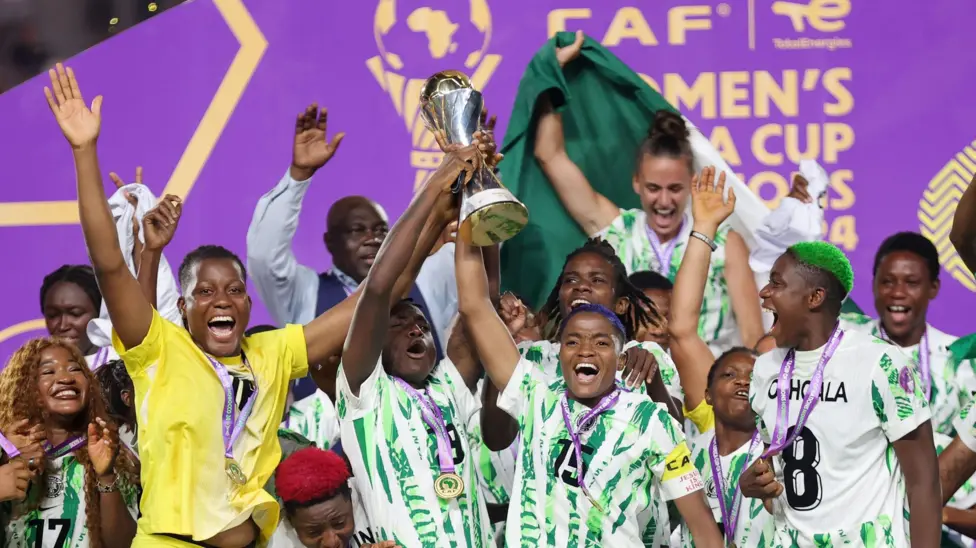
Similarly, the 2024 Women’s Africa Cup of Nations was delayed until July 2025 because of scheduling conflicts, including the Paris 2024 Olympic Games. Despite the delay, that tournament proved highly successful, drawing record crowds and significant television audiences across the continent.
Impact on Players and Teams
For the athletes involved, the postponement presents both physical and psychological challenges. Players had already been preparing intensely for the March kickoff, focusing their training schedules and personal commitments around the competition.
Oparanozie noted that many players may now struggle with the sudden change. She explained that athletes typically dedicate months of preparation for tournaments of this scale, often putting other aspects of their lives on hold.
The uncertainty created by repeated postponements can affect morale and motivation, especially for players who were already approaching peak fitness levels in anticipation of the competition.
Several national teams had already organized international friendlies and training camps to prepare for the tournament. Among them were Nigeria, Cameroon, and Ghana, all of whom had been actively competing in warm-up matches.
Ghana Team Facing Travel Concerns
Ghana’s women’s national team, known as the Black Queens, had been conducting a training tour in the United Arab Emirates ahead of the tournament.
However, the situation has become more complicated because of escalating tensions in the Middle East. The regional conflict has resulted in airspace closures and flight disruptions, which have created logistical concerns for teams traveling internationally.
The team’s media officer confirmed that the Ghanaian squad remains safe while awaiting further travel arrangements. Officials from Ghana’s diplomatic mission have been in contact with the players to ensure their safety and help coordinate their eventual departure.
While the team continues to train, the players are now waiting for more clarity about the tournament schedule and travel plans.
Calls for Better Planning
The repeated delays affecting WAFCON have led many observers to call for improved planning and stronger commitment from CAF.
Oparanozie suggested that the organization should begin identifying alternative host countries capable of stepping in if problems arise. According to her, relying heavily on a single nation such as Morocco could create unnecessary risks for the tournament’s stability.
She believes a broader network of prepared host nations would provide flexibility and reduce uncertainty for players and teams.
Despite the disappointment surrounding the postponement, many supporters remain hopeful that the tournament will eventually take place successfully in July. With the growing popularity of women’s football across Africa, the rescheduled event could still deliver exciting matches and showcase the continent’s best talent.
For more international sports updates, visit https://netsports247.com