
Gianni Infantino’s World Cup Joke Sparks Anger in England and Reopens Old Wounds
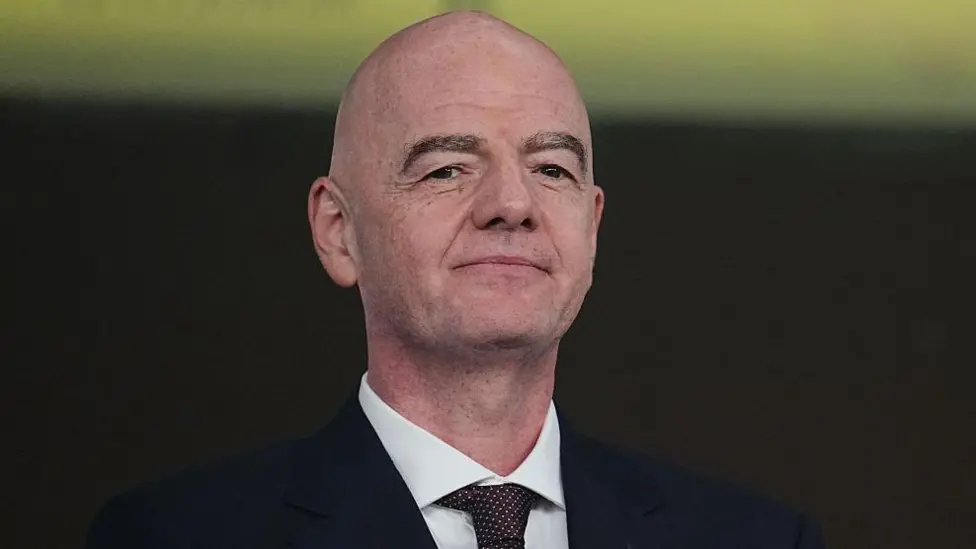
Fifa president Gianni Infantino may have believed he was delivering a harmless joke, but his comments about English fans at the World Cup landed badly back home. What was intended as light-hearted humour instead reignited long-standing sensitivities around England’s footballing reputation and prompted criticism from supporter groups across the UK.
Speaking at the World Economic Forum in Switzerland, Infantino referenced concerns about safety at upcoming World Cups in North America, as well as the criticism surrounding Qatar’s hosting of the 2022 tournament. During his remarks, he claimed that the Qatar World Cup marked a historic first.
“For the first time in history, also, no Brit was arrested during a World Cup,” Infantino said, drawing laughter from the audience. He followed it with: “Imagine. This is something really, really special.”
While the room responded with amusement, the reaction in England was far less forgiving. Many supporters felt the joke leaned into outdated stereotypes and unfairly portrayed England fans as habitual troublemakers on the international stage.
The Football Supporters’ Association (FSA) was quick to respond, accusing Infantino of resorting to “cheap jokes” at the expense of fans who have spent decades trying to move past the stigma of football hooliganism. The organisation argued that the comment ignored significant progress made by supporters and authorities alike in improving fan behaviour and safety at major tournaments.
There was also irritation over Infantino’s use of the term “Brits,” which risks lumping together fans from England, Wales, Scotland and Northern Ireland. Supporters from those nations have their own identities, football cultures and histories, and many felt the remark was both lazy and inaccurate.
England’s relationship with international football authorities has long been shaped by its troubled past. The country’s reputation reached a low point around the turn of the millennium, particularly during Euro 2000, when violent clashes involving England fans in Belgium and the Netherlands drew global condemnation. Those incidents were the culmination of decades of hooliganism that had plagued English football since the 1970s and 1980s.
Since then, significant efforts have been made to rebuild trust and change perceptions. Policing strategies evolved, banning orders were introduced, and cooperation between clubs, authorities and supporter groups improved dramatically. England fans at recent tournaments have often been praised for their passion, colour and organisation rather than feared for disorder.
Against that backdrop, Infantino’s remark felt to many like a step backwards. Critics argued it perpetuated an outdated caricature that no longer reflects reality and undermined years of work by fans and governing bodies to modernise football culture.
The comment also raised questions about whether the lack of arrests in Qatar was genuinely unusual. In truth, the 2022 World Cup saw very few arrests involving supporters from any country. Qatar’s strict laws, heavy policing and controlled fan zones contributed to an environment where incidents were rare across the board.
Alcohol restrictions also played a major role. With limited access to alcohol around stadiums and public areas, one of the traditional triggers for football-related disorder was largely absent. Many fans noted that the absence of arrests said as much about the host nation’s regulations as it did about supporter behaviour.
In addition, attendance numbers for some nations were lower than at previous World Cups due to travel costs, accommodation issues and human rights concerns. England fans who did attend were subject to intense scrutiny, which may have deterred any potential troublemakers.
As a result, some questioned whether Infantino’s comment reflected a genuine statistical anomaly or was simply a convenient punchline designed to entertain a business audience.
Supporter groups also highlighted the irony of making such remarks while promoting future World Cups in North America, where organisers are keen to attract fans from around the world. Suggesting that British supporters are historically prone to arrest risks reinforcing stereotypes that could affect how fans are treated by host nations and authorities.
From Fifa’s perspective, Infantino may have been attempting to emphasise how smoothly Qatar 2022 passed in terms of crowd control, countering criticism that surrounded the tournament’s organisation. However, by singling out “Brits,” he inadvertently placed blame and ridicule on one group rather than focusing on broader structural factors.
The episode also underscores the delicate balance football’s global leaders must strike when speaking publicly. While humour can humanise administrators, it can also alienate supporters when it touches on sensitive issues tied to identity, history and national reputation.
For England fans, the frustration is rooted not just in the joke itself, but in what it represents. Many feel that no matter how much progress is made, old narratives resurface at the slightest opportunity. The sense that England supporters are still viewed through the lens of past behaviour remains a sore point.
Whether Infantino intended offence or not, the fallout illustrates how deeply these issues still resonate. Football, after all, is not just a sport—it is bound up with national pride, collective memory and cultural identity.
As preparations continue for future World Cups, particularly the expanded tournament in 2026, organisers will need the cooperation and goodwill of travelling supporters. Building trust rather than recycling stereotypes may prove far more productive.
For now, Infantino’s comment serves as a reminder that words spoken casually on global stages can carry weight far beyond the room in which they are said.
👉 More football news and World Cup analysis:
https://netsports247.com