
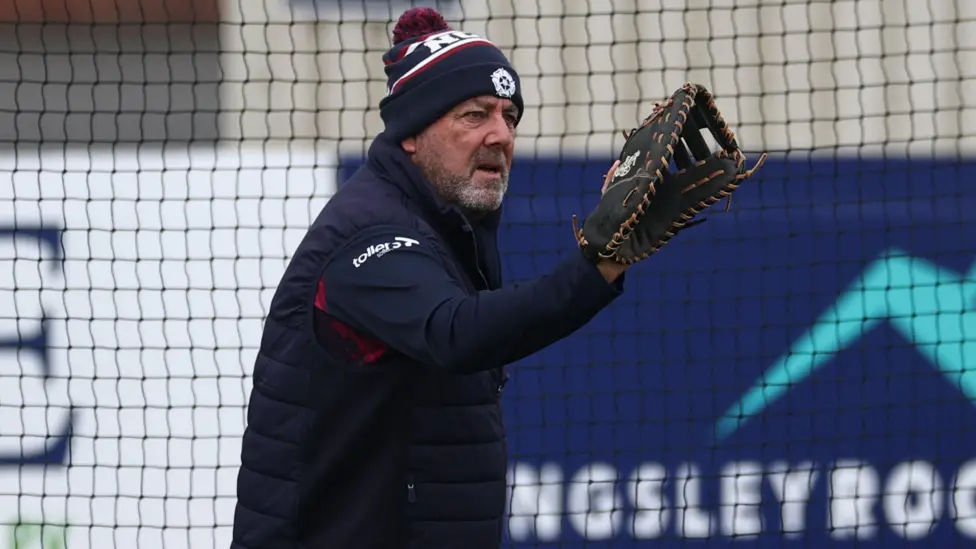
Northamptonshire’s head coach Darren Lehmann has raised concerns about the limited involvement of England’s international players in county cricket, suggesting that the lack of participation is impacting both player development and the national team’s overall performance. He also believes that selectors have not paid sufficient attention to standout performers in the domestic circuit.
Now in his second season at Wantage Road, Lehmann expressed optimism that the England and Wales Cricket Board (ECB) will strengthen its connection with county teams following England’s disappointing Ashes campaign in Australia. The 4-1 series defeat exposed several issues within the system, including preparation, selection, and player readiness.
Lehmann revealed that during his first year as Northamptonshire’s head coach, he did not encounter any England selectors at matches. This lack of presence raised questions in his mind about how closely domestic performances are being monitored. However, he has since had discussions with key figures such as England’s managing director Rob Key and Test captain Ben Stokes, which he hopes will lead to improvements in communication and scouting.
One of the most notable examples cited by Lehmann is Northamptonshire batter Saif Zaib. The 27-year-old left-hander had an outstanding domestic season, finishing as the country’s leading run-scorer with 1,425 runs at an impressive average close to 65. His tally included six centuries, showcasing consistency and resilience across the campaign. Despite these achievements, Zaib was not selected for the England Lions’ winter tour, a decision Lehmann believes highlights the disconnect between domestic performances and national selection.
Lehmann emphasized that England players should spend more time playing county cricket, arguing that regular participation in the domestic game would better prepare them for international challenges. While he acknowledged that such decisions are ultimately made by the ECB, he stressed the importance of maintaining a strong link between county cricket and the national side.
He suggested that the governing body appears willing to engage more closely with counties moving forward. Rather than acting as a distant authority, the ECB seems intent on ensuring that county voices are heard and that talent across all divisions is properly evaluated. According to Lehmann, there are numerous players within the county system who could contribute at higher levels if given the opportunity.
England’s Ashes campaign provided further evidence of the issue. Of the team that played in the opening Test, very few had significant recent experience in the County Championship. Opener Ben Duckett made just one appearance for Nottinghamshire, while his partner Zak Crawley featured in four matches for Kent in Division Two.
Ollie Pope had slightly more involvement, playing six games for Surrey, but key figures such as Joe Root and Harry Brook each played only once for Yorkshire. That match ended in a defeat to Warwickshire, highlighting the lack of match practice at the domestic level.
Wicketkeeper Jamie Smith participated in just three games for Surrey, and even then, he did not take on his usual role behind the stumps. Among the bowlers, Gus Atkinson made four appearances for Surrey, Brydon Carse played only once for Durham, and Jofra Archer delivered a mere 18 overs for Sussex. Meanwhile, Mark Wood did not feature at all due to recovery from knee surgery.
This limited exposure to red-ball cricket raised concerns about England’s preparation for the Ashes. Lehmann pointed out that the team might have benefited from playing additional first-class matches before the series began, rather than focusing on white-ball fixtures.
Rob Key has acknowledged the need for stronger ties between the national team and the county system. He recently stated that the ECB plans to establish a “County Insight Group,” which will include coaches and directors of cricket from both divisions. This group will meet several times a year to provide feedback and insights into player performance and potential selection.
Key also defended the current selection process, explaining that it relies on a comprehensive scouting network and advanced analytics. Every ball in domestic matches is tracked, and multiple scouts attend games to assess players. However, he admitted that with no dedicated selector currently in place, the new initiative will play a crucial role in identifying talent.
Lehmann also addressed criticism surrounding England’s preparation during the Ashes tour, particularly a controversial break in Noosa, Queensland. While some reports suggested players indulged excessively during the break, Lehmann dismissed these claims. He observed players during that period and found them to be professional and focused.
Drawing from his own experience as a former international player, Lehmann argued that modern cricketers are generally more disciplined than previous generations. He believes the issue lies not in off-field behavior but in inadequate preparation and scheduling decisions.
He suggested that England should have played additional first-class matches instead of a one-day series in the lead-up to the Ashes. Such preparation, he believes, would have better equipped players to handle the challenges of Test cricket in Australian conditions.
Looking ahead, Lehmann expects England to perform strongly in their upcoming home Test series. The summer begins with a three-match series against New Zealand in June, followed by a series against Pakistan later in the season. He anticipates that England will play an aggressive and entertaining brand of cricket, particularly on flatter pitches.
However, he also cautioned that the team must strike a balance between aggression and adaptability. During the Ashes, England’s overly aggressive approach proved costly, especially when conditions favored bowlers. Lehmann believes that refining their strategy and improving preparation will be key to future success.
Ultimately, Lehmann’s comments highlight the importance of bridging the gap between domestic and international cricket. By ensuring that players remain connected to the county system and that selectors closely monitor performances, England can build a stronger, more resilient team capable of competing at the highest level.