
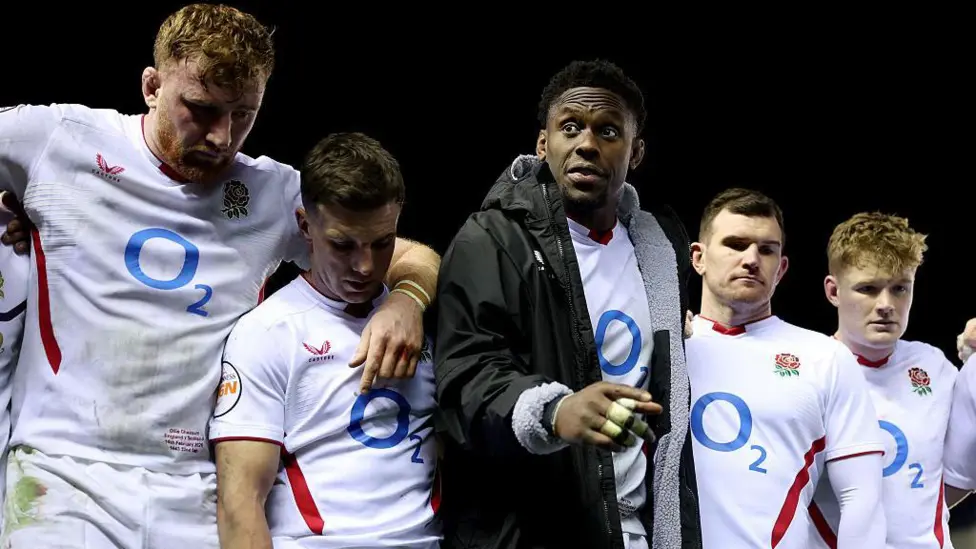
England captain Maro Itoje is set to reach a historic milestone as he prepares to earn his 100th international cap when England take on Ireland this Saturday. At 31, the dynamic second-row forward will become only the ninth men’s player to achieve a century of appearances for England, a remarkable achievement that reflects not just talent but resilience, leadership, and sustained excellence over nearly a decade at the highest level of rugby.
Itoje’s journey to this landmark has been anything but simple. While his rise to prominence once seemed inevitable, his career has included moments of adversity, personal challenges, and periods of intense scrutiny. Yet, through determination and growth, he has established himself as one of the most influential figures in English rugby.
His story began long before his senior debut. After captaining England Under-20s to a World Championship triumph in 2014 and being part of the extended squad preparing for the 2015 Rugby World Cup, Itoje was widely regarded as one of the brightest young prospects in the sport. His long-awaited senior debut finally arrived during the 2016 Six Nations against Italy, when he was just 21 years old. Coming off the bench, he made an immediate impact that showcased his athleticism, intelligence, and physical presence.
His impressive debut performance quickly earned him a starting spot in the following match against Ireland. Reflecting on his early career, Itoje later admitted that missing out on selection for the 2015 World Cup turned out to be a blessing in disguise. That disappointment fueled his motivation, pushing him to improve his game significantly between mid-2015 and early 2016. By the time he cemented his place in the starting lineup, he felt fully prepared to compete at the international level.
Itoje went on to start the remaining matches in that Six Nations campaign, delivering standout performances, including a player-of-the-match display against Wales. England went on to secure a Grand Slam that year, marking a dream start to Itoje’s international career and solidifying his reputation as a rising star.
His rapid ascent continued into 2017 when, at just 22, he was selected for the British and Irish Lions tour of New Zealand, making him the youngest player on the squad. During the tour, his performances captured the imagination of fans, and the now-famous “Oh, Maro Itoje” chant echoed around stadiums as his popularity soared. After an impressive showing off the bench in the first Test, he was promoted to the starting lineup alongside veteran lock Alun Wyn Jones for the crucial second Test in Wellington.
Itoje delivered a sensational performance in that match, earning the player-of-the-match award in what became one of the Lions’ most memorable Test victories. The series eventually ended in a draw, but Itoje returned home as a global rugby star and a household name.
By the time the 2019 Rugby World Cup arrived, Itoje’s career trajectory had already been extraordinary. However, the 2018 season brought a slight dip in form, with then England coach Eddie Jones attributing it to “second-season syndrome.” Itoje himself acknowledged how quickly success had come early in his career and how the sport has a way of humbling even the most talented players.
Determined to rediscover his best form, Itoje delivered a phenomenal World Cup campaign in Japan. He played every minute of England’s knockout matches, including the iconic semi-final win over New Zealand, where his relentless energy and defensive dominance played a crucial role. Although England ultimately fell short in the final against South Africa, Itoje’s performances demonstrated his ability to respond to setbacks and perform under immense pressure.
Another major challenge emerged when Saracens, his club side, were relegated from the Premiership at the end of the 2019–20 season due to salary cap breaches. The situation created uncertainty for many players, but Itoje chose loyalty, staying with the club and helping them rebuild. Despite the controversy surrounding off-field financial matters involving the club, Itoje maintained his focus on rugby and continued to represent England regularly.
During the 2020–21 period, he remained a key figure for the national team while also playing a vital role in Saracens’ promotion back to the top tier. His reduced club schedule did not hinder his international impact, and he was once again selected for the 2021 British and Irish Lions tour to South Africa. His performances during that series were exceptional, earning him the team’s player-of-the-series award despite the Lions losing the series 2–1.
In 2023, Itoje faced another personal and professional challenge when an underlying health issue affected his performances during the Six Nations. At the time, he was unaware of the structural problem impacting his condition. Once diagnosed and treated, he worked diligently to regain his peak form. His perseverance paid off as he played a significant role in England’s campaign at the 2023 Rugby World Cup, helping the team secure a third-place finish and reaffirming his importance to the squad.
Leadership has long been viewed as a natural progression for Itoje. Having captained England at youth level and established himself as a senior leader, many expected him to eventually take on the captaincy role. In 2024, he was appointed captain of Saracens following Owen Farrell’s move to Racing 92, marking his first major leadership position at senior club level.
Interestingly, former England coach Eddie Jones had previously questioned whether Itoje possessed the outward influence typically associated with captains. However, Itoje has since grown significantly as a leader, both on and off the field. His interests extend beyond rugby, including philanthropy, business, art, and political discussions through his podcast, reflecting a multifaceted personality.
Faith also plays a central role in his life, with Itoje often speaking about the importance of daily reflection, prayer, and reading the Bible. These personal values have helped shape his mindset and approach to both challenges and leadership responsibilities.
Later, he succeeded Jamie George as England captain and ended the season by leading the British and Irish Lions to a series victory in Australia, a remarkable achievement that highlighted his rapid development as a leader. Within less than a year, he transitioned from not captaining a senior side to leading multiple elite teams on the international stage.
The 2025–26 season has been somewhat disrupted, as Itoje featured in all four autumn internationals but suffered an injury in the final match against Argentina. Additionally, he faced personal grief after missing the start of the Six Nations training camp to attend his mother Florence’s funeral in Nigeria. Despite these emotional challenges, he returned to play a role in England’s opening win over Wales, showing immense mental strength.
Itoje has consistently proven throughout his career that he can overcome setbacks and rediscover top form when it matters most. As England prepare for a crucial clash against Ireland, a match that could determine their championship ambitions, his leadership and experience will be more important than ever.
England coach Kevin Sinfield has praised Itoje’s growth as a captain, describing him as an outstanding leader who continues to evolve in the role. Reaching 100 caps is not just a personal milestone for Itoje but also a testament to his dedication, resilience, and lasting influence on English rugby.
As he leads England onto the field for this historic appearance, Itoje’s journey serves as a powerful example of perseverance, adaptability, and elite performance. From a promising young talent to a seasoned leader, his career reflects both the highs of sporting success and the strength required to navigate adversity. With his ambition still burning and a desire to win a World Cup gold medal, Itoje’s story is far from over, and his milestone cap is simply another chapter in an already extraordinary rugby legacy.
Read more sports updates at: https://netsports247.com