

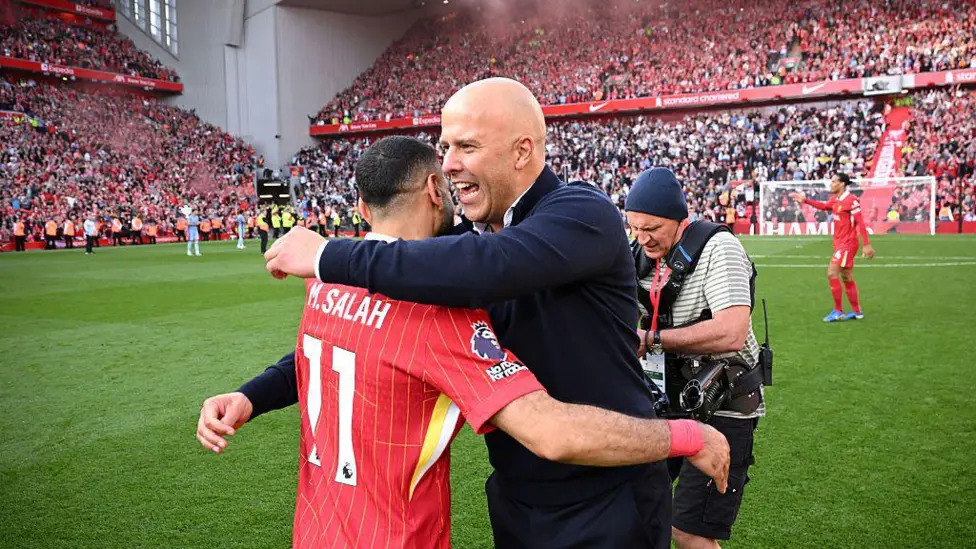
Arne Slot’s Tactical Shift at Liverpool: Control vs Chaos
When Arne Slot arrived at Liverpool, he introduced a noticeably different philosophy from his predecessor Jurgen Klopp.
Rather than seeking a manager with a similar approach, Liverpool’s leadership opted for change. Slot’s arrival brought a calmer, more controlled style of football, which initially felt refreshing for both players and supporters.
A Clear Departure from Klopp’s Style
Under Klopp, Liverpool became famous for their high-intensity, “heavy-metal” football—characterized by relentless pressing, fast transitions, and constant attacking pressure.
Slot, however, implemented a more measured approach. His system emphasized controlled possession, slower build-up play, and less aggressive pressing when out of possession.
This tactical shift was not just about style but also about sustainability. Slot’s methods appeared to reduce physical strain on players, which was reflected in strong fitness levels during his first season.
Fitness and Squad Management
One of the reasons Liverpool’s decision-makers were drawn to Slot was his impressive track record in maintaining player fitness.
Only Ruben Amorim at Sporting CP ranked higher in this regard.
Slot’s training sessions are less intense compared to Klopp’s demanding routines. Instead, they are tailored to individual players and adjusted according to the team’s schedule.
This approach proved effective initially, as Liverpool managed to keep players fit and consistent throughout the previous season, which played a key role in their success.
A Different Story This Season
However, the current season has presented new challenges. Liverpool have struggled with injuries more than before and have also found it difficult to maintain control in matches, particularly in the later stages.
After a frustrating draw against Burnley, captain Virgil van Dijk admitted that the team had become careless after the hour mark, highlighting a recurring issue.
These struggles suggest that while Slot’s methods have advantages, they may also have limitations when not supported by the right player profiles.
The Importance of Klopp’s Foundation
There is a strong argument that Slot’s early success was partly built on the physical foundation established by Klopp.
Klopp’s intense training methods may have been demanding, but they created a squad capable of executing high-energy football. When Slot introduced a more controlled system, it worked well because it was layered on top of this existing physical base.
Now, with changes in the squad, that balance appears to be shifting.
Squad Changes and Their Impact
Liverpool underwent significant changes during the summer transfer window. While these changes were expected to strengthen the team, they may have unintentionally disrupted the balance needed for Slot’s tactics to succeed.
The departures of key attacking players, including Darwin Nunez and Luis Diaz, have had a noticeable impact.
Additionally, the tragic loss of Diogo Jota affected the team’s pre-season preparations and overall structure.
These players were known for their pressing ability, often winning the ball high up the pitch and disrupting opposition build-up play.
Pressing Problems
Slot’s system relies on selective pressing rather than constant pressure. While this approach can be effective, it requires precise coordination and intensity from the entire team.
This season, Liverpool’s forward line has struggled to execute this effectively. Players have been slower to close down opponents, leaving gaps and allowing teams to play through them more easily.
Even though new attackers like Hugo Ekitike and Alexander Isak bring different strengths, they do not replicate the pressing intensity of their predecessors.
Meanwhile, Mohamed Salah, though still highly influential, is now adapting his game as he ages, further changing the team’s attacking dynamics.
A More Conservative Approach
The changes are not limited to pressing. Liverpool’s overall style of play has become more cautious.
Compared to Klopp’s peak years, the team now engages in fewer high-risk actions. They lose possession less frequently but also recover it less often, indicating a safer, less aggressive approach.
This cautious style is particularly evident in build-up play, where the ball often circulates between defenders and midfielders without progressing quickly through the lines.
Missing Creativity in Build-Up
One of the key factors in Liverpool’s previous success was the influence of Trent Alexander-Arnold.
His ability to deliver precise long passes and break defensive lines added unpredictability to Liverpool’s attack.
Alexander-Arnold’s willingness to take risks allowed Liverpool to transition quickly from defense to attack, creating space for players like Salah to exploit.
Without this level of creativity and risk-taking, Liverpool’s build-up play has become more predictable, making it easier for opponents to defend.
Struggles Against Low Blocks
Another challenge Liverpool face this season is dealing with teams that defend deep.
Slot himself has acknowledged that low-block defenses have become more common, making it harder for his team to create scoring opportunities.
Liverpool’s slower tempo and cautious passing give opponents time to organize their defensive structures, reducing the effectiveness of their attacks.
The Case for Controlled Chaos
Former and current players have highlighted the importance of taking calculated risks in football.
Under Klopp, Liverpool often thrived on controlled chaos—losing the ball in advanced areas only to win it back quickly and exploit the resulting space.
This approach created dynamic, unpredictable attacking situations that overwhelmed opponents.
In contrast, Slot’s system prioritizes control, which, while reducing errors, may also limit opportunities to break down well-organized defenses.
Finding the Right Balance
The key challenge for Slot is finding the right balance between control and aggression.
While his approach has clear benefits, including improved structure and reduced physical strain, it must also adapt to the strengths of the current squad.
As Van Dijk recently pointed out after a defeat, Liverpool have at times been too slow and predictable in possession.
Introducing more risk and unpredictability could help unlock defenses and restore the excitement that once defined their play.
Conclusion
Arne Slot’s arrival marked a new chapter for Liverpool, bringing a fresh tactical identity focused on control and efficiency.
However, the team’s struggles this season highlight the complexities of implementing a new system, particularly after significant squad changes.
While Slot’s philosophy has its merits, adapting it to suit the players available will be crucial for long-term success.
Finding a balance between structured play and controlled chaos could be the key to unlocking Liverpool’s full potential once again.
For more football news and updates, visit:
https://netsports247.com