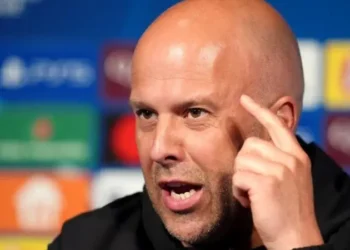

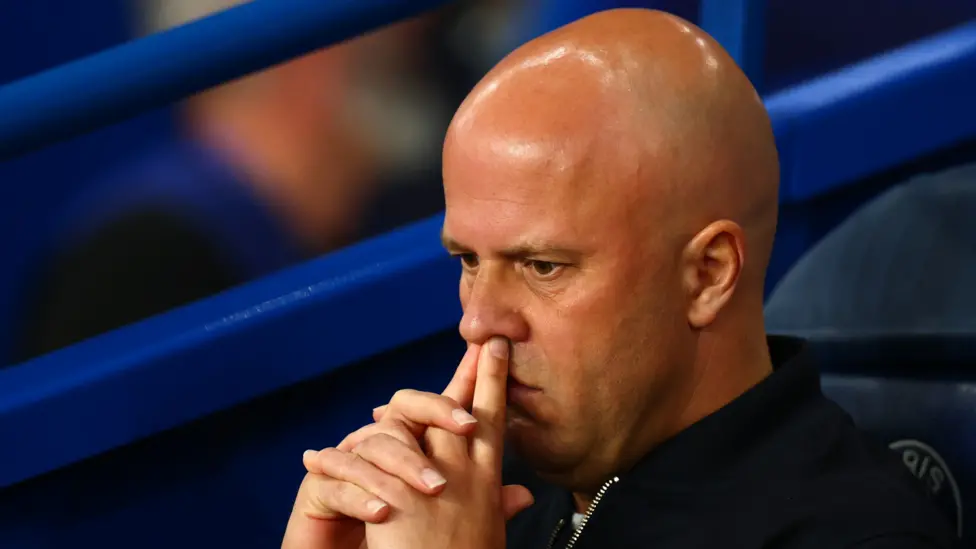
Liverpool manager Arne Slot made a bold and highly scrutinized tactical decision by deploying a back five against reigning European champions Paris Saint-Germain in the first leg of their UEFA Champions League quarter-final. The move immediately drew attention, as it marked a rare departure from Liverpool’s usual setup. However, the outcome—a 2-0 defeat in Paris—has left their European ambitions hanging in the balance.
This tactical shift was unexpected, considering Liverpool had only used a five-man defensive line once before this season, during their Carabao Cup defeat to Crystal Palace. Naturally, questions arose: was Slot’s decision a miscalculation, or were PSG simply too strong on the night?
From the opening whistle, PSG demonstrated their dominance, controlling 74% of possession and registering 18 shots compared to Liverpool’s mere three. While the numbers suggest a one-sided affair, Liverpool did not intend to sit deep and defend throughout. Instead, they attempted to press high up the pitch, aiming to disrupt PSG’s build-up play. However, this strategy proved ineffective against a technically superior and tactically flexible opponent.
Liverpool’s pressing structure involved a narrow front line, with attackers trying to block passing lanes between PSG’s defense and midfield. PSG adapted intelligently by dropping one midfielder deeper, effectively forming a temporary back three. This created a numerical advantage that allowed them to bypass Liverpool’s press with relative ease.
The challenge for Liverpool was compounded by PSG’s dynamic full-backs, Achraf Hakimi and Nuno Mendes, who pushed high up the pitch. Their advanced positioning pinned Liverpool’s wing-backs deep, preventing them from contributing effectively to the press. This created gaps in wide areas, which PSG exploited through clever rotations and movement.
PSG’s attackers frequently dropped into these open spaces, dragging Liverpool’s defenders out of position. Liverpool’s back three, including Virgil van Dijk and Ibrahima Konate, were often reluctant to follow attackers into wide areas, leading to dangerous situations. As Slot later admitted, every attempt to press aggressively resulted in PSG breaking through and creating chances.
Konate, in particular, found himself exposed. Tasked with supporting the press and tracking runners, he was frequently pulled into unfamiliar positions. While he followed tactical instructions diligently, the distances he had to cover left him vulnerable. PSG capitalized on this by exploiting the spaces behind him, often using quick passes or long balls to release attackers into dangerous positions.
One recurring pattern involved Hakimi making runs from deep positions into advanced wide areas. Liverpool’s wing-back on that side struggled to track these movements, especially when forced to shift across the pitch. This allowed PSG to switch play effectively and stretch Liverpool’s defensive shape.
As the game progressed, PSG’s control intensified. Their fluid attacking system, orchestrated under manager Luis Enrique, created constant confusion for Liverpool’s defense. Players interchanged positions seamlessly, making it difficult for defenders to maintain their structure.
A key figure in this fluid system was Ousmane Dembele, who operated in a free-roaming role. Rather than staying in a fixed position, Dembele drifted across the pitch, often dropping into midfield or moving wide. This movement disrupted Liverpool’s defensive organization, particularly affecting Van Dijk, who struggled to determine when to track runners and when to hold his position.
In the build-up to PSG’s second goal, Dembele’s movement proved निर्णायक. By dropping deep into midfield, he drew Van Dijk’s attention away from the defensive line. While Van Dijk attempted to organize his teammates, PSG exploited the resulting space. The attack culminated in a goal by Khvicha Kvaratskhelia, who made a perfectly timed run into the gap left by Konate.
This goal highlighted PSG’s tactical intelligence. On the left flank, multiple players combined in close proximity, creating an overload that Liverpool struggled to manage. As defenders were drawn out of position, Kvaratskhelia found space to attack, ultimately securing PSG’s second goal.
Liverpool’s issues were not limited to defensive organization. Their inability to maintain possession meant they spent long periods without the ball, further increasing pressure on their defense. While the back five provided additional bodies in defensive areas, it did little to improve their overall control of the game.
Slot’s decision to use a back five was likely intended to provide defensive stability against a formidable opponent. However, the execution fell short, largely due to PSG’s superior movement, technical quality, and tactical adaptability. Even when Liverpool managed to execute their press effectively, PSG quickly adjusted, finding new ways to break through.
Despite the disappointing result, it is important to acknowledge the quality of PSG’s performance. Under Luis Enrique, they have developed into one of the most cohesive and dangerous teams in world football. Their ability to adapt mid-game and exploit weaknesses makes them a formidable opponent for any team.
For Liverpool, the challenge now is to regroup and learn from this experience. While the first leg exposed several weaknesses, it also provides valuable insights that can be used to improve their approach in the return fixture at Anfield. Adjustments in pressing structure, defensive positioning, and ball retention will be crucial if they hope to overturn the deficit.
The second leg presents an opportunity for redemption. With the support of their home crowd, Liverpool will aim to produce a الأداء worthy of their European pedigree. However, they will need to address the tactical shortcomings highlighted in Paris if they are to stand a chance against such a well-drilled PSG side.
In conclusion, the match served as a reminder of the fine margins at the highest level of football. Tactical decisions, player movements, and in-game adjustments can all have a significant impact on the outcome. While Slot’s bold approach did not yield the desired result, it sets the stage for an intriguing second leg, where Liverpool will محاولة to turn the tie around.
For more football analysis, match breakdowns, and latest updates, visit: https://netsports247.com