
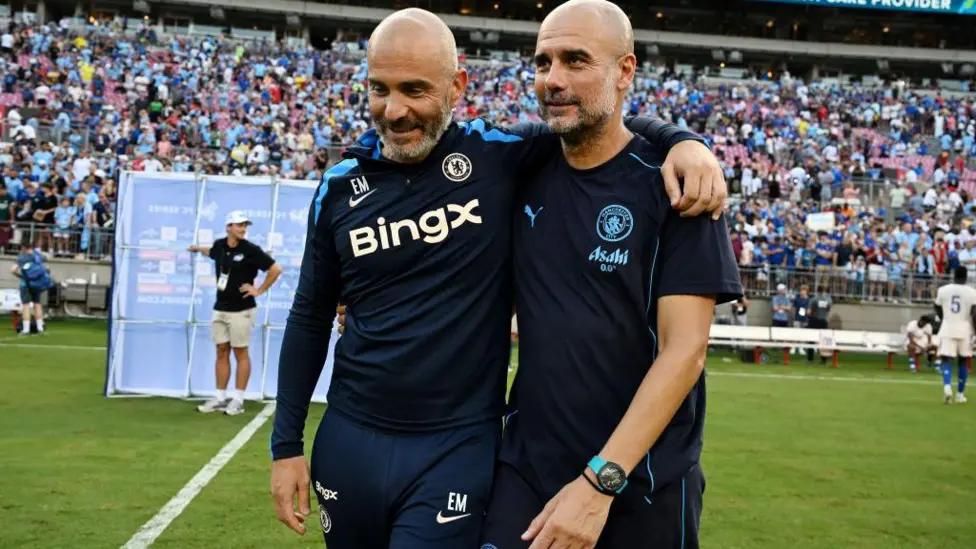
Pep Guardiola’s influence on modern football, particularly in the Premier League, has been nothing short of revolutionary. If you were to ask current managers in England’s top flight about their biggest inspirations, a large number would point to Guardiola. His impact goes far beyond the trophies he has won with Manchester City over the past decade—it has reshaped how football is played, coached, and understood at every level of the game.
When Guardiola eventually leaves Manchester City, his legacy will not just be measured in silverware. Instead, it will be defined by the tactical evolution he has sparked across the league and even into grassroots football. Interestingly, not all of his innovations were pre-planned. While Guardiola is known for his strong footballing philosophy, many of his tactical decisions have been influenced by the players available to him and the challenges he has faced along the way.
Revolutionizing the Goalkeeper Role
One of Guardiola’s earliest and most controversial decisions at Manchester City was replacing Joe Hart with Claudio Bravo and later Ederson. At the time, English football traditionally valued goalkeepers for their shot-stopping ability rather than their technical skills with the ball. Guardiola challenged that norm by insisting on a goalkeeper who could actively participate in build-up play.
Initially, this approach was heavily criticized. However, over time, it became the standard. Today, it is almost unthinkable for a top Premier League club to operate without a goalkeeper comfortable with the ball at their feet. Teams across the league followed suit, replacing traditional keepers with more technically skilled options.
However, football is cyclical, and even Guardiola has shown adaptability. With the rise of intense high-pressing systems, playing out from the back has become riskier. This has led to a partial shift back toward more traditional goalkeeping qualities. At Manchester City, the introduction of Gianluigi Donnarumma signaled this change, as his strength lies more in shot-stopping and one-on-one situations than in distribution.
This adjustment highlights Guardiola’s flexibility. Rather than rigidly sticking to one philosophy, he adapts based on evolving trends and the specific needs of his team.
Redefining the Role of Full-Backs
Another major tactical innovation introduced by Guardiola is the use of inverted full-backs. During Manchester City’s record-breaking 2017–18 season, injuries forced Guardiola to experiment with players like Oleksandr Zinchenko and Fabian Delph in defensive roles. Instead of using them traditionally, he deployed them in central midfield positions during build-up play.
This tactical tweak provided greater control in midfield, improved ball retention, and allowed wingers more freedom on the flanks. The success of this system caught the attention of other managers, many of whom adopted similar approaches.
Mikel Arteta, one of Guardiola’s former assistants, implemented this tactic at Arsenal with great success. Likewise, Ange Postecoglou used inverted full-backs during his time at Tottenham. This innovation has become a common feature in modern football, illustrating Guardiola’s lasting influence.
Guardiola has also experimented with using center-backs as full-backs, adding defensive stability while maintaining flexibility in possession. Players like Nathan Aké and Manuel Akanji have thrived in these hybrid roles. This idea has since been adopted by other clubs, further demonstrating Guardiola’s role as a trendsetter.
More recently, Guardiola has evolved the full-back role even further, allowing them to operate higher up the pitch and contribute directly to attacking play. This versatility has influenced how defenders are developed and utilized across the game.
Dominance Through Possession
Guardiola’s philosophy has always centered around controlling possession. His teams aim to dominate the ball, dictate the tempo, and limit the opposition’s opportunities. At Manchester City, this approach has been executed to perfection.
During the 2017–18 season, City averaged nearly 72% possession per game, an astonishing figure in a competitive league like the Premier League. Even in subsequent seasons, they have consistently maintained possession levels above 60%.
This emphasis on ball control has influenced other teams to adopt similar styles. Managers like Mikel Arteta and Roberto De Zerbi have built their teams around possession-based football. Even Liverpool, under new management, has moved closer to this philosophy compared to their previous high-intensity approach.
Before Guardiola’s arrival, English football was known for its directness, pace, and physicality. His success has shifted the focus toward technical ability, tactical intelligence, and positional play.
Adapting While Leading
One of Guardiola’s greatest strengths is his ability to adapt. While many view him as a coach with a fixed philosophy, the reality is quite different. He continuously evolves his tactics to suit his players and respond to new challenges.
Whether it’s switching between false nines and traditional strikers, adjusting defensive structures, or experimenting with new positional roles, Guardiola remains one step ahead. This adaptability is a key reason why his teams have remained successful over such a long period.
However, this also presents a challenge for other managers. By the time they adopt one of Guardiola’s innovations, he has often already moved on to something new. This constant evolution ensures that Manchester City maintains a competitive edge.
Lasting Impact on the Premier League
Guardiola’s influence on the Premier League cannot be overstated. He has changed how teams build attacks, defend, and even how players are developed. His ideas have filtered down through the league and beyond, shaping the future of football.
While other managers have attempted to replicate his methods, success often depends on having the right players and the ability to adapt those ideas effectively. Guardiola’s genius lies not just in his tactics but in his understanding of how to implement them in different contexts.
As the Premier League continues to evolve, Guardiola’s legacy will remain deeply embedded in its fabric. His innovations have set new standards and redefined what is possible in modern football.