

Set-Piece Chaos, VAR Controversy and Refereeing Issues Continue to Frustrate Football
Set-pieces in modern football have once again become a major talking point, particularly when it comes to corners. In many matches this week, scenes inside the six-yard box have looked more like wrestling contests than football situations. Players from both attacking and defending teams crowd around the goalkeeper, pushing, holding, and blocking each other while waiting for the ball to be delivered.
After reviewing several of these incidents carefully, it becomes clear that defenders are frequently grabbing attackers around the waist or arms. In many cases they are not even watching the ball being crossed into the area. Instead, they focus solely on preventing opponents from moving freely.
According to the rules of football, this type of behaviour is clearly a foul. When a defender restrains an attacker like that inside the penalty area, referees should award a penalty kick. However, this is rarely happening, which raises questions about how such incidents are being officiated.
The situation has now reached a point where referees must take firm action. Officials need to either award penalties against defenders committing these fouls or give free-kicks to the defending side when attackers are the ones causing the problem. Without consistent enforcement, players will continue to push the boundaries of what they can get away with.
Many people are now asking what instructions referees are receiving from Howard Webb, who currently leads Professional Game Match Officials Limited. As the organization responsible for officiating in English professional football, PGMOL has the task of ensuring referees apply the laws of the game consistently.
The confusion becomes even more obvious when comparing fouls elsewhere on the pitch. Players often receive free-kicks for minor contact outside the penalty area. Yet in the six-yard box during corners, players can hold, block, and wrestle opponents without punishment.
The Decline of Proper Defending
This lack of enforcement has also changed how teams defend set-pieces. Instead of focusing on positioning, timing, and clearing the ball effectively, defenders are increasingly relying on physical obstruction.
In previous eras, coaches spent significant time training their players to defend crosses properly. Defenders were taught how to track runners, judge the flight of the ball, and clear danger effectively.
Now, however, some teams appear to rely more on blocking attackers than actually competing for the ball. As a result, the traditional skill of defending crosses is gradually disappearing from the game.
This trend is concerning because it undermines one of the fundamental aspects of football. If players can stop opponents simply by holding them rather than defending fairly, the quality of the game inevitably suffers.
Interestingly, this situation also reflects poorly on set-piece coaches. Their job is to help teams organize both attacking and defensive situations. Allowing players to defend by grabbing opponents rather than positioning themselves correctly should not be encouraged.
Many pundits have suggested complicated solutions to solve the issue. However, the answer may actually be very simple: referees should enforce the rules strictly. If officials start awarding penalties or issuing red cards for persistent fouling during corners, players will quickly adjust their behaviour.
Debate Over Timekeeping
Refereeing controversies were not limited to set-pieces this week. Another moment that sparked debate occurred during Leeds United’s narrow defeat to Manchester City.
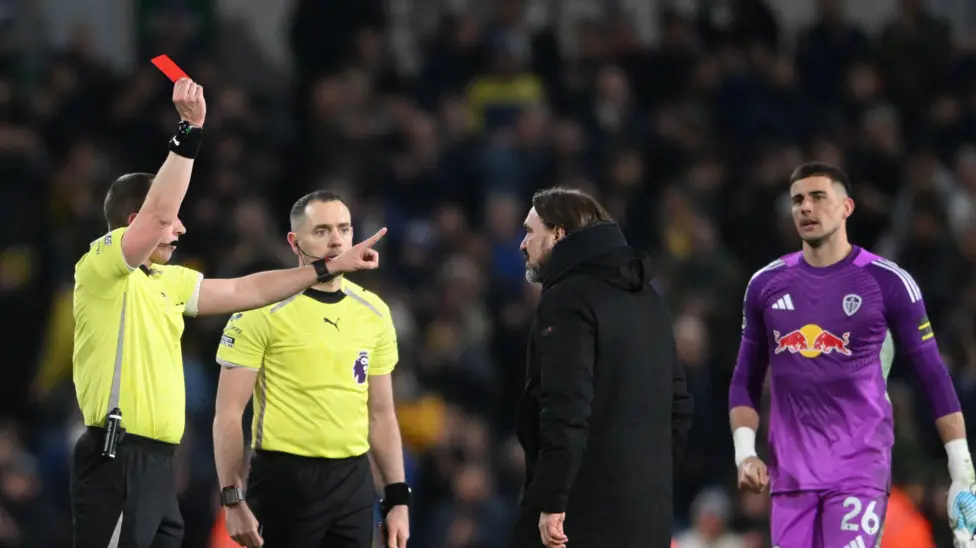
Leeds manager Daniel Farke was sent off after challenging the referee about the amount of added time at the end of the match. Many observers felt sympathy for him, as the issue of stoppage time has become increasingly controversial in recent seasons.
Managers from smaller clubs have long believed that major teams tend to benefit from more favourable decisions. Whether this perception is accurate or not, it continues to influence how such incidents are viewed.
The problem is that stoppage time often feels unpredictable. Supporters, players, and coaches rarely know exactly how the final minutes are calculated.
One potential solution would be to introduce a dedicated timekeeper who works alongside the referee. This system is already used successfully in rugby union. In rugby matches, the stadium clock stops whenever play is interrupted, ensuring everyone can clearly see how much time remains.
Applying a similar system to football could improve transparency. When the referee signals that time should stop—during injuries, substitutions, or other delays—the timekeeper would pause the clock. Once play resumes, the clock would start again.
Such a system would remove the need for referees to estimate stoppage time at the end of the game.
The Expanding Influence of VAR
Another topic generating strong opinions is the continued use of Video Assistant Referee, commonly known as VAR.
VAR operations in English football are managed from Stockley Park. Over the years, this facility has become central to decision-making in the Premier League and other competitions.
While VAR was originally introduced to correct obvious mistakes, many critics believe the technology has grown into something far more intrusive.
Football has always involved subjective decisions. Determining whether a challenge is a foul, whether a handball is deliberate, or whether a tackle deserves a booking often depends on interpretation.
However, red-card decisions should ideally be more clearly defined. Providing referees with stricter guidelines could help ensure consistency.
When VAR was first proposed, it was meant to correct only the most obvious errors. Historic examples of such mistakes include Thierry Henry’s controversial handball against Ireland, Diego Maradona’s famous “Hand of God” goal against England, and Frank Lampard’s disallowed goal during the 2010 FIFA World Cup.
In situations like those, technology could have corrected clear injustices.
Unfortunately, critics argue that VAR now intervenes far too frequently. Instead of addressing only major mistakes, it often becomes involved in minor decisions that interrupt the flow of the match.
Fans Want the Game Back
Many supporters feel that constant interruptions are damaging the experience of watching football. Fans attend matches to see their teams compete, not to wait for lengthy video reviews.
In earlier decades, referees were praised when they officiated games quietly and efficiently. If a referee was barely noticed during a match, it usually meant the game flowed smoothly.
Today, however, referees and VAR decisions are often the main talking points after games.
This shift has frustrated many people involved in the sport. Players, managers, and fans alike want the game to remain the main focus.
There is also frustration that key football organizations are not being consulted enough about improving VAR. Groups such as the League Managers Association and the Professional Footballers’ Association represent people directly involved in the sport.
Their members include current players and managers who understand the realities of the game. Seeking their input could help identify practical improvements to the system.
Restoring Balance to Football
Ultimately, referees face an extremely difficult job. The pace and intensity of modern football make officiating more challenging than ever.
However, technology was supposed to help referees, not expose more problems.
The goal should be to correct obvious errors while still allowing the match to flow naturally. If every minor decision requires lengthy analysis, the spectacle of football will suffer.
Supporters want the game to feel spontaneous and exciting again. They want to celebrate goals immediately rather than waiting for a video check.
For the health of the sport, football authorities may need to rethink how VAR is used and how referees enforce rules during set-pieces.
Only then can the game truly return to what it should be: a sport driven by players, passion, and supporters.
For more football analysis and sports updates, visit https://netsports247.com