

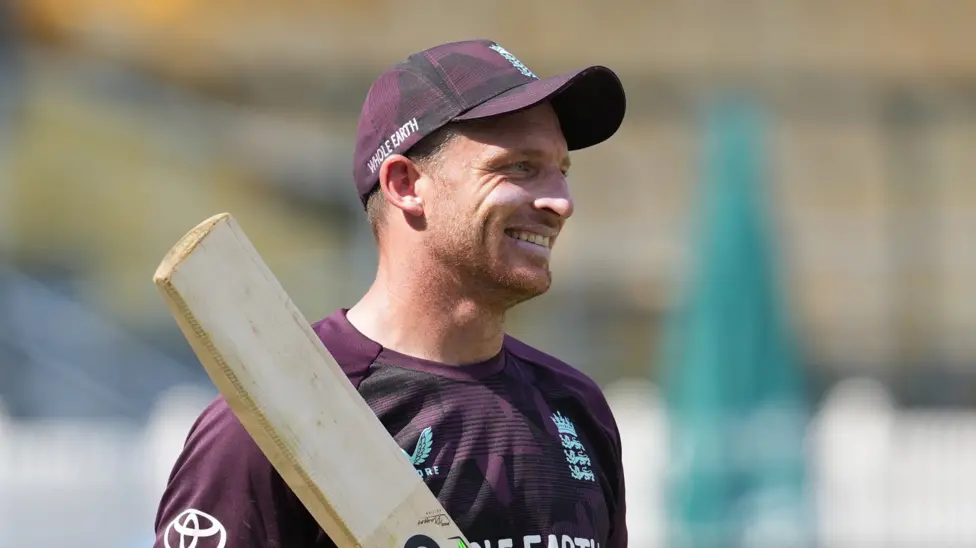
Jos Buttler has made it clear that he will not adopt a selfish approach to batting despite his recent dip in form during the T20 World Cup. The England white-ball captain, widely regarded as one of the finest limited-overs batters the country has ever produced, is currently enduring a challenging run with the bat. However, rather than slowing down purely to rebuild his statistics, Buttler insists that his priority remains the needs of the team and the overall match situation.
The 35-year-old opener has struggled to make significant contributions in recent games, including low scores against Scotland and Italy. His winter international campaign has been particularly difficult, as he has failed to register a half-century in his last 14 innings. These numbers have naturally drawn attention from analysts and former players, many of whom have questioned whether he should adjust his approach and spend more time at the crease to rediscover rhythm.
After his early dismissal against Italy — where he was out on the fourth ball while attempting to clear the infield for the second consecutive match — former England captain Nasser Hussain suggested that Buttler might benefit from focusing on building an innings rather than attacking from the outset. The idea was that a more patient strategy could help him regain confidence and form during a difficult phase.
Buttler, however, offered a thoughtful response on his podcast, explaining that while he would enjoy batting deep into an innings, he does not want to do so purely for personal redemption. According to him, T20 cricket requires players to remain aware of the scoreboard and the evolving demands of the match. Simply occupying the crease without contributing to the team’s momentum would not align with the aggressive nature of the format.
He explained that there have been moments in his career, particularly in Test cricket, when coaches advised him to rein in his attacking instincts and focus on spending time at the crease. In contrast, the T20 format demands a different mindset, where adaptability and scoring intent remain crucial regardless of individual form. For Buttler, the key is to keep playing the game situation rather than shifting into a survival mode that might negatively affect the team’s overall strategy.
Despite his current lean patch, Buttler’s place in the England XI remains undisputed due to his long track record of match-winning performances. His last standout innings for England came in September when he smashed a blistering 83 off just 30 balls against South Africa, reminding everyone of his explosive capabilities. Performances like that underline why team management and teammates continue to back him during difficult periods.
Earlier this year, Buttler featured in the SA20 tournament, where he showed glimpses of good form even though the big scores largely eluded him. He managed 97 not out for Durban Super Giants, demonstrating his ability to dominate when set. However, his other scores in the competition — including 12, 20, 15, 22, three and one — reflected inconsistency rather than a complete loss of touch. Buttler himself acknowledged that he felt he was batting well without converting starts into substantial contributions.
One of the qualities he prides himself on in T20 cricket is the ability to capitalize once he gets settled at the crease. He emphasized that when he manages to get in and find rhythm, his goal is always to produce a meaningful innings that benefits the team rather than just accumulating runs slowly. This mindset aligns with England’s aggressive white-ball philosophy, which prioritizes intent and attacking cricket.
Following their group-stage fixtures, England traveled to Sri Lanka, where the squad resumed training after their win over Italy. Buttler was seen undergoing an extended net session, signaling his determination to sharpen his skills and regain confidence ahead of the crucial Super 8s stage. Notably, he practiced against throw-downs delivered with a wet tennis ball on a soaked concrete surface — a method often used to improve reflexes and simulate challenging conditions.
This specialized training approach suggests a proactive effort to adapt to subcontinental conditions, where slower pitches and varying bounce can test even the most experienced batters. By working intensively on his reaction time and technique, Buttler appears focused on preparing for the next phase of the tournament rather than dwelling on past dismissals.
Teammate Jacob Bethell dismissed any concerns about Buttler’s form, expressing full confidence in the captain’s ability to deliver when it matters most. Bethell highlighted that Buttler’s decision-making has not been poor, but rather that the risks he has taken simply have not paid off so far. Within the dressing room, there is reportedly no panic regarding the opener’s performances.
According to Bethell, the squad remains calm and supportive, believing that Buttler will find his rhythm during the latter stages of the competition. His experience on the big stage, combined with his proven match-winning ability, gives the team assurance that he will rise to the occasion when the pressure intensifies.
Bethell himself has been dealing with a minor injury, training with a bandaged finger on his left hand after sustaining a cut during England’s defeat by the West Indies. The injury has temporarily prevented him from bowling, though it is expected to be reassessed before England’s upcoming Super 8s clash against co-hosts Sri Lanka in Pallekele.
England’s journey through the group stage has been far from dominant. They secured narrow and somewhat unconvincing wins against Italy, Scotland, and Nepal, while also suffering a defeat to the West Indies. Although they progressed, the performances have raised questions about consistency and overall form within the squad.
However, there is optimism within the camp due to their recent success in Sri Lankan conditions. Before the World Cup, England defeated Sri Lanka 3-0 in a T20 series, with all matches played in Pallekele. That clean sweep has provided a significant confidence boost as they return to familiar surroundings for the Super 8s phase.
Bethell noted that beating a strong Sri Lankan side in their home conditions was a major achievement and has instilled belief within the group. The players feel comfortable with the pitches, climate, and tactical demands of the venue, which could play a crucial role in their campaign moving forward.
He added that the team is confident not only because of past results but also due to their understanding of how opponents are likely to approach matches in these conditions. This familiarity could help England execute their plans more effectively during the knockout stages of the tournament.
As England prepares for the next phase, Buttler’s form will remain a focal point. Yet, his comments reveal a captain who is not overly consumed by personal statistics. Instead, he is determined to maintain a team-first approach, balancing aggression with responsibility in a format where momentum often dictates outcomes.
Ultimately, Buttler’s mindset reflects experience and maturity. Rather than retreating into a defensive shell during a rough patch, he aims to continue playing with intent while staying aligned with the team’s game plan. With crucial matches ahead and confidence still strong within the squad, England will be hoping that their captain rediscovers his best form on the biggest stage — not by batting for himself, but by contributing in a way that drives the team toward success.
For more cricket and sports updates, visit: https://netsports247.com