
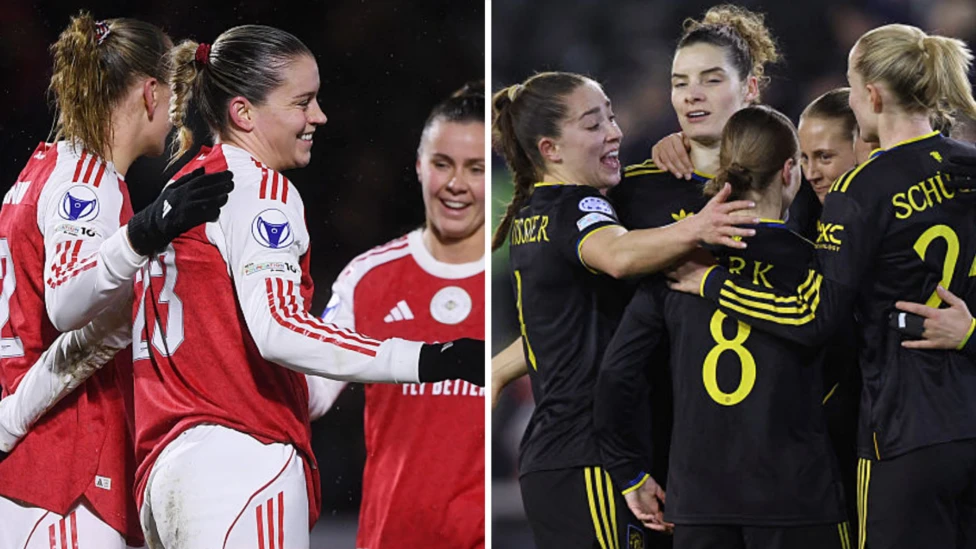
Three English clubs have successfully progressed to the quarter-finals of this season’s UEFA Women’s Champions League, raising questions about whether their path has been as straightforward as it may seem on the surface. Manchester United Women, Arsenal Women, and Chelsea Women have all secured spots in the last eight, but their journeys reveal a far more demanding route than the results alone suggest.
Manchester United, appearing in the competition’s main draw for the first time, sealed their place in the quarter-finals with an emphatic 5-0 aggregate triumph over Atlético Madrid Femenino in the two-legged play-off round. Their dominant performance highlighted both their defensive organization and growing maturity on the European stage. Meanwhile, Arsenal also advanced through the play-off route after comfortably defeating OH Leuven Women 7-1 on aggregate. Chelsea, on the other hand, had already ensured direct qualification by finishing inside the top four during the newly introduced league phase format.
The new competition structure has sparked debate among fans and analysts alike, with many questioning whether it has made progression easier for top clubs or simply showcased the strength of the English sides. While it may appear that the English teams benefited from favorable draws, the reality is more complex.
Arsenal, the defending champions, began their European campaign with a challenging fixture against the record eight-time winners, Olympique Lyonnais Féminin. Having previously defeated Lyon in last season’s semi-finals, Arsenal were unable to repeat that success this time and suffered defeat. They also endured another setback against FC Bayern Munich Women during the league phase, placing additional pressure on their qualification hopes.
Despite the early struggles, Arsenal managed to regain momentum with crucial victories over top opposition, including wins against strong European sides, which ultimately helped them finish fifth in the league standings. This position forced them into the knockout play-offs, where they received a relatively favorable draw compared to potentially tougher opponents such as Wolfsburg or Juventus. Facing competition debutants Leuven, whom they had already beaten earlier in the league phase, Arsenal capitalized on their experience and clinical finishing.
Their 4-0 first-leg victory effectively set the tone, although manager Renee Slegers emphasized that the tie was far from simple. She noted that Leuven had previously caused difficulties for other European teams and required serious focus and discipline. Arsenal’s improved form at the crucial stage proved decisive, demonstrating their ability to peak when it matters most rather than dominating throughout the campaign.
Manchester United’s path has arguably been even more demanding. Before even reaching the league phase, they had to navigate three qualifying rounds, including a comeback victory against Brann that tested their resilience. Once in the main stage, they faced a series of heavyweight opponents such as Wolfsburg, Juventus, and Lyon, exposing them to different tactical styles and high-level competition.
United manager Marc Skinner acknowledged that the journey has been anything but easy, highlighting how the diverse challenges have accelerated the team’s development. Matches against elite European clubs not only tested their tactical flexibility but also strengthened their confidence and cohesion. The growth in performance levels from early fixtures to the latter stages of the league phase has been particularly noticeable, underlining the value of competing against top-tier opposition.
Even Chelsea, who entered as one of the top seeds and secured direct quarter-final qualification, did not have a straightforward campaign. They faced strong teams including Barcelona and Wolfsburg during the league phase, showing that finishing among the top four required consistent high-level performances rather than a simple route through weaker opponents. Their progression demonstrates both squad depth and tactical discipline.
Looking ahead, the competition could still become even more challenging for English clubs. Chelsea are set to face Arsenal in an all-English clash, guaranteeing at least one representative in the semi-finals. However, potential future encounters with European giants such as Lyon and Barcelona could present significant hurdles on the road to the final.
The introduction of the new league phase format has played a major role in shaping this season’s competition dynamics. Under the revised system, 18 teams face six different opponents, either home or away, with the top four teams advancing directly to the quarter-finals. The bottom six are eliminated, while the remaining eight teams enter a seeded play-off round to fight for the final quarter-final spots.
This structure replaces the previous format of smaller groups, where four teams played each other home and away, with the top two progressing. In earlier seasons, top clubs often competed directly against one another for group supremacy, while lower-ranked teams struggled to make an impact. The new format spreads fixtures across a wider range of opponents, arguably reducing the risk of early elimination for elite teams.
Some analysts believe the updated system provides greater protection for established clubs. According to football writer Tim Stillman, the league phase has felt less tense compared to previous group-stage formats. He argued that under the older system, losing a key head-to-head match could significantly endanger qualification prospects. In contrast, the league phase allows teams to recover from setbacks more easily, as consistent overall performance matters more than isolated results.
For instance, Arsenal’s losses to higher-ranked opponents did not eliminate them because they were still able to secure enough wins against other teams to remain in contention. Had the older format been in place, those defeats might have had more severe consequences. Instead, they were given another opportunity through the play-offs, where they faced a winnable tie.
Nevertheless, it remains too early to definitively judge whether the format truly favors larger clubs in the long term. Coaches and analysts agree that only multiple seasons of data will reveal whether it consistently benefits elite teams or creates more competitive balance across European football.
Regardless of structural debates, one clear takeaway from this season is the growing strength of English women’s football. The presence of three English teams in the quarter-finals reflects the increasing competitiveness and investment within the Women’s Super League. Former England midfielder Fara Williams pointed out that a stronger domestic league naturally leads to better European performances, as clubs gain experience and depth through high-quality competition at home.
Historically, Arsenal remain the only English club to have won the Women’s Champions League, though they have experienced fluctuations in European success over the years. Their journey to reclaim continental glory last season demonstrated that consistent development and squad investment eventually yield results. Chelsea, meanwhile, have established themselves as regular contenders, reaching multiple semi-finals and finishing as runners-up in 2021.
Manchester United’s emergence as a new force further highlights the evolution of English women’s football. Their defensive solidity, including an impressive number of clean sheets during the campaign, suggests they are capable of competing with Europe’s elite sides. A potential quarter-final clash against Bayern Munich will provide another major test of their credentials.
With at least one English team guaranteed a semi-final place due to the Arsenal versus Chelsea tie, the league’s reputation continues to grow on the European stage. Ultimately, while the new format may have influenced the journey, the performances of English clubs indicate genuine quality rather than mere fortune. Their tactical strength, squad depth, and resilience against strong opposition confirm that they belong among Europe’s top teams and are serious contenders for the title this season.
For more football updates and analysis, visit: https://netsports247.com