
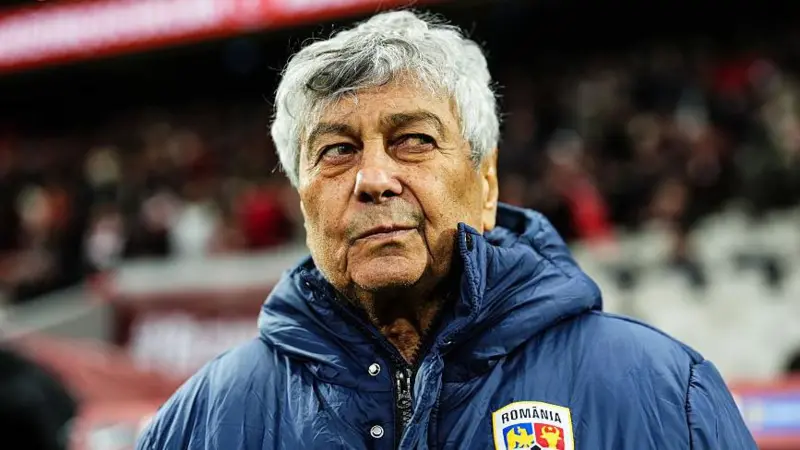
The football world is mourning the loss of one of its most iconic figures, as legendary manager Mircea Lucescu has passed away at the age of 80. His death came just days after he stepped down from his role as head coach of the Romania national football team, bringing an end to a remarkable career that spanned nearly five decades and left an indelible mark on global football.
Lucescu had recently resigned from his position after experiencing health issues ahead of a training session. Reports later confirmed that he had been admitted to hospital following a heart attack, and despite medical care, he sadly did not recover. His passing has triggered an outpouring of tributes from across the footballing community, reflecting the immense respect and admiration he commanded throughout his life.
In an official statement, the Romanian Football Federation expressed profound sorrow, describing Lucescu as not only a brilliant tactician but also a visionary leader and a national symbol. The federation emphasized that his influence extended far beyond the pitch, shaping generations of players and elevating Romanian football to new heights.
Lucescu’s connection with the national team was deep and enduring. He first took charge of Romania in the early 1980s, managing the team between 1981 and 1986. Decades later, he returned for a second spell in 2024, demonstrating his unwavering commitment to his country’s footballing future. His final match in charge was a narrow 1-0 defeat to Turkey national football team in a World Cup play-off on March 26, a result that ultimately denied Romania a place in the FIFA World Cup 2026.
While that result marked a disappointing end to his tenure, it did little to diminish the extraordinary legacy he built over decades. Lucescu’s managerial journey began 47 years ago at Corvinul Hunedoara, and from there he went on to lead some of Europe’s most prominent clubs. His career included spells at Inter Milan, Galatasaray, Besiktas, Shakhtar Donetsk, Zenit St Petersburg, and Dynamo Kyiv, among others.
At each of these clubs, Lucescu demonstrated his tactical intelligence and adaptability. Perhaps his most successful period came with Shakhtar Donetsk, where he transformed the club into a dominant force in Ukrainian football and a competitive presence in European competitions. His ability to develop young talent and implement an attractive, effective style of play earned him widespread acclaim.
Clubs he managed were quick to pay tribute following the news of his passing. Galatasaray, where he enjoyed significant success, remembered him as a title-winning coach who played a key role in their history. Meanwhile, Inter Milan expressed their condolences, acknowledging his contribution to the club and the broader football community.
Beyond his achievements as a manager, Lucescu also had a distinguished playing career. He earned 64 caps for Romania and had the honor of captaining his country at the 1970 FIFA World Cup. His leadership on the field laid the foundation for his future success as a coach, where he would go on to influence countless players and teams.
Romanian Football Federation president Razvan Burleanu described Lucescu’s passing as a “black day” for both Romania and the global football community. He highlighted not only Lucescu’s achievements but also his role as a mentor and teacher, emphasizing that his impact went far beyond tactics and results.
Indeed, Lucescu was widely regarded as a figure who shaped lives as much as careers. Players who worked under him often spoke of his guidance, discipline, and passion for the game. He was known for his attention to detail, his innovative approach to coaching, and his unwavering dedication to football.
Throughout his career, Lucescu remained deeply committed to the sport. Even in his later years, he continued to take on new challenges, demonstrating a love for football that never waned. His return to manage Romania in 2024 was a testament to his enduring passion and belief in the potential of his nation’s players.
His influence extended beyond the teams he coached. Lucescu played a significant role in promoting football development in multiple countries, particularly in Eastern Europe. His work helped raise the profile of clubs and leagues, contributing to the growth of the game on a broader scale.
As news of his passing spread, tributes poured in from former players, colleagues, and fans around the world. Many shared memories of his leadership, his charisma, and his ability to inspire. These reflections paint a picture of a man who was not only a great coach but also a deeply respected human being.
Lucescu’s legacy is one of excellence, resilience, and innovation. He leaves behind a record of achievements that few can match, as well as a lasting influence on the sport he loved. His contributions to football will continue to be felt for generations, both through the players he mentored and the teams he shaped.
In moments like these, the football community is reminded of the profound impact individuals can have on the game. Lucescu’s life serves as an example of dedication, passion, and the pursuit of greatness. While his passing marks the end of an era, his legacy will endure in the hearts of those who knew him and the countless fans who admired his work.
In conclusion, Mircea Lucescu was far more than a manager—he was a pioneer, a leader, and a symbol of footballing excellence. His journey from player to global coaching icon is a story of perseverance and success. As the world reflects on his life, it is clear that his contributions to football are truly immeasurable.
For more football news, updates, and in-depth coverage, visit https://netsports247.com