
The 2026 Formula 1 season is set to usher in one of the most dramatic transformations in the sport’s modern history. As teams and drivers prepare for the opening round in Melbourne from 6–8 March, fans can expect sweeping regulatory shifts, a reshaped grid, and fresh storylines that could redefine the competitive order.
Major Regulation Overhaul
Formula 1 has introduced some of the most comprehensive technical changes ever seen. For 2026, the power units, chassis design, tyres, and fuel specifications have all been revised. The new engines now operate with an almost even 50-50 split between electric power and traditional internal combustion. In addition, all cars run on fully sustainable fuels, aligning the championship with broader environmental goals.
The cars themselves are smaller and lighter, designed to improve agility while reducing aerodynamic drag. However, the new rules have sparked debate within the paddock. Drivers are expected to manage energy deployment far more carefully throughout qualifying sessions and races, leading to concerns that strategy and battery conservation may dominate driving style.
The long-standing Drag Reduction System (DRS) has been scrapped and replaced by a new “overtake mode.” This system grants drivers an additional boost of electric power when they are within one second of the car ahead at a detection point, typically positioned near the final corner. Meanwhile, active aerodynamics now allow both front and rear wings to adjust angles dynamically on straights and through corners, eliminating the need for DRS altogether.
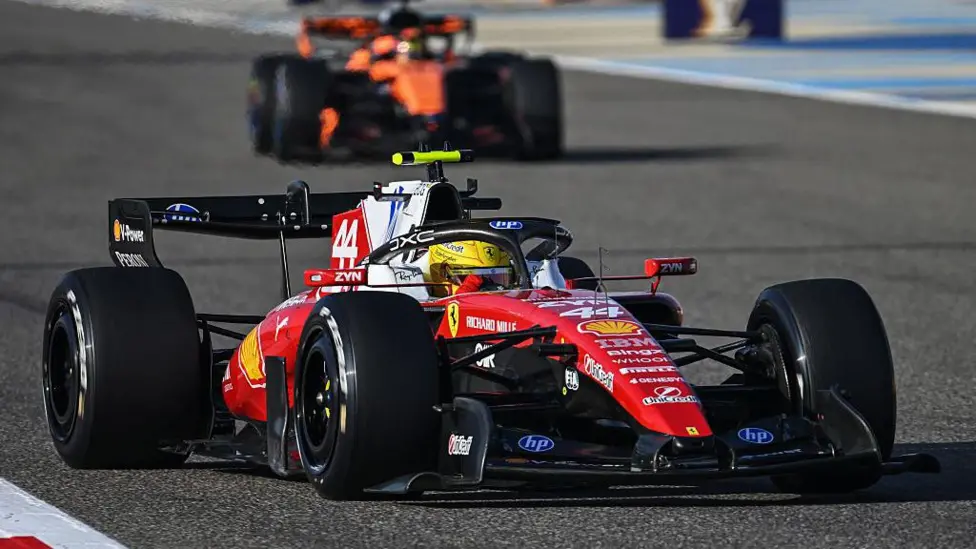
During pre-season testing in Bahrain, several teams experimented boldly with the new framework. Ferrari, in particular, drew attention with a rotating rear wing concept that altered its angle dramatically when straight-line mode was engaged. The visual effect was striking, and opinions in the paddock were divided over its long-term viability.
Four-time world champion Max Verstappen likened the new machinery to “Formula E on steroids,” highlighting the heavy focus on electrical management. Meanwhile, seven-time champion Lewis Hamilton described the regulations as “ridiculously complex,” though he admitted the cars are more enjoyable to drive than expected.
A Promising Young Rookie
The 2026 grid features just one rookie: British teenager Arvid Lindblad. Partnering Liam Lawson at Racing Bulls, Lindblad arrives with a growing reputation. Last year, he became the youngest race winner in Formula 2 history at just 17 years and 243 days old. By the time of the Australian Grand Prix, he will be 18 years and seven months old, making him the fourth youngest driver ever to start an F1 race, behind Verstappen, Lance Stroll, and Kimi Antonelli.
Expectations are high for Lindblad, who has demonstrated composure and speed beyond his years. His progression will be closely monitored throughout the season.
Spain Hosts Its Own F1 “El Clasico”
Spain now boasts two races on the calendar, creating a rivalry reminiscent of football’s famous El Clasico. The Spanish Grand Prix moves to Madrid for 11–13 September at the newly constructed Madring circuit, a 22-corner hybrid track combining public roads and private sections.
Barcelona remains on the schedule for 2026 under the name Barcelona-Catalunya Grand Prix, taking place 12–14 June. However, from 2027 onward, it will alternate with Belgium’s iconic Spa-Francorchamps circuit until 2032, reflecting F1’s evolving global strategy.
Red Bull’s New Line-Up Challenge
Red Bull enters 2026 with a reshuffled driver pairing. Isack Hadjar has been promoted to partner Verstappen following the departure of Yuki Tsunoda. Hadjar impressed during his rookie campaign at Racing Bulls, securing a maiden podium with third place at the Dutch Grand Prix.
His task will be formidable: matching Verstappen’s relentless pace. The last time Verstappen was defeated by a team-mate was at the 2023 Azerbaijan Grand Prix, where Sergio Perez triumphed. Since then, Red Bull’s second seat has proven difficult to stabilize. Perez departed at the end of 2024 after inconsistent results, and Tsunoda struggled to deliver competitive performances.
Cadillac and Audi Expand the Grid
For the first time since Haas joined the championship in 2016, Formula 1 welcomes a new team. Cadillac becomes the 11th entrant on the grid, marking a significant American presence. The team has recruited experienced drivers Sergio Perez and Valtteri Bottas and will use Ferrari power units in its debut season.
Pre-season testing showed occasional reliability hiccups, but team principal Graeme Lowdon expressed optimism about their long-term platform.
Audi also makes its long-awaited entry into Formula 1 after acquiring Sauber. Unlike Cadillac, Audi has developed its own in-house power unit. Drivers Gabriel Bortoleto and Nico Hulkenberg logged extensive mileage during Bahrain testing, fueling hopes that Audi could contend strongly in the midfield.
Aston Martin’s Honda Era Begins
Aston Martin embarks on its works partnership with Honda, but testing was challenging. Reliability issues with the Japanese power unit limited running time for both Fernando Alonso and Lance Stroll. Meanwhile, Red Bull—now developing engines in partnership with Ford—appeared competitive and is expected to remain among the top four teams alongside Mercedes, Ferrari, and reigning constructors’ champions McLaren.
Sprint Events and Calendar Changes
Silverstone will host its first sprint race since 2021, as the British Grand Prix joins five other sprint venues this year. China and Miami return as sprint hosts, while Canada, Zandvoort, and Singapore will feature the format for the first time.
The Dutch Grand Prix at Zandvoort will be held for the final time this season. Despite consistent sell-out crowds eager to support Verstappen, financial challenges have led to its removal from the calendar after 2026.
A Season of Uncertainty
With sweeping technical revisions, fresh teams, and rising stars, the 2026 campaign promises unpredictability. Energy management strategies, new aerodynamic concepts, and evolving team dynamics will all shape the competitive landscape. Whether the bold regulations prove successful remains to be seen, but Formula 1 is undeniably entering a new era.
For more Formula 1 news and global sports coverage, visit:
https://netsports247.com