
A decade can completely reshape a football club’s identity, and few stories illustrate this better than the remarkable transformation of Aston Villa. Ten years ago, the club was enduring one of the darkest chapters in its long and proud history. Today, they stand on the brink of European glory, competing at the highest levels once again and redefining expectations both domestically and internationally.
It was exactly ten years ago that Villa suffered relegation from the Premier League, marking their first drop to the second tier since 1987. A narrow 1-0 defeat at the hands of Manchester United sealed their fate in what had been a disastrous 2015–16 campaign. That loss was their ninth consecutive league defeat and part of a 13-match winless run, reflecting a team that had lost direction and confidence.
At the time, uncertainty surrounded the club under the ownership of Randy Lerner. Villa, once crowned champions of Europe in 1982, suddenly faced an unclear future. Their fall from grace was not just about results—it was about a loss of identity, stability, and belief.
The road back was far from easy. Villa spent three seasons battling in the Championship, struggling to rediscover their footing. Promotion finally came ahead of the 2019–20 campaign, but even then, the club lacked consistency and a clear long-term vision. Survival, rather than success, was the immediate objective.
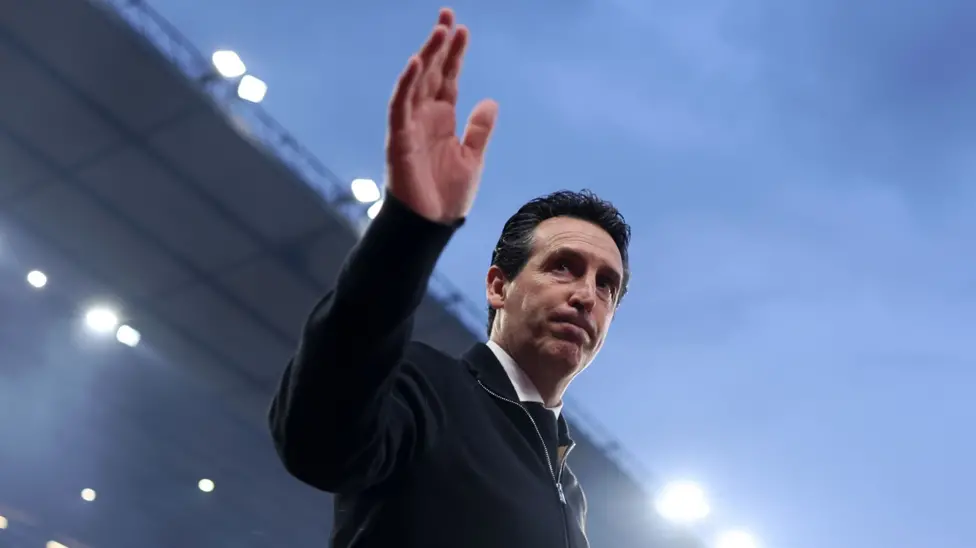
Everything began to change with the arrival of Unai Emery in October 2022. When Emery took charge, Villa were once again hovering dangerously close to the relegation zone. However, his impact was immediate and profound. Known for his tactical expertise and success in European competitions, Emery brought structure, discipline, and a renewed sense of belief.
Working alongside football executive Monchi, who joined as president of football operations in 2023, Emery began to reshape the club both on and off the pitch. The duo had previously enjoyed immense success together at Sevilla, winning multiple Europa League titles, and their partnership quickly bore fruit at Villa.
Under Emery’s guidance, Villa climbed the table and secured a top-seven finish in his first season, earning qualification for European competition. This achievement marked the beginning of a new era—one built on ambition, organization, and a clear footballing philosophy.
The following season confirmed that their progress was no fluke. Villa Park became a fortress, with the team consistently delivering strong performances against top opposition. They established themselves as genuine contenders for a top-four finish while also making a deep run in European competition.
Their journey in the Conference League during the 2023–24 season ended in the semi-finals, where they were defeated by Olympiacos FC. Despite the disappointment, the experience proved invaluable for a squad that was still learning how to compete at the highest level in Europe.
Forward Ollie Watkins highlighted how those experiences shaped the team’s growth. Many players were relatively new to European competition, and the pressure of knockout football was a steep learning curve. However, each campaign brought lessons that helped them evolve.
Last season marked Villa’s return to elite European competition for the first time in decades. Competing in the Champions League, they reached the quarter-finals, where they faced Paris Saint-Germain. Along the way, they recorded impressive victories against giants such as Bayern Munich and RB Leipzig, while also earning a credible draw against Juventus FC.
Fast forward to the present, and Villa’s upward trajectory continues. A commanding 7-1 aggregate victory over Bologna FC 1909 secured their place in the Europa League semi-finals with authority. The performance at Villa Park reflected not just quality, but confidence—a team fully aware of its capabilities.
For Watkins, who scored three goals across the two legs and recently reached 100 goals for the club, this moment represents the culmination of years of progress. He acknowledged how far the team has come, emphasizing the importance of enjoying the journey while continuing to push forward.
Villa are also firmly in contention for a top-four finish in the Premier League, sitting in a strong position with only a handful of games remaining. Qualification for next season’s Champions League via the league remains a realistic goal, further highlighting the club’s resurgence.
Standing in their way of a European final is Nottingham Forest, setting up an exciting all-English semi-final clash. Forest, despite their domestic struggles, have proven to be resilient opponents. Villa experienced this firsthand in a recent league encounter that ended in a 1-1 draw.
Both Watkins and Emery have stressed the difficulty of the upcoming tie. While Villa may enter as favorites, they are under no illusions about the challenge posed by Forest. European knockout matches demand focus, discipline, and adaptability—qualities that Emery has instilled in his squad.
The first leg will take place in Nottingham on 30 April, with the return leg scheduled for 7 May in Birmingham. The winner will advance to the final in Istanbul, where they will face either SC Braga or SC Freiburg.
For Villa, the prospect of reaching a European final carries immense significance. It offers a chance to end a 30-year trophy drought and add to their historic 1982 European Cup triumph. With Emery at the helm—a manager who has won the Europa League multiple times—the club has every reason to believe that success is within reach.
Former Villa midfielder Stiliyan Petrov praised the team’s performance and highlighted the belief that now runs through the squad. That belief, combined with experience and tactical discipline, has become the foundation of Villa’s resurgence.
What makes this story particularly compelling is the contrast between past and present. A decade ago, Villa were a club in decline, struggling to find direction. Today, they are competing among Europe’s elite, with a clear identity and ambitious goals.
This transformation did not happen overnight. It required strategic planning, strong leadership, and a commitment to long-term growth. Emery’s influence has been central, but the collective effort of players, staff, and management has been equally important.
As the season approaches its climax, Villa find themselves in a position few could have predicted ten years ago. They are chasing success on multiple fronts, balancing domestic ambitions with European dreams.
For supporters, the journey has been extraordinary. From the despair of relegation to the excitement of European semi-finals, the past decade has been a rollercoaster of emotions. Now, with the possibility of lifting a major trophy, the future looks brighter than ever.
Whether Villa can complete this remarkable journey remains to be seen, but one thing is certain: they have re-established themselves as a force in modern football. And with Emery guiding them, this may only be the beginning of a new golden era.
For more football news and updates, visit: https://netsports247.com