
It is a chapter in his life that Michael Carrick will always remember.
Back in January, the former midfielder was making the familiar drive north toward his home region when the call came that would change his immediate future. He had been offered the chance to take charge of Manchester United until the end of the season. For many, it would have been a moment to share instantly, to celebrate loudly. But those who know Carrick best say that is simply not his style.
On that particular day, he was attending a family gathering alongside close friends, including Chris Hood. Despite the growing speculation that he could step into one of the biggest jobs in football, Carrick chose not to draw attention to himself. Hood later reflected that although there had been whispers and people quietly wondering if the opportunity might fall his way, Carrick never once mentioned it.
Instead, he focused entirely on being present with his loved ones. For him, family and roots have always mattered more than headlines. That precious time with those closest to him was something he valued deeply — especially knowing that, if he did take the role, such moments would soon become rare.
Now fully immersed in the demands of elite management, Carrick prepares to lead his team to St James’ Park for the first time as a manager. The fixture holds special meaning. Though synonymous with Manchester United after years of success at Old Trafford, Carrick grew up supporting Newcastle United. His Geordie identity remains an essential part of who he is.
According to Hood, Carrick has never forgotten the foundations that shaped him. He understands that his discipline, humility, and determination were born from his upbringing in the North East.
The Wallsend Influence
One of the strongest influences on Carrick’s early life was Wallsend Boys Club — affectionately known as the “Boyza.” The club has a remarkable history, producing 97 players who went on to become professional footballers. Carrick followed in the footsteps of notable alumni such as Alan Shearer, Peter Beardsley, and Steve Bruce.
Carrick spent countless hours developing his skills there, benefiting from both structure and freedom to play. However, in 2012, the original building was demolished after being severely damaged by high winds. The loss of the indoor facility deprived many local youngsters of the opportunities Carrick once enjoyed.
Determined to give back, Carrick used proceeds from his testimonial to establish a foundation aimed at supporting youth development. His funding helped employ a general manager, John Percival, who played a central role in securing resources for a new community hub. That hub, completed in 2023, now stands as a lasting symbol of Carrick’s commitment to his hometown.
Club chairman Steve Dale explained that Carrick credits the boys’ club with much of the positivity in his childhood. The foundation’s mission is simple but powerful: provide a safe, challenging environment where young people can meet friends, stay active, and potentially discover a passion for football — just as he did.
A Crossroads Decision
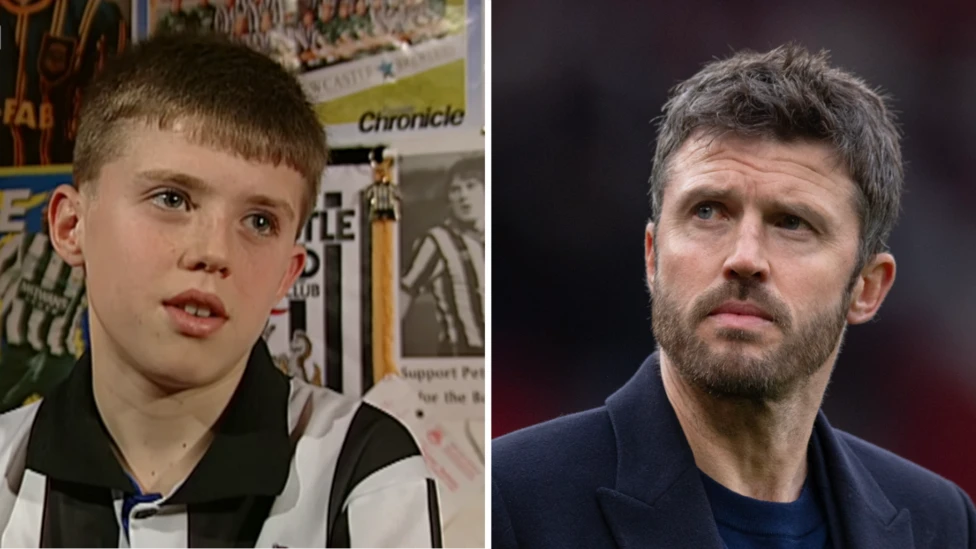
Carrick’s love of football was evident from an early age. In 1995, he appeared on the BBC’s children’s show Live & Kicking, sitting proudly in a Newcastle shirt, surrounded by posters of his heroes. Many assumed he was destined to represent his boyhood club.
Newcastle certainly tried to persuade him. On his 13th birthday, Beardsley presented him with a cake at St James’ Park. He was even invited to compete in the prestigious Milk Cup youth tournament ahead of schedule.
Yet, despite the attention, Carrick ultimately chose West Ham United. After visiting several clubs around the country, he felt the London side offered clearer opportunities for progression. At the time, Newcastle lacked a reserve team structure, whereas West Ham had a well-established pathway from youth ranks to senior football.
That decision shaped his career. Carrick went on to represent West Ham and later Tottenham Hotspur before sealing a move to Manchester United. At Old Trafford, he enjoyed extraordinary success, collecting 18 major trophies — including five Premier League titles and the Champions League — and earning international recognition with England.
Newcastle’s New Era
Newcastle United has evolved significantly since Carrick’s teenage years. The academy now boasts improved facilities and a more structured developmental system. Recent graduates such as Sean Longstaff, Elliot Anderson, and Lewis Miley demonstrate the region’s ongoing ability to produce talent.
Longstaff made more than 200 appearances before moving to Leeds United, while Anderson’s transfer to Nottingham Forest was influenced by financial regulations. Meanwhile, 19-year-old Miley has emerged as the academy’s brightest current prospect. His symbolic moment receiving the captain’s armband from Kieran Trippier highlighted his importance to the club’s future.
Head coach Eddie Howe has praised Miley’s immense talent and spoken about the dramatic improvements made behind the scenes. From upgraded facilities to enhanced psychological support and coaching continuity, the academy environment has transformed.
Howe acknowledges, however, that nurturing elite-level players is a long-term process. Opportunities must be earned, and standards must remain high. The aim is not simply to produce players, but to develop individuals capable of thriving at the highest level.
Full Circle
As Carrick prepares to stand in the dugout at St James’ Park, there is a sense of coming full circle. He may now represent Manchester United in a managerial capacity, but the lessons learned in the North East remain deeply embedded in him.
His journey — from Wallsend to West Ham, from Premier League champion to manager — reflects a blend of ambition and grounded humility. For Carrick, success has never meant forgetting where he came from.
And that, perhaps, is why his story resonates so strongly in the North East.