

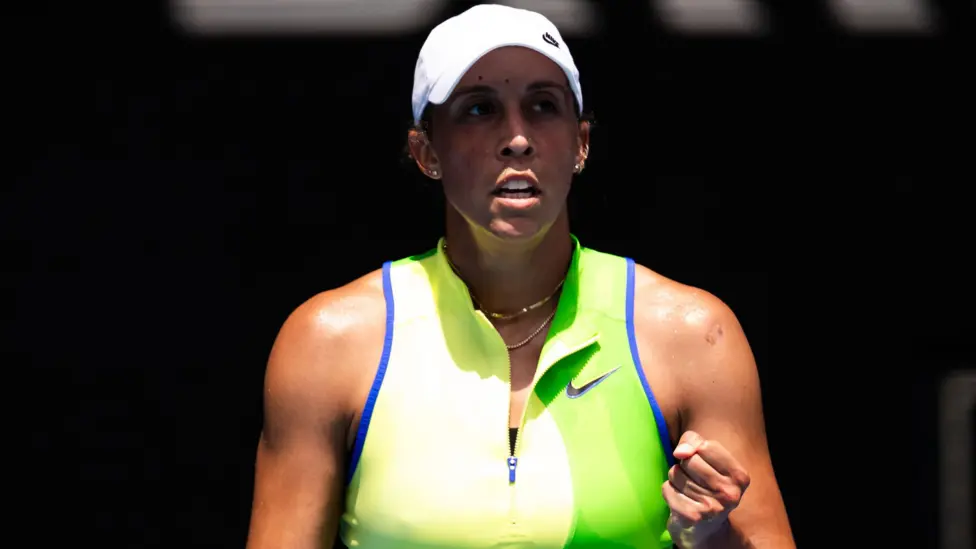
Defending a Grand Slam title brings its own unique pressures, and for Madison Keys, the opening match of her Australian Open campaign proved to be as mentally demanding as it was competitive. Despite being an experienced player and reigning champion, the American admitted that nerves played a major role as she stepped back onto the Melbourne stage to begin her title defence.
Keys, now 30, enjoyed a dream run at Melbourne Park 12 months earlier, capturing her first Grand Slam crown in a moment that defined her career. That triumph transformed expectations around her, and returning as the defending champion placed her firmly under the spotlight. The pressure was heightened further by the unfamiliar challenge of facing an opponent she knew very little about.
Her first-round match on Tuesday paired her with Oleksandra Oliynykova, a Ukrainian player making her Grand Slam main-draw debut. For Keys, the lack of familiarity proved unsettling. She later revealed that she struggled to find sufficient video footage of Oliynykova ahead of the match, making it difficult to build a detailed tactical plan.
That uncertainty showed early on. Keys appeared tense and out of rhythm at the start, dropping the first four games as Oliynykova settled quickly and played with freedom. The Ukrainian’s defensive style and ability to absorb pace disrupted Keys’ powerful baseline game, forcing the American to rethink her approach on the fly.
As errors crept into her game, it was clear that Keys was feeling the weight of expectation. Defending champions often speak about the psychological challenge of returning to a tournament with something to lose rather than everything to gain, and Keys’ opening moments reflected exactly that reality.
However, experience eventually told. Gradually, Keys began to find her range, reducing unforced errors and imposing more authority on her shots. She steadied herself just in time to force a tie-break in the opening set, where her composure improved noticeably. Despite the pressure, she edged the breaker 8-6 to claim the first set, a turning point that shifted momentum firmly in her favour.
Once the opening set was secured, the match followed a very different pattern. Keys played with far greater confidence in the second set, dictating rallies and striking the ball with the aggression that has long defined her game. Oliynykova, who had shown admirable resilience early on, struggled to maintain the same level as Keys surged ahead.
The ninth seed wrapped up the match with a convincing 6-1 second set, sealing a 7-6 (8-6) 6-1 victory and safely navigating what could have been a tricky first hurdle. While the scoreline ultimately looked comfortable, it masked the emotional and mental challenge Keys faced during the early stages.
Reflecting on the match, Keys spoke candidly about the nerves that accompanied the moment. She admitted that the anticipation had been building for almost a year, ever since she lifted the trophy in Melbourne. Walking back onto Rod Laver Arena as the defending champion brought a rush of emotions that were impossible to fully prepare for.
According to Keys, the moment the umpire calls “ready, play” is when reality truly sets in. The weight of expectation, memories of the previous year, and the desire to perform all collide at once. Even for seasoned professionals, it is a moment that can feel overwhelming.
Despite that stress, Keys also highlighted the privilege of being in such a position. She reminded herself that very few players ever get the chance to defend a Grand Slam title, let alone do so in front of a supportive crowd at one of the sport’s most iconic venues.
The reception she received from the Melbourne crowd played a significant role in helping her settle. Keys described the atmosphere as warm and welcoming, something that helped counterbalance the nerves and reminded her why she loves competing at the Australian Open.
Her comments revealed a player who has matured not just technically, but emotionally. Earlier in her career, such a nervy start might have derailed her completely. This time, she was able to accept the anxiety, manage it, and channel it into a performance that improved as the match progressed.
Keys’ victory also served as a reminder of how dangerous unknown opponents can be in the early rounds of Grand Slam tournaments. Debutants often arrive with little pressure and plenty of motivation, while established stars must handle both expectations and unpredictability.
As her title defence continues, Keys will likely take confidence from the way she handled adversity in her opening match. While there is room for improvement, particularly in managing early nerves, the ability to reset and dominate the latter stages of the contest is a positive sign.
With the first hurdle cleared, attention will now turn to whether Keys can build momentum and replicate the form that carried her to glory a year ago. The competition will only intensify as the tournament progresses, but her experience as a reigning champion could prove invaluable.
For now, Keys can take satisfaction in surviving a tense opener, embracing the pressure, and advancing to the next round with her title hopes firmly intact.
For more tennis news, match analysis, and Australian Open updates, visit
👉 https://netsports247.com