
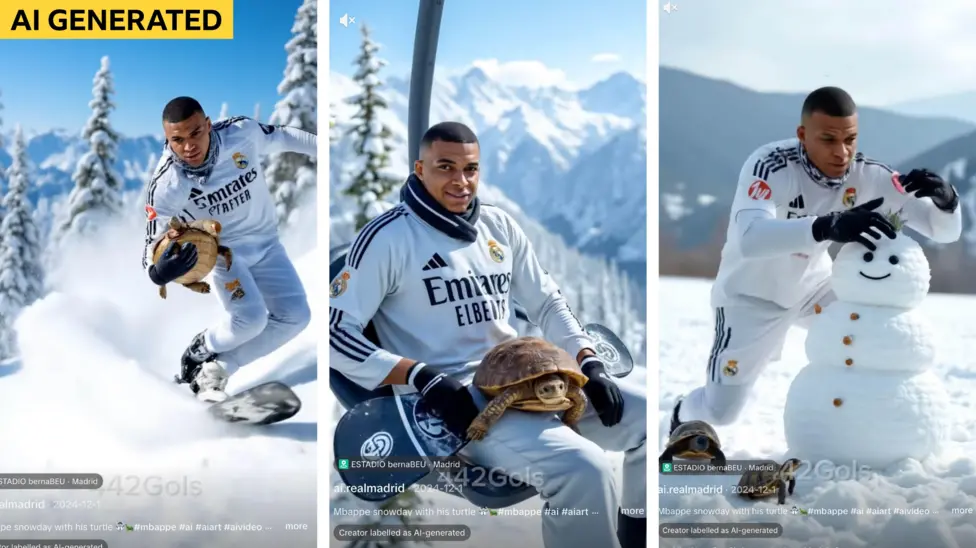
Artificial intelligence is rapidly transforming the way football content appears online, and nowhere is this more visible than on social media platforms. It does not take long to scroll through TikTok, Instagram, or Facebook before stumbling across bizarre, humorous, or entirely fabricated scenes involving some of the biggest names in the sport. You might see Lionel Messi and Cristiano Ronaldo cutting each other’s hair, boarding the Titanic dressed in Edwardian outfits, or flipping burgers at a fast-food restaurant. In another surreal clip, Kylian Mbappé might appear riding a ski lift beside a turtle.
These creations are not the result of elaborate film productions but rather the explosion of artificial intelligence tools that can now generate ultra-realistic images and videos within seconds. The rapid evolution of AI technology has made it increasingly difficult to distinguish between authentic content and so-called “deepfakes.” While much of this content may appear harmless or humorous, it raises serious questions about reputation, intellectual property, and the boundaries of digital manipulation.
At first glance, it is easy to dismiss these AI-generated scenarios as playful entertainment. Most viewers understand that Messi and Ronaldo are not secretly working in restaurants. However, the concern grows when fabricated images or videos place players in misleading, controversial, or potentially damaging contexts. As football continues to operate as a massive global commercial enterprise, both clubs and players have invested heavily in protecting their brands. From safeguarding logos and crests to trademarking slogans and celebrations, image management has become central to modern football business.
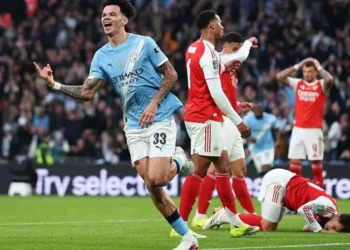
For example, Cole Palmer has trademarked the phrase “Cold Palmer” through the UK’s Intellectual Property Office, along with his name, autograph, and signature goal celebration. This kind of legal protection helps athletes control how their identity is used commercially. But while trademarks can defend against unauthorized merchandise or advertising, they are less effective in combating a flood of AI-generated images circulating freely online.
Legal experts suggest that current UK legislation offers limited protection regarding image rights. Unlike some countries that recognize a defined “personality right,” the UK does not provide comprehensive coverage over the commercial use of someone’s likeness. This creates grey areas, particularly when AI content is presented in a non-defamatory or non-commercial way. If a deepfake does not cause measurable reputational or financial harm, pursuing legal action becomes complicated and expensive.
Recent examples highlight how convincing AI creations can be. Before official unveiling photos were released, fabricated images circulated online showing Antoine Semenyo and Marc Guéhi signing contracts at Manchester City alongside manager Pep Guardiola. Other fake images depicted Semenyo being welcomed at the training ground by former midfielder Yaya Touré. None of these events actually occurred, yet the visual quality made them appear authentic.
Similarly, an AI-generated image recently showed Michael Carrick posing with a Manchester United fan who had vowed not to cut his hair until the club achieved five consecutive wins. Again, the image looked entirely plausible despite being fabricated.
When AI content crosses into harmful territory, the stakes increase. The UK’s Data (Use and Access) Act now criminalizes the creation and distribution of sexually explicit deepfakes. However, other forms of misleading AI—such as videos portraying players in violent or inappropriate behavior—exist in more ambiguous legal territory. For instance, if a fabricated video shows a player striking a referee, does it damage their reputation, or is it dismissed as obviously fake? The answer may depend on context and public perception.
Clubs may have stronger legal avenues compared to individual players. If AI-generated content uses official kits, crests, or branded materials, teams can potentially pursue trademark or design infringement claims. For example, a club like Manchester City could argue that unauthorized use of its crest violates intellectual property rights. Yet taking creators to court is often costly and time-consuming.
An increasingly practical solution lies in targeting the platforms themselves. The UK’s Online Safety Act places obligations on social media companies to remove illegal or harmful content. Instead of engaging in lengthy legal battles against anonymous creators, clubs and players may find it more efficient to request takedowns directly from platforms. Digital rights management companies are already using AI tools to scan the internet for misuse of intellectual property and request removal of infringing material.
The risks extend beyond humorous deepfakes. AI-generated advertisements have already caused controversy. Last year, Meta’s oversight board banned a gambling advertisement that used manipulated footage of former Brazil striker Ronaldo Nazário, replicating his voice and likeness without authorization. The incident highlighted how AI can be weaponized for deceptive marketing, potentially misleading consumers and harming reputations.
Football authorities have also felt the impact. During Euro 2024, fake AI-generated interviews circulated online showing Gareth Southgate making derogatory comments about his players. The fabricated videos violated TikTok’s policies and were eventually removed, but not before accumulating millions of views and shares. Once misinformation spreads widely, the damage can be difficult to reverse.
Transparency may become a crucial factor in managing AI content. The European Union’s AI Act introduces certain transparency requirements, although it does not apply in the UK. Experts suggest that platforms could require clear labels—such as “#AI generated”—similar to how influencers must disclose sponsored content. However, enforcement remains a challenge. Individuals creating malicious deepfakes are unlikely to voluntarily identify their work as artificial.
For now, many clubs appear relatively relaxed, confident that fans recognize official channels as the primary source of legitimate news and media. But as AI tools grow more sophisticated and accessible, the distinction between authentic and fabricated content will become increasingly blurred. The football industry may soon face a tipping point where stronger legal frameworks, stricter platform policies, and more proactive digital rights management become essential.
Artificial intelligence offers genuine benefits, including streamlined marketing and creative advertising possibilities. Yet it also introduces significant risks to personal brands, commercial integrity, and public trust. As the digital landscape evolves, football’s biggest stars and institutions must decide how aggressively they are willing to defend their image in an era where reality itself can be convincingly manufactured.
For more latest football and sports news, visit: https://netsports247.com