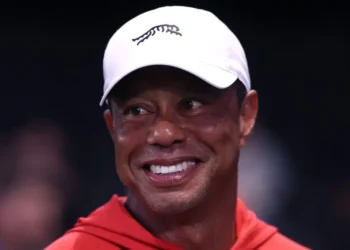

Tiger Woods has once again found himself at the center of controversy following a recent car accident, raising serious concerns not only about his personal life but also about his long-standing influence over the direction of men’s professional golf.
For decades, Woods has been the most dominant and recognizable figure in the sport. His impact has extended far beyond his performances on the course, shaping decisions at the highest levels of golf administration. However, his career has also been punctuated by a series of off-course incidents that have repeatedly cast a shadow over his legacy.
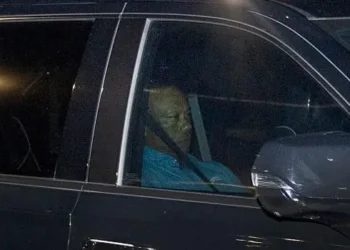
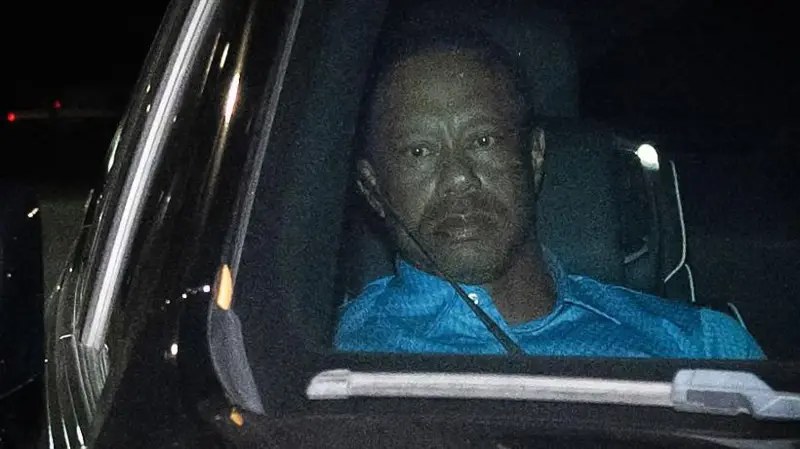
The latest episode occurred on Florida’s Jupiter Island, where Woods reportedly overturned his Range Rover on a quiet residential road. The incident quickly drew widespread attention, especially after images of his disheveled appearance circulated in the media. Authorities are expected to proceed with charges related to driving under the influence, refusal to undergo a urine test, and property damage, although Woods reportedly passed a breathalyzer test for alcohol.
This incident has once again brought into focus Woods’ troubled history with driving-related offenses. Back in 2009, a highly publicized crash involving a fire hydrant and a tree led to revelations about his personal life, including multiple infidelities. In 2017, he was arrested for reckless driving, and in 2021, he survived a serious high-speed crash that fortunately did not involve any other vehicles.
Despite these controversies, Woods has remained a central figure in golf. His stature within the sport has only grown with time, and he has often been called upon to take on leadership roles and influence key decisions. This reliance on Woods raises important questions about whether the sport has become overly dependent on one individual.
For instance, when Augusta National sought to develop a new public nine-hole course known as The Loop, Woods was chosen as the designer. Similarly, when the PGA Tour established a committee to shape its future, Woods was appointed as its chair. His influence extends to team events as well, with many advocating for him to take on leadership roles such as captaincy in the Ryder Cup.
Woods has also been actively involved in the governance of the PGA Tour. Since August 2023, he has served as a player director on the Policy Board and as vice-chairman of the PGA Tour Enterprises board. These roles place him at the heart of decision-making processes that will shape the future of the sport.
In addition to his administrative responsibilities, Woods has remained a presence in competitive golf, albeit on a limited basis. The PGA Tour even introduced a special exemption rule allowing him to participate in high-profile Signature Events, despite his low world ranking and limited recent appearances.
Beyond traditional golf, Woods has ventured into innovative projects aimed at modernizing the sport. Through his company TMRW Sports, co-founded with Rory McIlroy, he helped launch the TGL indoor golf league. The initiative, supported by the PGA Tour, seeks to attract new audiences and enhance the entertainment value of golf. Woods’ participation in the league’s recent finals contributed to strong television viewership.
Golf authorities have often emphasized Woods’ importance as both a player and a leader. Jay Monahan once highlighted his influence, noting that Woods’ presence on and off the course makes him a central figure in the sport’s ecosystem. His leadership was particularly valued during the PGA Tour’s efforts to counter the emergence of rival competitions such as the LIV Golf league.
However, the latest incident raises questions about how long Woods can continue to fulfill these roles effectively. With uncertainty surrounding his availability and public image, stakeholders may need to reconsider their reliance on him.
One immediate concern is whether Woods will appear at upcoming events, including the Masters at Augusta. Given the circumstances, his participation seems uncertain. Similarly, his involvement in projects such as the opening of The Loop and his responsibilities within the PGA Tour could be affected.
The timing of this situation is particularly challenging for golf’s governing bodies. The PGA Tour is currently in the process of planning its future structure, with key decisions expected by mid-year. Woods’ absence or reduced involvement could complicate these efforts.
This moment may serve as a turning point for the sport. While Woods’ achievements are undeniable—he has won 15 major championships and a record-equalling 82 PGA Tour titles—his ability to guide the sport’s future is now being questioned. Success on the course does not necessarily translate to expertise in areas such as financial management, strategic planning, or governance.
Moreover, Woods’ personal struggles highlight the pressures associated with his unique position. As one of the most scrutinized athletes in history, he has faced intense public attention throughout his career. For someone described as naturally private, this level of scrutiny may have contributed to the challenges he has encountered.
Even within the context of golf-specific roles, questions are being raised. For example, his suitability as a Ryder Cup captain has been debated. Despite his individual success, Woods has been part of only one winning American Ryder Cup team in eight attempts. Additionally, he has shown limited enthusiasm for taking on the captaincy in recent years.
As the United States prepares for future Ryder Cup competitions, officials are likely to explore alternative candidates. Names such as Stewart Cink have emerged as potential options. Cink’s experience and steady demeanor make him a strong contender for a leadership role.
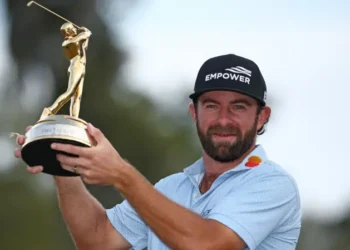
Another inspiring figure is Gary Woodland, who recently achieved a remarkable comeback victory at the Houston Open following brain surgery and a diagnosis of post-traumatic stress disorder. Woodland’s openness about his struggles and his resilience have earned widespread admiration, offering a contrast to Woods’ more private approach.
While Woods has also been celebrated for his comebacks from injury, Woodland’s journey highlights a different kind of strength—one rooted in transparency and perseverance. This contrast underscores the evolving expectations of leadership within the sport.
Ultimately, the latest incident involving Woods may prompt a broader reassessment within golf. For years, the sport has turned to him as a central figure for guidance and inspiration. However, this reliance may need to be reconsidered in light of ongoing concerns about his personal and professional stability.
As the golfing world reflects on this situation, it becomes clear that the future of the sport cannot rest on the shoulders of a single individual, no matter how accomplished. Instead, a more diversified approach to leadership and decision-making may be necessary to ensure long-term growth and stability.
For Woods, the path forward remains uncertain. Whether he chooses to address the situation publicly or step back from his roles, the coming weeks will be crucial in determining his future both within and beyond the sport.