
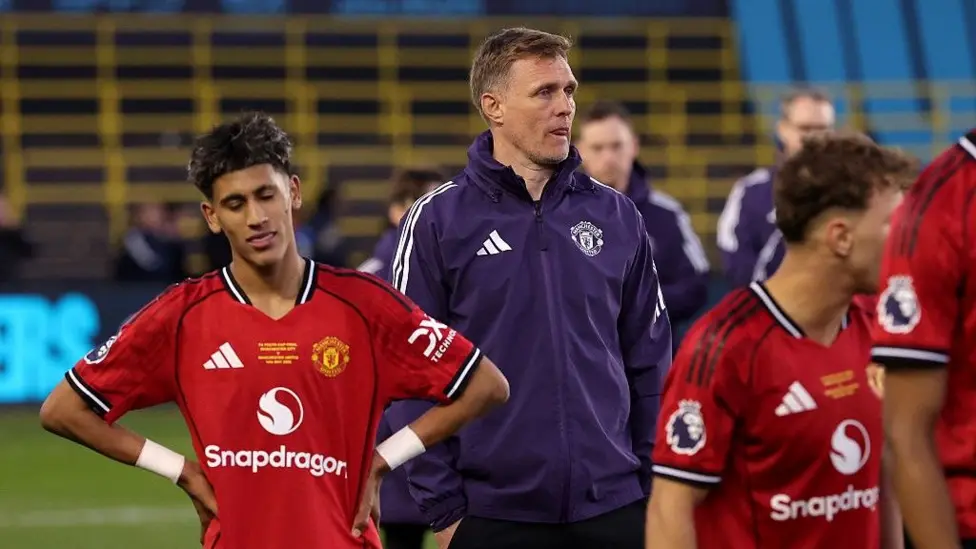
Manchester United Under-18s coach Darren Fletcher has strongly criticized the Football Association (FA) for its handling of the Youth Cup final, suggesting that the event felt overly influenced by Manchester City. His comments came after United suffered a narrow 2-1 defeat to City at the Joie Stadium, marking a disappointing conclusion to their youth campaign.
The match itself saw City emerge victorious, with Fletcher acknowledging that Oliver Reiss’ side performed better on the night and deserved the win. However, despite giving credit to the opposition, Fletcher expressed frustration with several aspects surrounding the organization and presentation of the final, which he believed detracted from the integrity and neutrality expected of an FA competition.
United’s Under-18 side has endured a challenging end to the season. Prior to the Youth Cup final, they were defeated in the Premier League Under-18 Cup final by Crystal Palace, losing on penalties after conceding a late equalizer in stoppage time. Additionally, they finished second behind Manchester City in the Premier League North standings. These setbacks have compounded the disappointment of losing another major final.
One of Fletcher’s primary concerns centered on the venue for the Youth Cup final. Manchester United had proposed hosting the match at Old Trafford, a historic and iconic stadium that would have provided a grand stage befitting such a prestigious youth competition. However, Manchester City declined the offer, citing ongoing construction work at the Etihad Stadium as the reason they could not host the game there.
Instead, the final was held at the Joie Stadium, a smaller venue with a capacity of around 7,000, typically used for City’s academy and women’s matches. Located adjacent to the Etihad Stadium, it was perceived by United staff as giving City a significant home advantage. Fletcher and others within the club felt that this decision deprived young players from both teams of the opportunity to compete in a more fitting and high-profile setting.
Attendance at the match further fueled the criticism. Despite claims from Manchester City officials that the game had sold out, there were noticeable empty seats in sections allocated to home supporters. In contrast, the Manchester United section was fully occupied, highlighting what Fletcher saw as an imbalance in the atmosphere.
The final attracted attention from senior figures within both clubs, including Manchester City manager Pep Guardiola and Manchester United boss Michael Carrick, who were present to watch the young talents in action. Nevertheless, Fletcher remained dissatisfied with the overall presentation of the event, particularly during the post-match ceremony.
He took issue with the manner in which City players and staff were individually announced while collecting their winners’ medals from EFL chairman Rick Parry. Fletcher described this approach as excessive and uncharacteristic of traditional cup finals, where recognition is usually more collective rather than individualized.
According to Fletcher, such practices contributed to the perception that the event had been dominated by Manchester City, rather than being a neutral FA competition. He emphasized that while respect for the opposition is essential, the organization of the final should reflect fairness and impartiality.
Fletcher did not hold back in expressing his dissatisfaction, reportedly voicing his concerns directly to FA officials in a heated manner during the post-match proceedings. His reaction underlined the depth of his frustration with how the situation was handled.
In addition to his concerns about the Youth Cup final, Fletcher also raised issues regarding the scheduling of the Premier League 2 play-off final. This competition, which features under-21 teams, is set to take place at the Amex Stadium in Brighton as part of a double-header event, with a kick-off scheduled for 19:30 BST.
The timing of this fixture poses challenges for Manchester United, as it comes just 48 hours after the Youth Cup final. Many players in Fletcher’s Under-18 squad are also regular participants in the under-21 setup, meaning they may not be able to take part in both matches due to recovery and fitness considerations.
This scheduling conflict could result in several young players missing out on the opportunity to compete in another significant final, which Fletcher described as disappointing. He highlighted the difficulty of managing player workloads and ensuring their well-being under such tight timelines.
Furthermore, the proximity of these fixtures has implications for the senior team as well. Some of the young players who might otherwise be considered for Manchester United’s Premier League match against Nottingham Forest at Old Trafford on Sunday could be unavailable due to fatigue or prior commitments.
Fletcher pointed out that these overlapping demands create a complex situation for the club, requiring careful decision-making to balance development opportunities with player health. He called for greater consideration from governing bodies when scheduling youth competitions to avoid such conflicts in the future.
Reflecting on the broader situation, Fletcher expressed hope that both the FA and the Premier League would learn from these experiences. He emphasized the importance of preserving the prestige and fairness of historic competitions like the FA Youth Cup, while also ensuring that young players are given the best possible environment to develop and showcase their talents.
He suggested that a more thoughtful approach to planning and organization could help prevent similar issues from arising in the future. By taking a step back and evaluating the current system, authorities could identify areas for improvement and implement changes that benefit all stakeholders.
Despite the controversy, Fletcher reiterated that Manchester City deserved their victory on the pitch. His criticisms were not aimed at undermining their achievement but rather at addressing what he saw as shortcomings in the administration of the event.
Manchester City, for their part, declined to comment on Fletcher’s remarks, choosing not to engage publicly with the criticism.
The situation highlights ongoing challenges in youth football, where logistical decisions and organizational practices can have a significant impact on players’ experiences. As the sport continues to evolve, ensuring fairness, transparency, and professionalism in such competitions remains a key priority.
For Manchester United’s young players, the defeat marks the end of a difficult yet educational season. While the disappointment is evident, the lessons learned from these experiences could prove valuable in their development as they progress toward senior football.
Ultimately, Fletcher’s outspoken response reflects a broader concern about maintaining the integrity of youth competitions. His comments have sparked discussion about how such events should be managed, emphasizing the need for balance between competition, development, and fairness.
For more football news and updates, visit: https://netsports247.com