

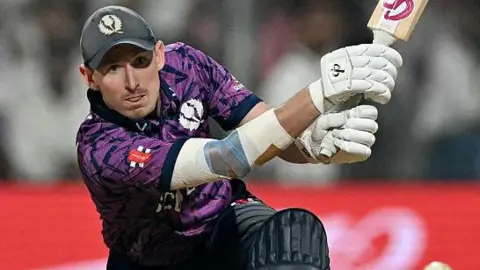
In an exciting clash in the Cricket World Cup League 2 tri-series held in Kirtipur, Nepal national cricket team secured an impressive six-wicket victory over Scotland national cricket team. The match marked the second meeting between the two sides in the ongoing series, and this time it was the hosts who came out on top with a composed and confident performance.
Scotland, having won their earlier encounters in the tri-series against both Nepal and the United States national cricket team, entered the match with momentum on their side. Opting to bat first, they aimed to post a competitive total and put pressure on the home side. However, despite a strong start and some aggressive batting, they were eventually bowled out for 194 in 39.1 overs.
The standout performer for Scotland was Brandon McMullen, who played a dynamic innings of 73 runs from just 44 deliveries. His knock was filled with powerful strokes and attacking intent, allowing Scotland to accelerate the scoring rate during the middle overs. McMullen’s innings provided much-needed momentum and briefly put Nepal’s bowlers under pressure.
Supporting him was Michael English, who contributed a steady 51 runs. English played a more controlled innings, focusing on building partnerships and stabilizing the innings after early wickets. Together, the pair formed the backbone of Scotland’s batting effort, but their contributions were not enough to carry the team to a larger total.
Nepal’s bowling attack, however, delivered a disciplined and effective performance. Leading the charge was Lalit Rajbanshi, who produced a match-defining spell by claiming four wickets for just 32 runs. His accuracy and ability to generate pressure proved crucial in dismantling Scotland’s batting lineup.
Rajbanshi’s wickets included key players such as Scotland captain Richie Berrington, who managed only 12 runs, and Michael Leask, who was dismissed for just one run. By removing these important बल्लेबाज, Rajbanshi ensured that Scotland could not build the kind of partnerships needed to post a daunting total.
As Scotland’s innings progressed, wickets fell at regular intervals, preventing them from establishing sustained momentum. Despite McMullen’s aggressive approach, the team struggled to maintain consistency, ultimately being bowled out well short of the 50-over mark.
Chasing a target of 195, Nepal began their innings with confidence but faced early challenges. Kushal Bhurtel provided a quick start with 28 runs before being dismissed leg-before-wicket by McMullen. Shortly after, Aasif Sheikh was run out for 29 following an energetic start that included several boundaries.
Despite these early setbacks, Nepal remained composed and focused on building their innings. The turning point came through a crucial partnership between Ishan Pandey and captain Rohit Paudel. Their collaboration not only stabilized the innings but also shifted the momentum firmly in Nepal’s favor.
Pandey played an important role with a well-crafted 55 runs, displaying patience and control. His innings helped anchor the chase and ensured that Nepal remained on track despite the early wickets. At the other end, Paudel delivered an outstanding performance, finishing unbeaten on 74 runs.
Paudel’s innings was a masterclass in composure and leadership. He carefully guided the chase, rotating the strike effectively and capitalizing on scoring opportunities. His ability to remain calm under pressure was instrumental in ensuring that Nepal did not lose control of the match.
As the target drew closer, Nepal’s confidence grew. Paudel eventually sealed the victory in style by hitting a six, bringing the total to 199-4 in 38.1 overs. The shot not only confirmed the win but also highlighted Nepal’s dominance in the latter stages of the game.
Scotland’s bowlers, including Mark Watt, who took two wickets for 58 runs, tried to apply pressure but were unable to break the crucial partnership between Pandey and Paudel. Their efforts, while commendable, were not enough to halt Nepal’s steady progress.
This victory was significant for Nepal, especially as they were playing at home. The support of the local crowd and familiarity with conditions played a role, but the team’s performance was driven by skill, discipline, and determination.
The result also balanced the competition within the tri-series. While Scotland had earlier recorded victories against both Nepal and the United States, this loss brought the teams closer in terms of standings. Nepal, too, now have two wins in the series, making the competition even more intriguing.
Looking ahead, Scotland are scheduled to face the United States again on Wednesday, giving them an opportunity to bounce back and regain momentum. Meanwhile, Nepal will conclude their campaign with a match against the United States on Friday, aiming to build on their recent success.
The tri-series format has provided exciting and competitive cricket, with each team showcasing their strengths and fighting for crucial points. Matches like this highlight the growing competitiveness of associate cricket nations and the increasing quality of performances on display.
Nepal’s victory over Scotland will be remembered for its balanced team effort. From Rajbanshi’s exceptional bowling to the composed batting of Pandey and Paudel, every aspect of the game contributed to their success. It also demonstrated the team’s ability to recover from early setbacks and execute a well-planned chase.
For Scotland, the match served as a reminder of the importance of consistency. While individual performances like McMullen’s were impressive, the team will need to improve their overall execution to succeed in future matches.
In conclusion, Nepal’s six-wicket win over Scotland in the Cricket World Cup League 2 tri-series was a testament to their resilience and teamwork. The match provided thrilling moments for fans and added another chapter to the competitive rivalry between the two teams.
For more latest sports news and updates, visit:
NetSports247