
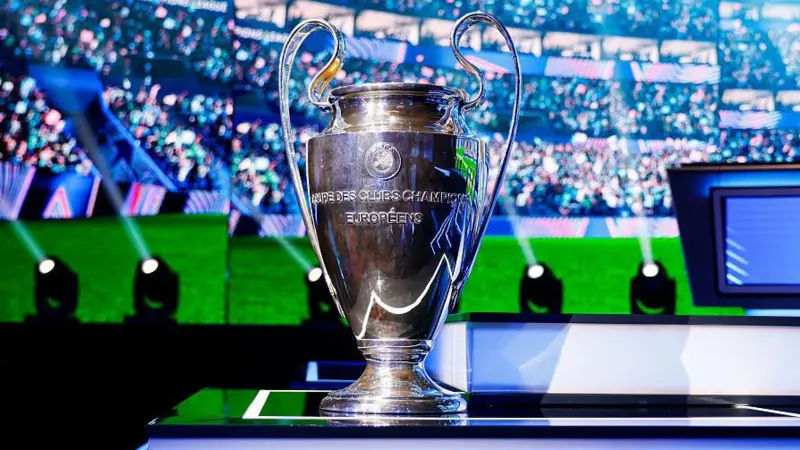
The UEFA Champions League returns this week with Europe’s elite clubs bracing for an unexpected detour on the road to continental glory. Under the revamped format introduced last season, 36 teams competed in a league-style phase from September to January, each playing eight different opponents. The top eight teams advanced directly to the round of 16, while the bottom 12 were eliminated. Those finishing between ninth and 24th must now navigate a two-legged knockout play-off to secure their place in the last 16.
Among the high-profile sides forced into the play-offs are reigning European champions Paris Saint-Germain and 15-time winners Real Madrid. Former champions Juventus, Borussia Dortmund and Benfica also failed to secure automatic qualification, underlining the increasing competitiveness of Europe’s premier club competition.
Perhaps the most dramatic qualification story belonged to Benfica. Coached by Jose Mourinho, they were seconds from elimination before goalkeeper Anatoliy Trubin ventured forward and scored in the eighth minute of stoppage time during a stunning 4-2 win over Real Madrid. That late heroics ensured Benfica’s survival and set up an immediate rematch with Real in the play-offs, offering Alvaro Arbeloa’s side a swift opportunity for revenge.
Five of the six English entrants secured direct passage to the last 16. Arsenal topped the league phase with a flawless record, winning all eight matches. Liverpool finished third, Tottenham fourth, Chelsea sixth and Manchester City eighth. That leaves Newcastle United as the only English club competing in the play-off round. Eddie Howe’s side face Azerbaijani champions Qarabag, who endured a heavy 6-0 defeat against Liverpool earlier in the competition.
Paris Saint-Germain’s presence in the play-offs raises an intriguing question: does failing to finish in the top eight damage a club’s chances of winning the Champions League? PSG themselves provided a compelling answer last season. In 2024-25, Luis Enrique’s side flirted with elimination when they trailed Manchester City 2-0 at home on matchday seven. A remarkable 4-2 comeback kept them alive, followed by a 4-1 victory over Stuttgart to finish 15th in the standings.
PSG then surged through the knockouts. They demolished Brest 10-0 on aggregate in the play-offs, edged past Liverpool on penalties in the round of 16, overcame Aston Villa and Arsenal in the quarter-finals and semi-finals, and capped their campaign with a stunning 5-0 victory over Inter Milan in the final. It was one of the most emphatic championship runs in recent history, proving that a play-off route does not preclude ultimate success.
This season, PSG meet Monaco in the play-offs, with the winners set to face either Barcelona or Chelsea. Luis Enrique remains confident, dismissing concerns about fixture congestion. He insisted that if any team is equipped to handle the extended path, it is PSG. The Spaniard even suggested his side should still be considered among the favorites to lift the trophy again.
The format change has also influenced other European competitions. In last season’s Conference League, Real Betis reached the final despite finishing 15th in the league phase, though they were defeated 4-1 by Chelsea. However, the Europa League told a different story: seven of the top eight league-phase finishers reached the quarter-finals, and Tottenham defeated Manchester United in the final.
Statistical projections offer further intrigue. Football data specialists Opta rate PSG’s title chances higher than some teams who finished in the top eight, including Tottenham and Sporting. Arsenal, after their perfect league phase, are assigned a 30% probability of winning the competition — the highest among the contenders. Bayern Munich are next at 14%, while Manchester City and Liverpool sit at 10%. Chelsea and Barcelona follow at 7%.
Newcastle and Inter Milan are both given a modest 3% chance of claiming the trophy. Nevertheless, Opta estimate Newcastle have an 88.5% likelihood of overcoming Qarabag and progressing to the last 16.
For English clubs that secured top-eight finishes, relief was palpable. Manchester City manager Pep Guardiola acknowledged the significance of avoiding the extra round. Having been eliminated by Real Madrid in last season’s play-offs, he emphasized how much tougher the competition has become compared to when he first managed in it nearly two decades ago.
Arsenal boss Mikel Arteta echoed that sentiment, praising his players for the rarity of an eight-win campaign in such a demanding environment. Liverpool’s Arne Slot and Chelsea’s Liam Rosenior also highlighted the benefit of reduced fixtures, citing improved preparation time and player conditioning.
Newcastle, though facing additional matches, remain optimistic. Eddie Howe admitted he might have accepted a play-off berth at the start of the campaign, even if the initial ambition was automatic qualification. Defender Dan Burn embraced the opportunity, noting that this marks the club’s first venture into Champions League knockout football — a milestone achievement for the Magpies.
The knockout play-off fixtures promise compelling drama. Monaco face PSG; Galatasaray take on Juventus; Benfica meet Real Madrid; Borussia Dortmund clash with Atalanta; Qarabag host Newcastle; Club Brugge encounter Atletico Madrid; Bodo/Glimt play Inter Milan; and Olympiacos meet Bayer Leverkusen. First legs are scheduled for 17-18 February, with return fixtures on 24-25 February.
As the Champions League resumes, the revised structure ensures both peril and possibility. The direct qualifiers enjoy rest and preparation advantages, yet recent history demonstrates that resilience and momentum can outweigh seeding advantages. For Europe’s giants forced onto the longer road, redemption and glory remain firmly within reach.
For more football news and updates, visit https://netsports247.com